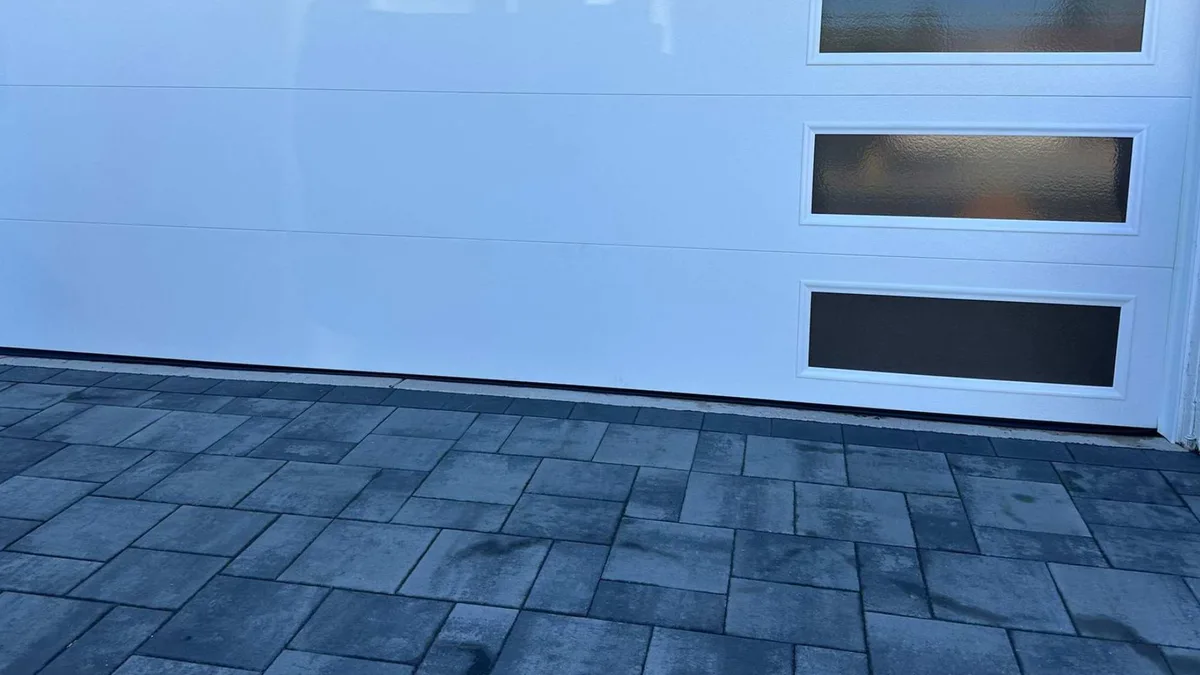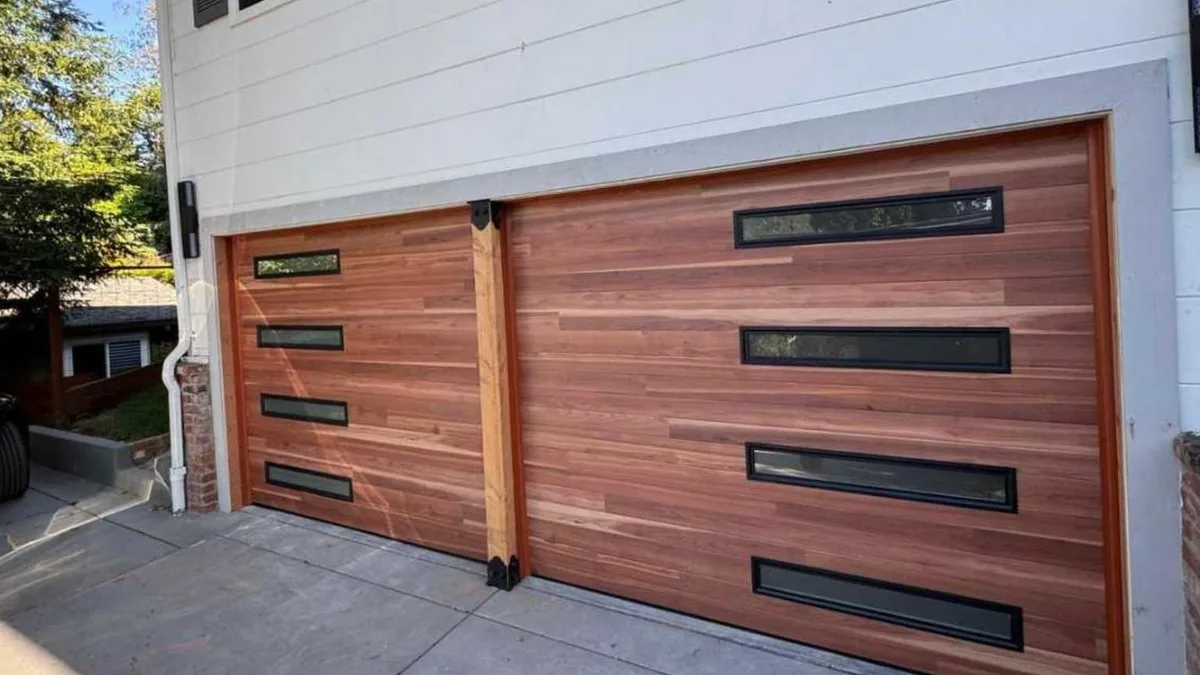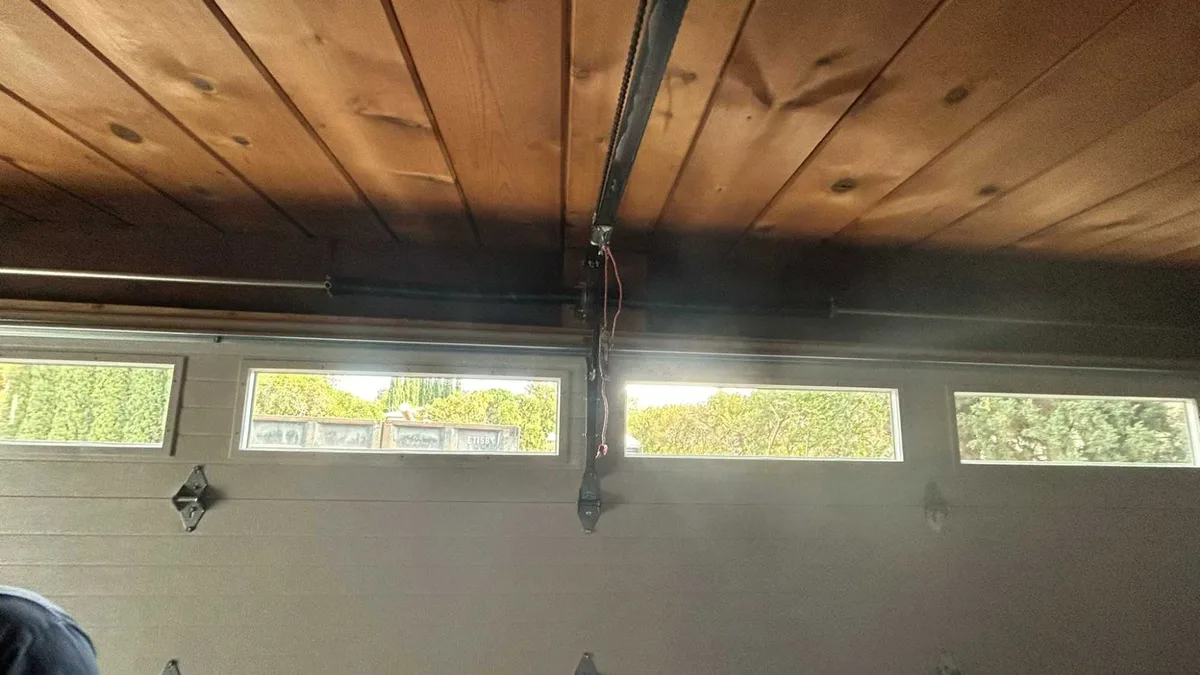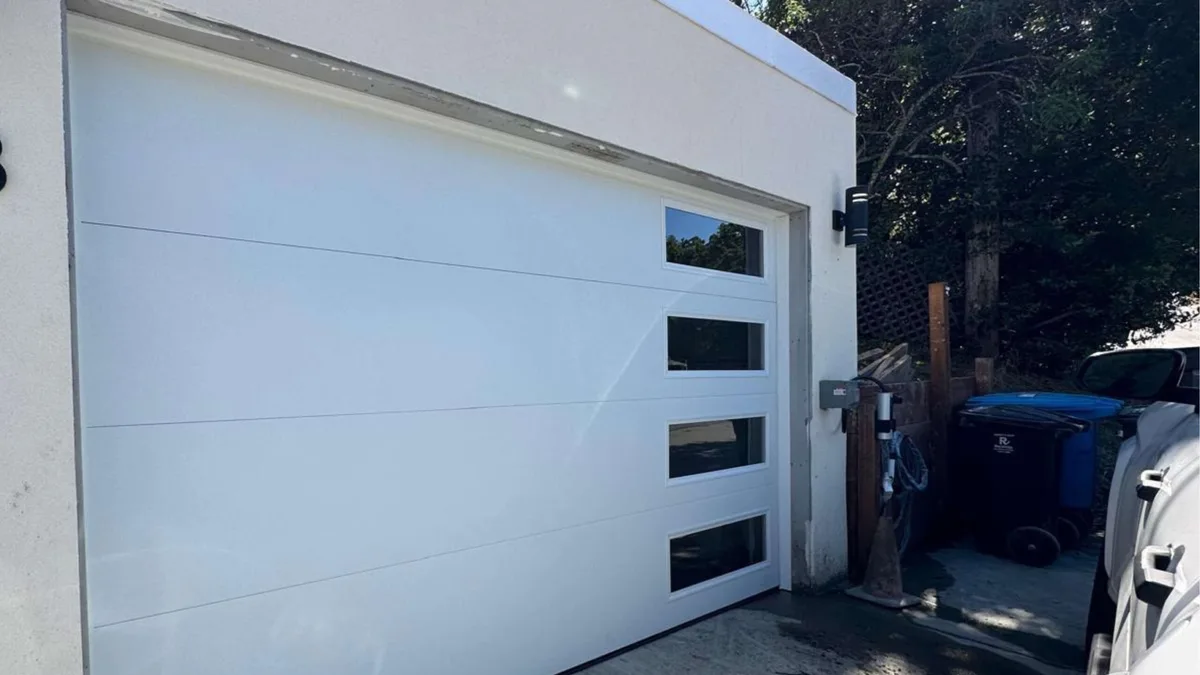
A garage door cable is a braided steel rope under heavy tension. It runs from a drum at each end of the torsion shaft or the spring anchor down the side of the door to a bracket at the bottom corner, and it is what ties the door to the counterbalance system. When a cable is sound, the door travels level and the spring does its job through the cable. When a cable fails, the door loses its connection to that counterbalance on one side or both, and what happens next depends on which cable went and what the door was doing at the time. This guide is about recognizing a cable problem from outside the door, understanding why coastal Broward wears cables faster than inland climates, and knowing precisely where the homeowner's work stops. Cables and springs are technician work throughout. What follows is about observation, not handling.
What a cable does, and why it is under tension all the time
On a standard sectional door, the cable is anchored at the bottom corner bracket and winds onto a drum at the top of the track assembly. The tension in that cable comes from the torsion spring, which is wound to roughly counterbalance the weight of the door. That means the cable is loaded whether the door is open, closed, or halfway. It is not a slack rope that tightens only during a cycle; it is carrying load at rest.
That constant load is why cable problems tend to announce themselves rather than appear gradually. A cable that has been fraying strand by strand for months can let go during an ordinary morning cycle, and the door will react immediately. Understanding that the cable is always under tension is also the reason for the rule that runs through this entire article: no homeowner should touch a cable, a spring, or the opener drive train. Releasing or adjusting any of those parts means working against stored energy that can injure a person badly. A technician has the tools and the training to relax that energy safely before any repair begins.
What you can see from the driveway
You do not need to get close to a cable to know something is wrong. The door itself reports the problem. With the garage empty and the door operated normally from the wall button or remote, these are the signs worth noting:
- The door hangs crooked. One side sits higher than the other at rest, or one side climbs faster during a cycle. A snapped cable is one certain cause of this — a door with a cable that has parted on one side hangs at an angle because that corner has lost its support. A broken torsion spring and a bent or displaced track can produce a similar crooked look, so the technician confirms which one it is before quoting the repair.
- A gap along the top or one side when closed. If the door no longer meets the floor or the header evenly, the door is not sitting square in its opening. That can follow a cable problem, but it can also come from a track that has shifted or a hinge that has worn. The gap tells you the door is out of alignment; it does not tell you why.
- The door feels heavier when you use it. If lifting the door by its normal operation — the opener, or the handle if your door is a manual one — feels like more work than it used to, the counterbalance is not carrying its share. A slack or damaged cable is one reason; a tired spring is another. Do not test this by lifting the door by hand to gauge its weight. Note how it feels in ordinary use and pass that along.
- A new noise at the start of a cycle. A snap, a twang, or a sudden change in the sound of the door starting to move is worth writing down. A cable that has just failed often makes a sharp report. A dry roller or a worn hinge can also introduce a new noise, so the technician separates them.
- The door comes down unevenly or stops level. A door that will not close flat, or that sits at an angle when it stops, is telling you the two sides are no longer moving together.
What you should not do is walk up to the cable and examine it strand by strand, or reach for the drum to see if it is seated. The cable is loaded, and a frayed cable can part while being handled. Leave the inspection of the cable, the drums, and the bottom brackets to the technician, who will check them as part of the repair.
Why salt air matters on the Broward coast
Cables are steel, and steel near the ocean corrodes faster than steel inland. In coastal Broward — Hollywood, Hallandale Beach, Dania Beach, Fort Lauderdale, and the beachside stretches of the service area — the air carries salt, and salt accelerates the corrosion of the braided strands. Corrosion does two things to a cable. It thins the individual wires, reducing the load the cable can carry, and it stiffens the cable so it no longer flexes smoothly over the drums and pulleys as the door cycles. A stiff, corroded cable works harder on every cycle, and that is how a cable that looked fine last year becomes a cable that fails this year.
You do not need to diagnose corrosion yourself. What you can do is treat a cable that is several years old on a coastal property as a part worth having checked during routine service, rather than waiting for it to announce itself. The same salt air that affects the cable also works on hinges, rollers, and the bottom brackets, so a technician servicing a door in these areas is looking at the whole assembly, not just the one part. If you are in Pembroke Pines, Weston, Sunrise, Plantation, or Cooper City, farther from the water, the corrosion clock runs slower, but it still runs. Humidity is present across the region year-round, and a cable does not need to be at the beach to age.
Why cable repair is not a homeowner job
The temptation with a cable is to think of it as a rope: something that can be reattached, tightened, or replaced with a trip to the hardware store. It is not. Three things make it technician work.
First, the cable is under load from the spring. To replace or reattach a cable, the spring tension has to be released first, and releasing torsion spring tension without the proper winding bars and the knowledge to use them is how people get seriously hurt. Second, the cable has to be wound correctly onto the drum and anchored at the bottom bracket with the right hardware. A cable that is attached but wound wrong will bind, jump the drum, or load one side of the door unevenly, and the door will fail again — possibly while someone is standing under it. Third, a cable failure rarely happens alone. A door that has been running on a failing cable for a while may have taken a bent track, a worn roller, or a strained spring along with it, and those need to be assessed together.
What a homeowner can safely do is stop using the door once a cable problem is suspected, keep the garage clear underneath it, and call for service. CrownLift Garage Doors handles garage door springs, garage door repairs, and openers across Broward County, and the technicians inspect the cables, drums, and bottom brackets as part of the repair rather than treating the cable in isolation. The company is licensed and insured, and can be reached at (877) 897-6132 or service@crownliftgarage.com. Weekday hours are 7:00 AM to 8:00 PM, weekends 8:00 AM to 6:00 PM, with emergency service available.
After a cable repair: what to watch
Once a cable has been replaced, the door should run level and quiet again, and the two sides should move together. In the first weeks after a repair, pay attention to the same signs you watched before: a door that starts to sit crooked again, a new gap at the floor, or a change in the sound at the start of a cycle. Any of those means the door needs another look, and it is worth a call rather than a wait.
For homeowners in Davie, Miramar, Southwest Ranches, West Park, Pembroke Park, Aventura, North Miami Beach, and the rest of the service area, the practical routine is the same. Keep the door's travel path clear, note changes in how the door behaves, and leave the cable, the springs, and the opener drive train to a technician. A cable is a small part of the door, but it carries the whole counterbalance, and it deserves to be treated that way.