You press the button, the door rises about a foot, and then it stops. Sometimes the motor keeps humming for a second or two. Sometimes it goes quiet right away. Press the button again and you get the same short lift, or nothing at all. It is one of the more common calls we get in Broward County, and the symptom itself narrows things down more than you might expect. You can check a few of the causes yourself in a few minutes. The rest are jobs for a technician, and one of them is a job you should never attempt on your own.
First, understand what the opener is doing
A modern opener does not simply run the motor until the door reaches the top. It watches for resistance. If the door meets more load than the opener expects, the logic board treats that as an obstruction and reverses or stops. It also stops when it reaches a travel limit — the point the opener has been taught to treat as fully open.
So a door that lifts a foot and quits is usually doing one of two things: it is meeting resistance early and stopping itself, or it is reaching a travel limit that has been set too low. Those two possibilities lead to different checks.
Check the photo-eye first, because it is easy
The photo-eye is the pair of small lenses mounted near the floor, one on each side of the opening. They send an invisible beam across the doorway. If the beam is broken while the door is closing, the opener reverses the door. A blocked or misaligned photo-eye is the most common reason a door refuses to close, or starts down and immediately comes back up.
A door that opens a foot and stops is a different symptom, but the photo-eye is still worth thirty seconds of your time. Wipe both lenses with a soft cloth. Look for cobwebs, a leaf, or a piece of debris in front of either lens. If the door behaves the same way afterward, the photo-eye is not your problem and you can move on.
Listen to the motor
What you hear separates the causes cleanly.
- The motor runs the whole time but the door does not move. The opener is turning but the door is not connected to it. The trolley may have come off the door arm, or the drive gear inside the opener may be stripped. A stripped gear lets the motor spin freely with nothing to push against.
- The motor hums for a second or two and then clicks off. The opener is meeting resistance and shutting down. Something is loading the door.
- The motor runs, the door moves about a foot, and then everything stops cleanly. This looks more like a travel limit that has drifted or been set wrong.
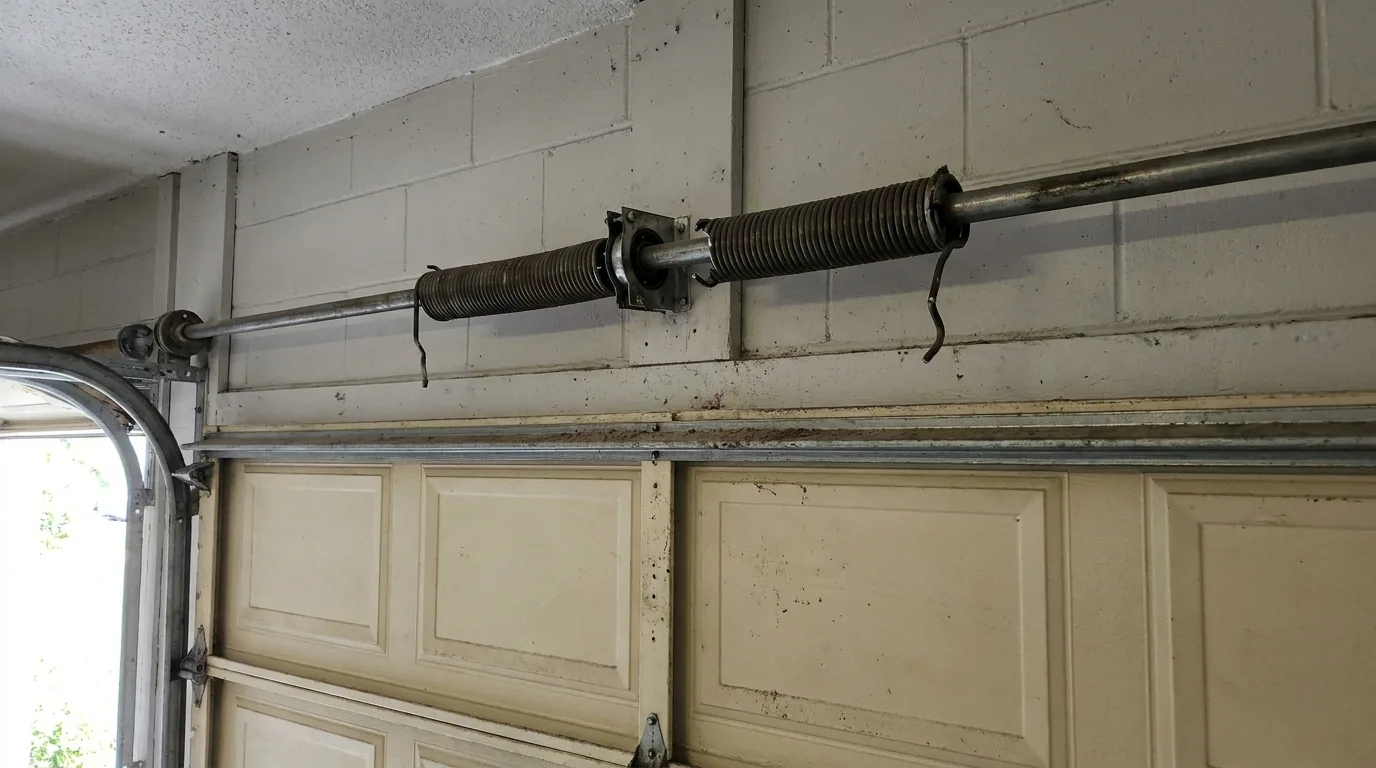
- You hear a loud bang from the garage and then the door will not lift at all. Stop here. That sound is often a torsion spring breaking. A broken torsion spring cannot hold the door's weight. Do not try to open the door by hand and do not run the opener. Call a technician.
Disconnect the door and lift it by hand
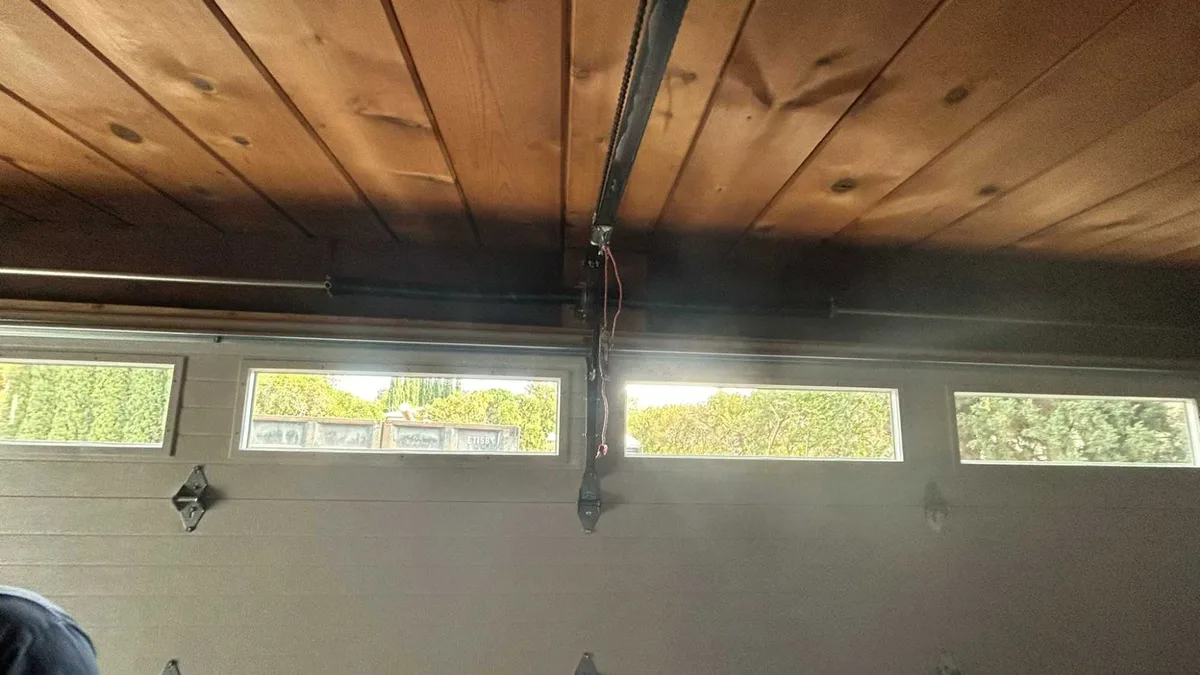
Pull the emergency release cord — usually a red handle hanging from the trolley — to disconnect the door from the opener. With the opener out of the picture, lift the door by hand to about waist height and let go.
A door with working springs will stay where you put it, or drift only slightly. If it feels heavy, or if it drops, the springs are not carrying the weight they should. That is a technician's job. Torsion springs and the cables that run with them are under high tension, and adjusting or removing them without the right tools and training can cause serious injury. Do not put a wrench on them.
If the door lifts and stays put easily, the springs are doing their job and the problem is upstream, in the opener or the travel settings.
Look at the tracks, rollers, and bottom seal
With the door still disconnected, walk both sides and look at the vertical and horizontal tracks. They should be straight. A track that has been bumped — by a car bumper, a ladder, a stored bike — can pinch a roller and add enough load to trip the opener's resistance sensing.
Run the door up and down by hand and watch the rollers. They should turn as they travel. A roller with a flat spot, or a hinge that has gone dry, can drag. So can a bottom seal that has torn and folded under, catching on the floor as the door comes down.
None of this requires tools. It requires a flashlight and a few minutes.
Travel limits and the logic board
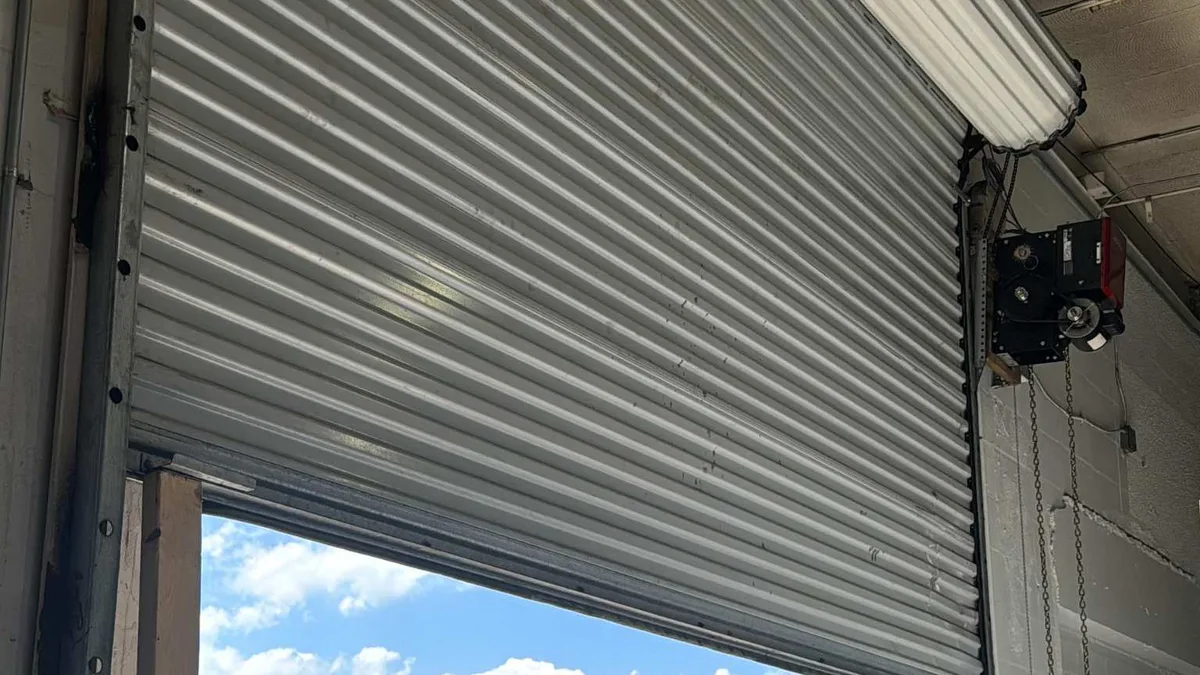
If the door moves freely by hand, the tracks are straight, and the motor runs normally, the travel limits are the likely cause. Openers are taught where the fully open and fully closed positions are, and those settings can drift over time. The reset procedure differs from model to model, so check your opener's manual. If the manual is long gone, the brand and model number are usually on a sticker on the back or side of the motor head.
If the opener is older and the motor runs without moving the door even after you reconnect the trolley, the drive gear is the likely culprit. Many openers use a plastic or composite gear that wears down after years of cycles. That is a repair, not an adjustment.
When to call
If you have checked the photo-eye, listened to the motor, tested the door by hand with the opener disconnected, and looked over the tracks and rollers, you have narrowed it down about as far as a homeowner safely can. What remains — springs, cables, the opener's internal drive, and the travel limit programming — is work for someone with the right tools and the training to do it safely.
CrownLift Garage Doors works throughout Broward County, including Hollywood, Fort Lauderdale, Hallandale Beach, Dania Beach, Davie, Pembroke Pines, Miramar, Weston, Sunrise, Plantation, Cooper City, Southwest Ranches, West Park, Pembroke Park, Aventura, and North Miami Beach. The company is licensed and insured. You can reach them at (877) 897-6132 or service@crownliftgarage.com. Weekday hours are 7:00 AM to 8:00 PM, weekend hours are 8:00 AM to 6:00 PM, and emergency service is available.
One last note. If you ever hear that loud bang and the door will not lift, leave it alone. A door with a broken spring can come down hard, and the opener will keep trying to lift weight the springs are no longer carrying. Keep people and pets clear and make the call.