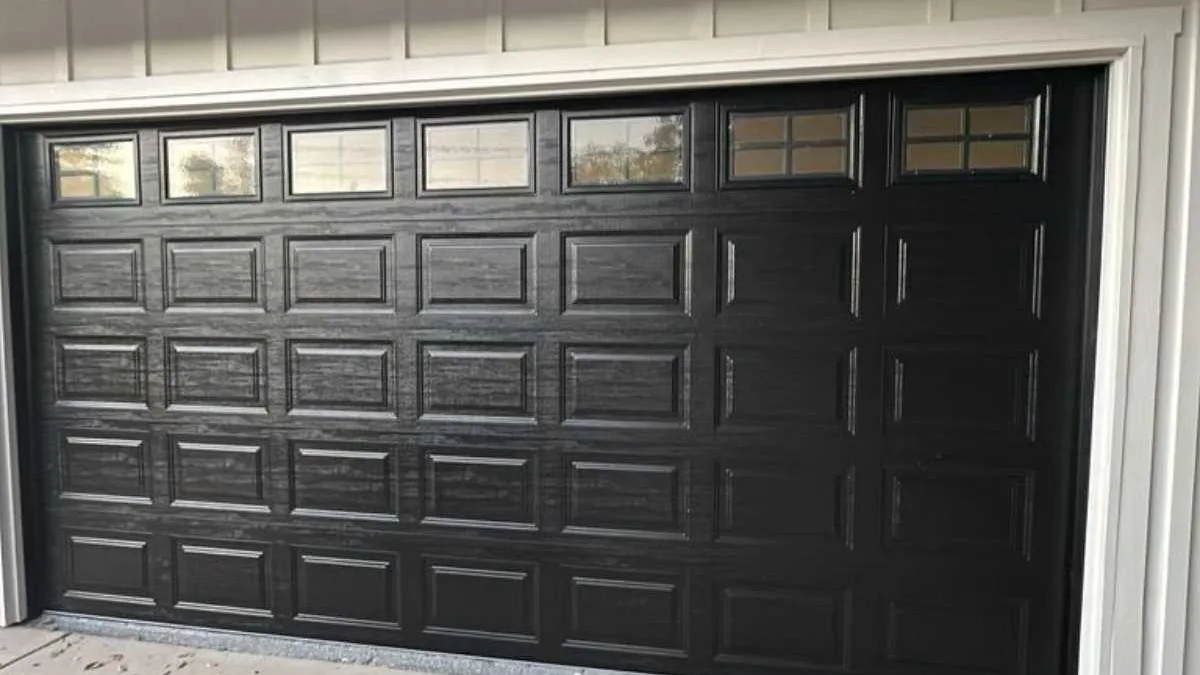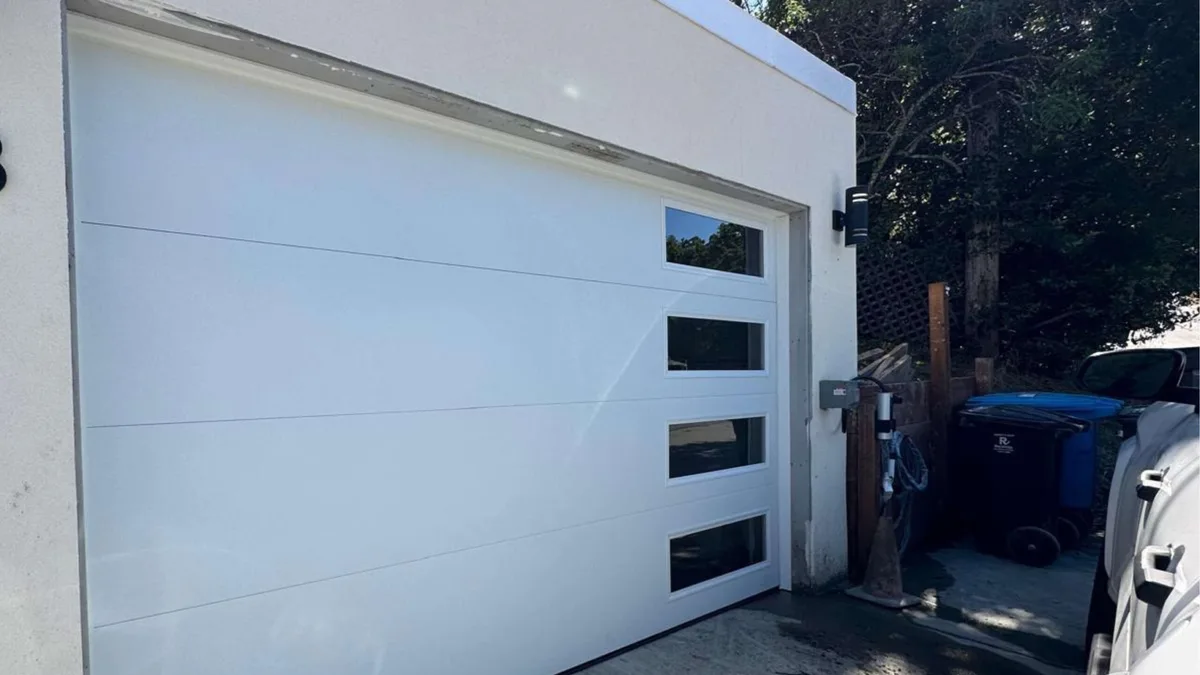
A garage door is one of the few machines in a house that runs every day, moves several hundred pounds, and gets almost no attention until something goes wrong. Most of the maintenance that keeps it running is genuinely simple, and most of it takes less time than watering the plants. The rest of it — springs, cables, and the opener drive train — is a different category entirely. This is a breakdown of which is which, so you can do the useful part yourself and know when to stop.
Start with the door closed and the opener unplugged
Before touching anything, close the door fully and disconnect the opener from power. Unplugging the unit at the ceiling outlet is the cleanest way; the wall switch alone is not enough. With the door down and the motor dead, you are working on a stationary object rather than a machine that could start moving while your hands are near it.
This is also the point to note anything that has changed. A door that has started sitting crooked, a gap you can see along the top edge, a new noise at the beginning of a cycle, or a door that feels heavier than it used to when you use it normally — those observations are worth writing down. They are the kind of detail a technician can act on quickly.
What you can safely do yourself
Clear the tracks of debris
With the door closed, wipe down the vertical and horizontal tracks with a dry cloth or a soft brush. Sawdust, leaf litter, and the general grit that blows in through an open garage all collect there, and a track with debris in it makes the rollers work harder and the door sound rougher. Do not lubricate the tracks themselves — they are meant to be clean and dry so the rollers can roll rather than slide.
Wipe down the door panels
A rinse and a wipe with a mild detergent keeps the finish in reasonable shape and gives you a chance to notice anything new: a dent, a panel that has shifted, a hinge that looks loose. Do not pressure-wash near the bottom seal or aim water at the opener. A garden hose and a soft cloth are enough.
Keep the opener housing clear
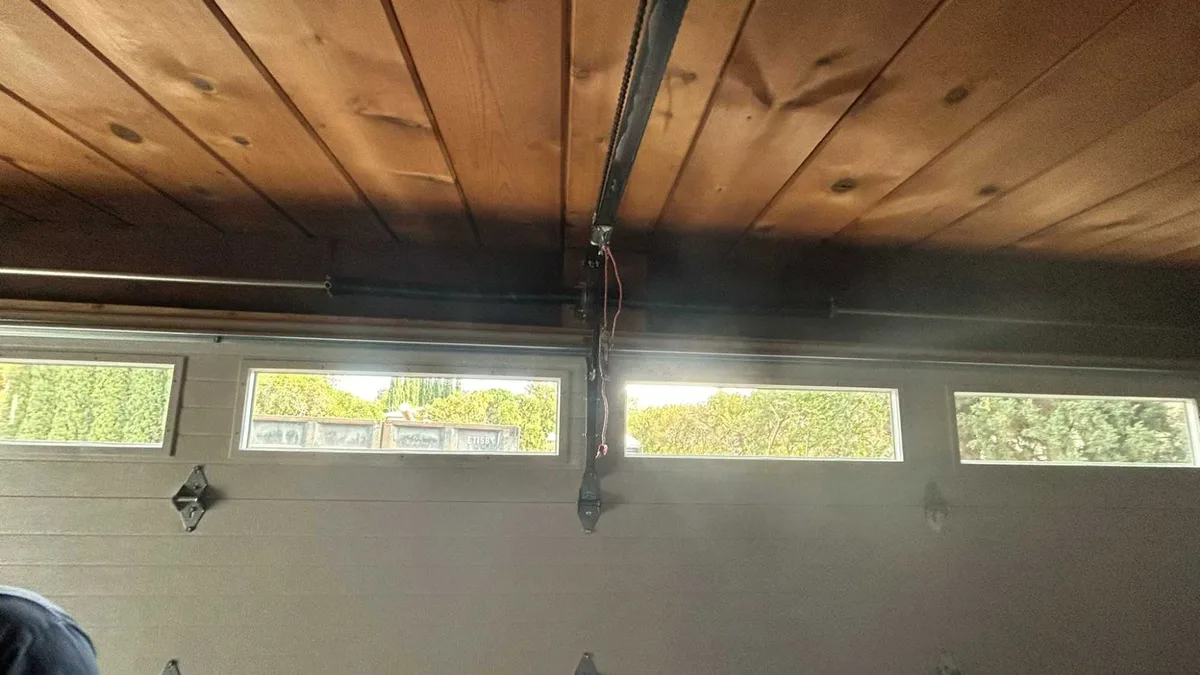
The opener is a motor, and motors shed heat. Boxes stacked against the unit, insulation pushed up against it, or a shelf built tight around it all work against that. Leave the housing with some air around it. While you are up there, check that the unit is still firmly attached to its mounting — a loose hanger makes a rattle that sounds like a much bigger problem.
Test the safety reverse on the closing travel
This is the one functional test a homeowner should run regularly. With the door open several feet, press the button to close it and pass a solid object — a length of lumber works — through the beam near the floor. A door that is closing should reverse. That is the photo-eye doing its job, and it is a safety device on the down travel only. If the beam is blocked or misaligned, the door will reverse while closing. If your door reverses before it reaches the floor with nothing in the way, that is a different problem — a travel-limit or force-setting issue — and it belongs with a technician.
Check the weather seal at the floor
With the door closed, a strip of paper laid on the floor under the bottom seal should be gripped when you tug it. If it slides out easily, the seal is not making contact, and that is a straightforward replacement. It is also worth noting whether daylight shows under the door across its width — a gap at one end can point to something more than a worn seal.
Keep the area around the door clear
Nothing stored against the door, nothing leaning on the tracks, nothing hanging from the bottom bracket. This sounds obvious and gets ignored constantly. A broom handle leaning against a vertical track is enough to bend it out of alignment over time.
What not to touch
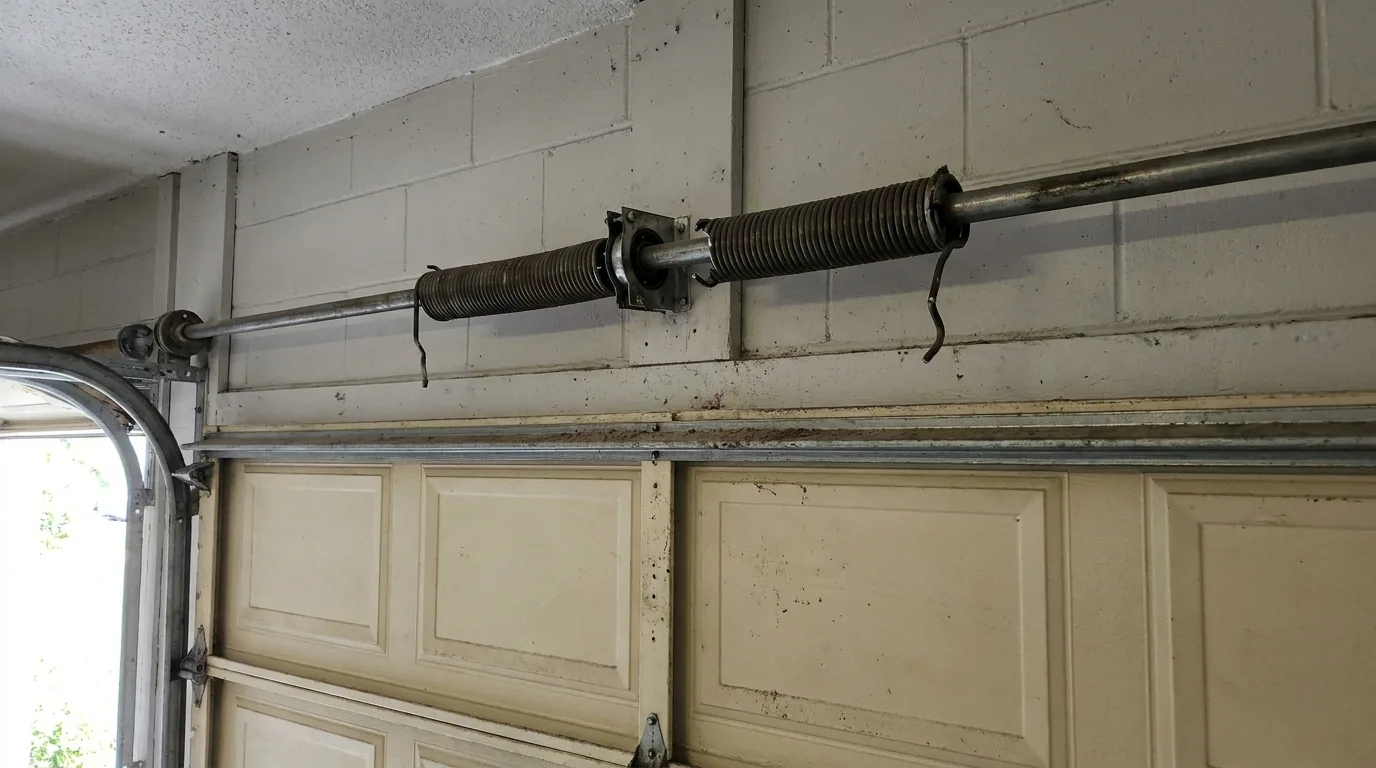
Torsion springs. The spring above the door holds the door's weight under significant tension. A spring that has failed cannot hold that weight, and the hardware attached to it is under load even when the door is down. There is no homeowner task involving a torsion spring that is worth the risk. If a spring has broken, the door will typically be far too heavy to raise by hand and may not raise at all — call a technician rather than attempting to assist it.
Cables. The cables run from the bottom corners of the door up to the drums at the ends of the shaft. They are under tension whenever the door is not fully open. A door with a snapped cable hangs at an angle, and that angle is a signal to stop using the door and call for service. Do not attempt to reattach a cable, and do not operate a door that is hanging unevenly.
The opener drive train. The rail, the carriage, the chain or belt, and the internal gearing are technician work. If the motor runs but the door does not move, a stripped gear is one possible reason — the motor turns, the door stays put, and the sound is a motor running free. Other possibilities include a carriage that has come loose from the chain or belt, or a door that is jammed. A technician can separate those in a few minutes; from the outside they look similar.
Anything involving lifting or balancing the door by hand. Do not test the door's balance by lifting it, and do not pull the emergency release and move the door manually to see how it feels. A technician has the tools and the training to check balance safely. What you can report is how the door feels in normal use — heavier than it used to be, or harder to close than it was a few months ago.
A crooked door, a squeal, and a door that runs but does not lift
These are the three symptoms homeowners most often ask about, and each has several possible causes. Naming one without testing is guesswork.
A door that sits crooked. A snapped cable is one cause; a broken spring is another; a bent or misaligned track is a third. The test that separates them is a technician's inspection of the springs, cables, and track alignment. From outside, note whether the door is crooked when closed, when open, or both, and whether the gap is at one corner. That observation narrows the field before anyone arrives.
A squeal or grind during the cycle. Rollers, hinges, and dry bearings all produce noise, and the location of the sound matters more than its character. A squeal that comes from the door itself is different from one that comes from the opener housing overhead. Note where it seems to originate and at what point in the travel it starts.
A motor that runs without lifting the door. As above: a stripped gear, a loose carriage, or a jammed door. Do not keep pressing the button to see if it will catch. Stop, unplug the opener, and call.
When to call
If your inspection turns up a broken spring, a cable that has failed, a door hanging at an angle, a motor that runs without moving the door, or a door that reverses before reaching the floor, stop using the door and call a technician. CrownLift Garage Doors serves Broward County and can be reached at (877) 897-6132 or service@crownliftgarage.com. The company is licensed and insured, offers emergency service, and handles springs, repairs, openers, and new installations. The routine above is yours to keep; the rest is theirs.