In Broward County, the garage door is often the largest opening in the house, and it is the one most exposed to wind. Preparing it for hurricane season is less about last-minute panic and more about knowing what you have, noticing changes early, and leaving the mechanical work to a technician. This guide walks through the parts of hurricane prep a homeowner can handle and the parts that belong with a professional.
Know your door's wind-load rating
A wind-load rating applies to a specific door, at a specific size, installed with specific hardware and anchoring. The rating label on the door or in the paperwork that came with the house will name a design pressure and a wind speed. If the label is missing or you cannot confirm that the door currently installed matches the label, that is worth resolving before the season. A technician can verify what is mounted on the opening and whether the anchoring and reinforcement match what the door requires. CrownLift Garage Doors installs new garage doors and replaces existing ones, and both are the point at which rating, size, and hardware are matched deliberately.
A heavier door is not automatically a stronger one, and how solid a door feels in calm weather tells you nothing about how it behaves under pressure. Rating is a document, not a feeling.
What you can observe from outside the door
With the garage empty and the door closed, a few things are visible without touching any moving part:
- A gap along the top of the door. If daylight shows between the top section and the header, the door is not seating against the opening. That can be a travel-limit setting, a misaligned track, or a bent section, and a technician separates the three.
- The door sitting crooked in the opening. A door that is visibly out of level when closed can mean a snapped cable, a broken spring, or a bent track. Any of those is technician work.
- Loose or missing fasteners at the track brackets. You can see whether a bolt is present and whether the bracket is tight against the wall. Do not loosen, tighten, or re-anchor track hardware yourself — the track geometry sets how the door travels, and moving it can put the door out of adjustment or create a pinch point.
- Rust at anchor points and the bottom section. South Florida air and summer rain take a toll on steel at the floor line and at the brackets. Surface rust on a bracket is a sign to have it looked at, not a sign to start unbolting.
If the door has a manufacturer's reinforcement or bracing kit specified for its rating, that kit needs to be present and correctly installed. Whether the assembly includes the right struts and braces is something a technician confirms against the rating documentation.
Listen and notice during normal use
Run the door a few times and pay attention to changes. A new noise at the start of a cycle — a squeal, a grind, a bang — is worth noting and describing. A squeal can come from a roller, a hinge, or a dry bearing, and the location of the sound is what separates them. A single loud bang at the start of a cycle is a different report and should be treated as urgent.
If the door feels heavier in normal use, or you find yourself holding the button longer, that is an observation worth passing along. Do not attempt to lift the door by hand to judge its weight, and do not pull the emergency release to move it — a door that is not holding its own weight can come down.
Watch the door close from inside the garage. A door that reverses before it reaches the floor is a travel-limit or force-setting problem, not a photo-eye problem. A photo-eye — the safety device at the bottom of the tracks — reverses a door only while it is closing, and only when the beam is blocked or misaligned. It has no role in a door that will not start at all. Knowing which symptom you have saves time on the phone.
If the motor runs but the door does not move, a stripped opener gear is one possible reason — the gear lets the motor turn without driving the door. It is not the only possible reason, and the test that separates them is a technician's. Note whether the motor runs, whether the door moves at all, and whether the problem is consistent or intermittent.
Clear the garage and check the seal
Clear the garage floor and the area around the door. Anything stored against the tracks or leaning on the door panels needs to move; in a wind event, loose objects in a garage become projectiles. Check the weather seal at the bottom and sides. A torn or flattened seal lets water in during driving rain. Replacing a bottom seal is routine; the condition of the door's structural hardware is a separate question for a technician.
When to call a technician
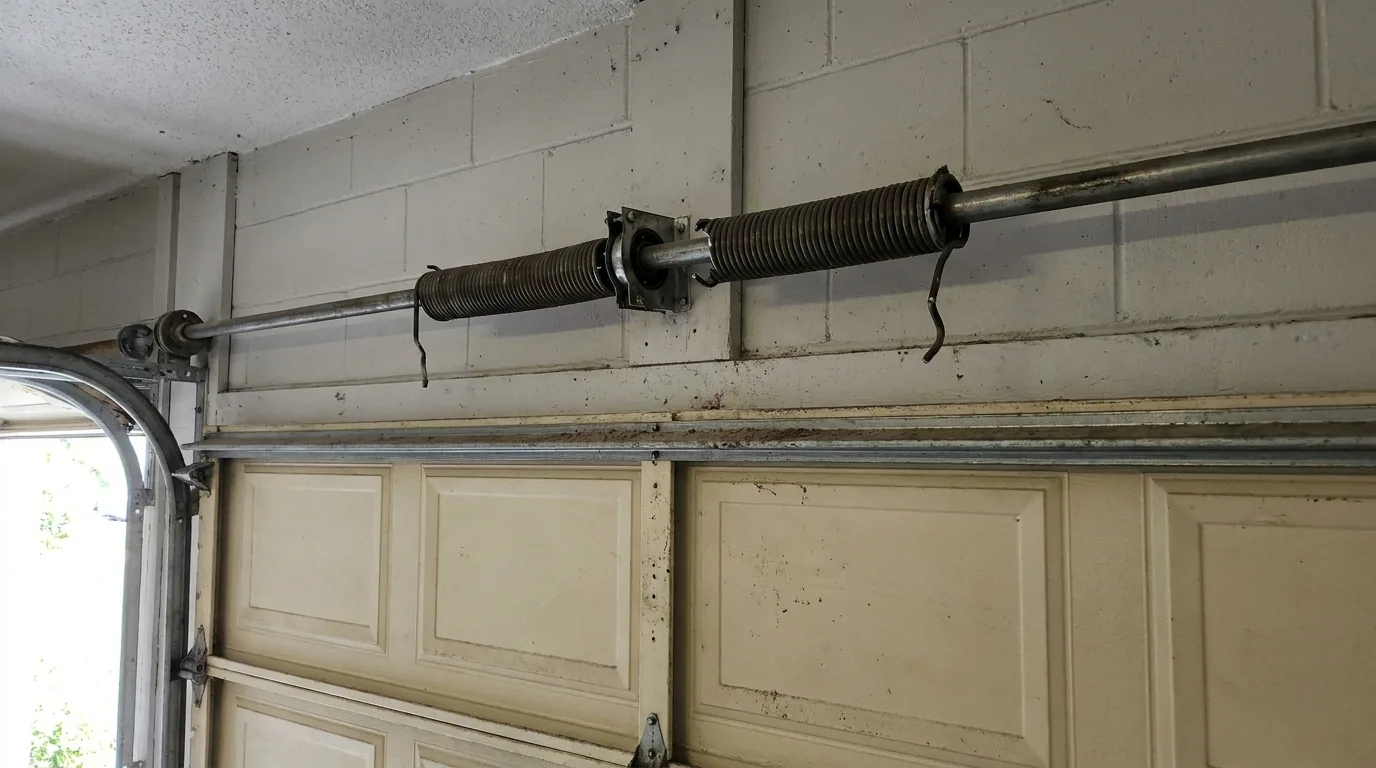
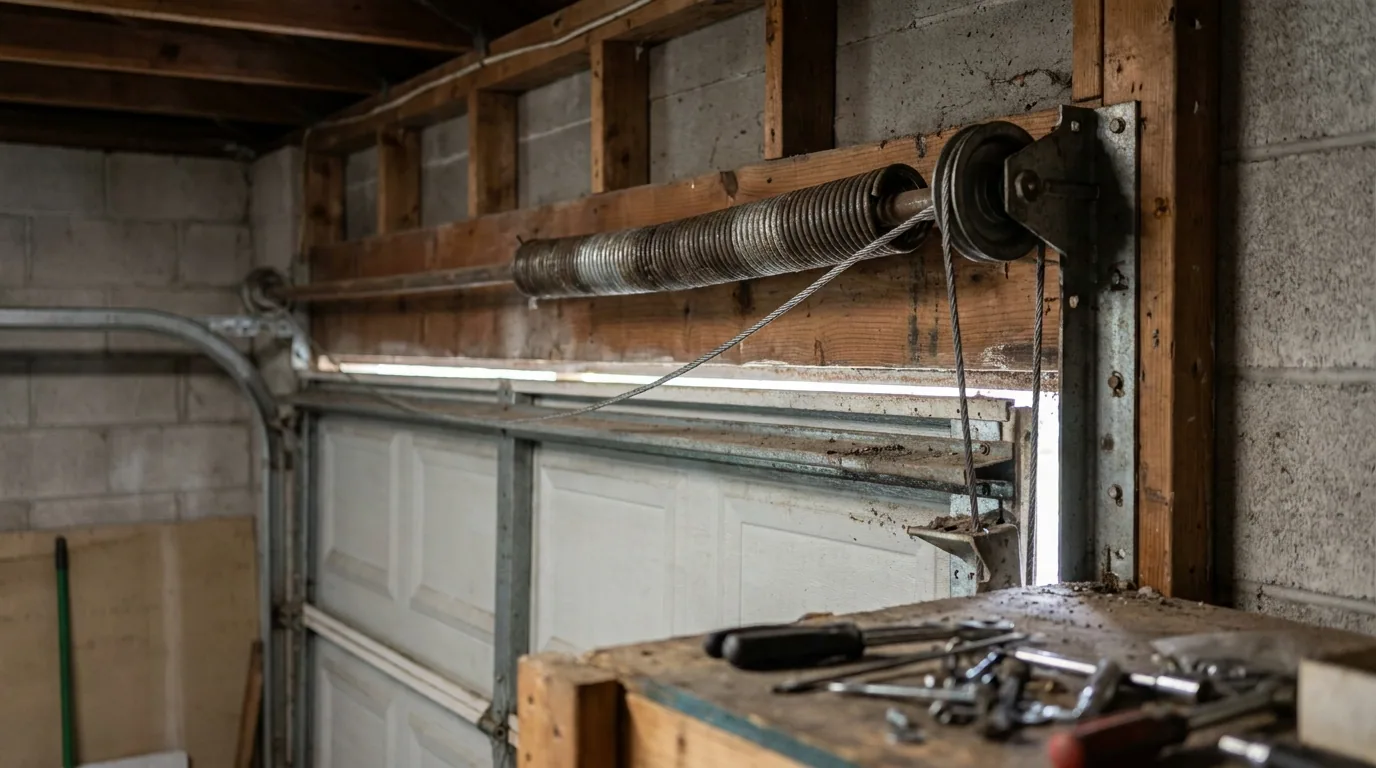
Some conditions should not wait. A broken torsion spring cannot hold the door's weight, and a door with a snapped cable hangs at an angle — neither is a door you want to be operating, and neither is a homeowner repair. The same goes for anything involving the cables, the springs, the track geometry, or the opener drive train.
If your door is currently not closing properly, is noisy in a way it was not last year, or has stopped working entirely, the pre-season window is the right time to have it looked at. CrownLift Garage Doors handles garage door repairs, spring work, opener service, and full replacement across Broward County, including Hollywood, Fort Lauderdale, Hallandale Beach, Dania Beach, Davie, Pembroke Pines, Miramar, Weston, Sunrise, Plantation, Cooper City, Southwest Ranches, West Park, Pembroke Park, Aventura, and North Miami Beach. The company is licensed and insured, and emergency service is available outside regular hours — weekdays 7:00 AM to 8:00 PM and weekends 8:00 AM to 6:00 PM. Reach the office at (877) 897-6132 or service@crownliftgarage.com, or visit 2350 NW 66th Ter, Hollywood FL 33024.
Light commercial and rental properties
If you own or manage a property with a commercial overhead door — a service bay, a storage unit, a small warehouse — the same preparation applies with a different priority order. Cycle count matters more than age: a door that runs dozens of times a day wears its springs, rollers, and hinges on a different schedule than a home door that runs four times a day. Before the season, the items worth scheduling are a technician's inspection of the springs and cables, a check of the safety devices, and confirmation that the door's rating and anchoring match the opening. Commercial garage door service is one of the services CrownLift provides, and the inspection is the point at which a marginal component gets found on a Tuesday instead of during a storm.
The short version: know what your door is rated for, keep the tracks and anchors in sound condition, watch and listen for changes during normal use, and route anything involving springs, cables, or the drive train to a technician. That covers most of what a homeowner in South Florida can control before the season arrives.