A sharp snap from the garage, followed by a heavy thud or a lurch, is not a sound most homeowners mishear. It is sudden, it is loud, and it usually comes with a change in how the door sits. Sometimes the door ends up crooked in the opening. Sometimes it will not lift at all. In Broward County these calls come in year-round, and the snap almost always traces back to one of two parts: a torsion spring that has broken, or a cable that has come off its drum. The two sound nearly identical from inside the house. They look different once you are standing in front of the door, and they call for different next steps. Both are jobs for a technician. The reason is the same in each case — stored energy — but the way you leave the door matters.
Look before you press the button again
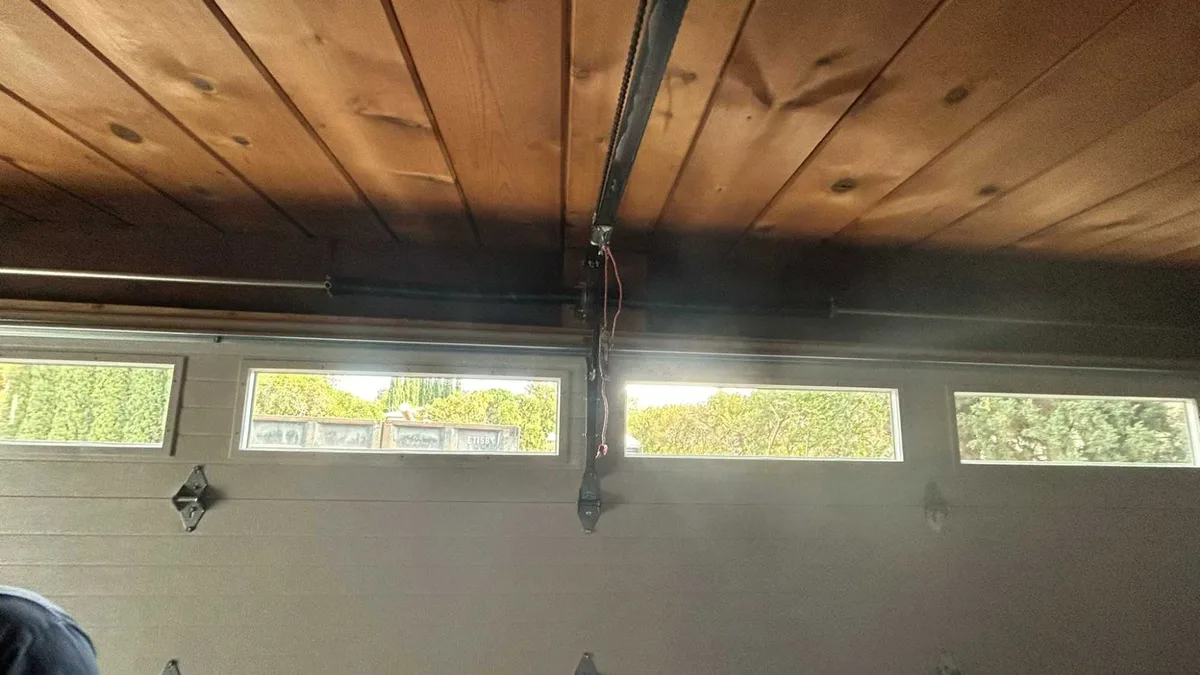
Before you touch the wall button, stand back several feet and look at the door. Check whether the bottom edge is level with the floor. A door that has dropped on one side and hangs at an angle is giving you a clear clue. So is a door sitting a few inches lower than it was yesterday, or one that is visibly bowed across the top section.
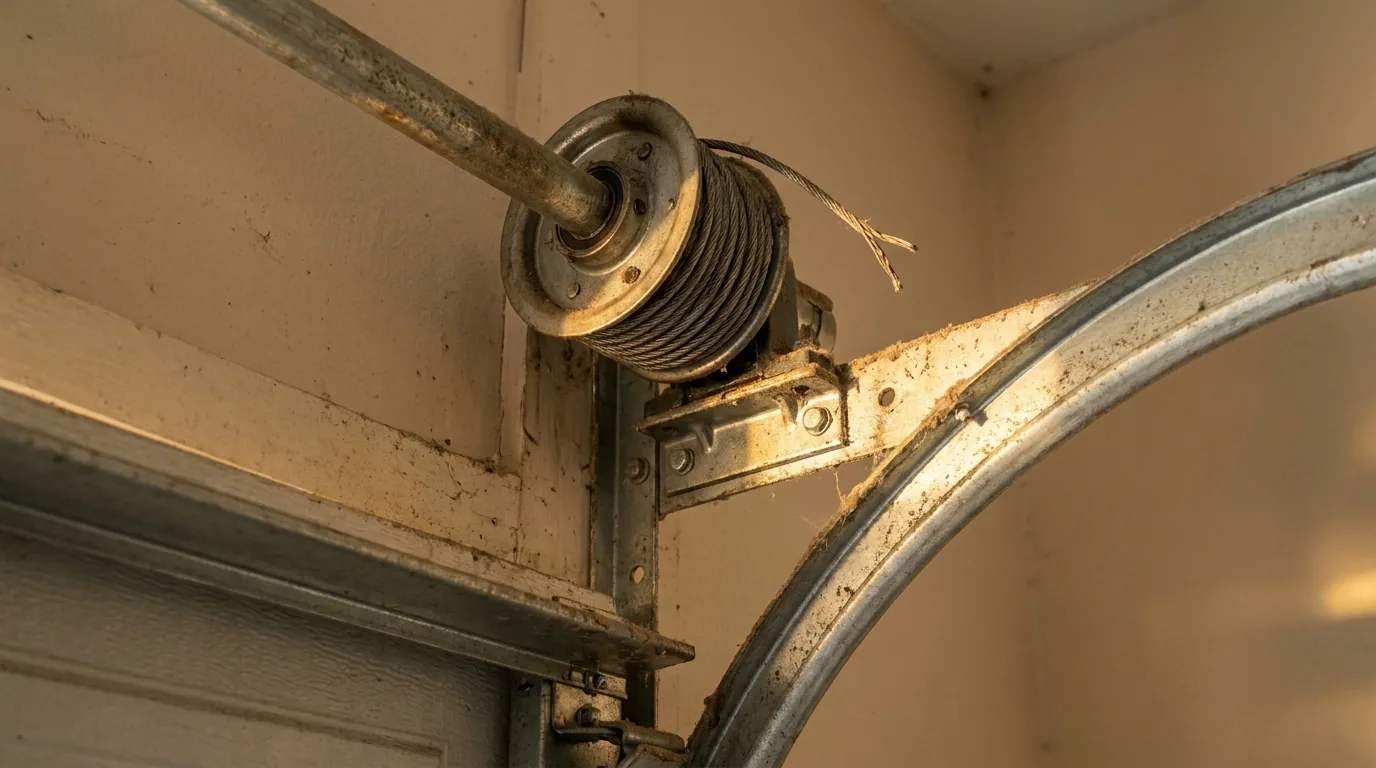
If the door looks level and closed, look at the horizontal tracks that run back into the garage. The cables are the thin steel lines running from the bottom corners of the door up to the drums above the tracks. A cable that has come off its drum is usually visible from the floor, either draped loose across the track or wound unevenly around the drum.
Do not reach up and try to reseat a cable by hand. Do not try to lift the door to test it. Both put you in the path of stored energy that is not currently under control. What you are doing here is looking, not touching.
What a broken torsion spring looks like
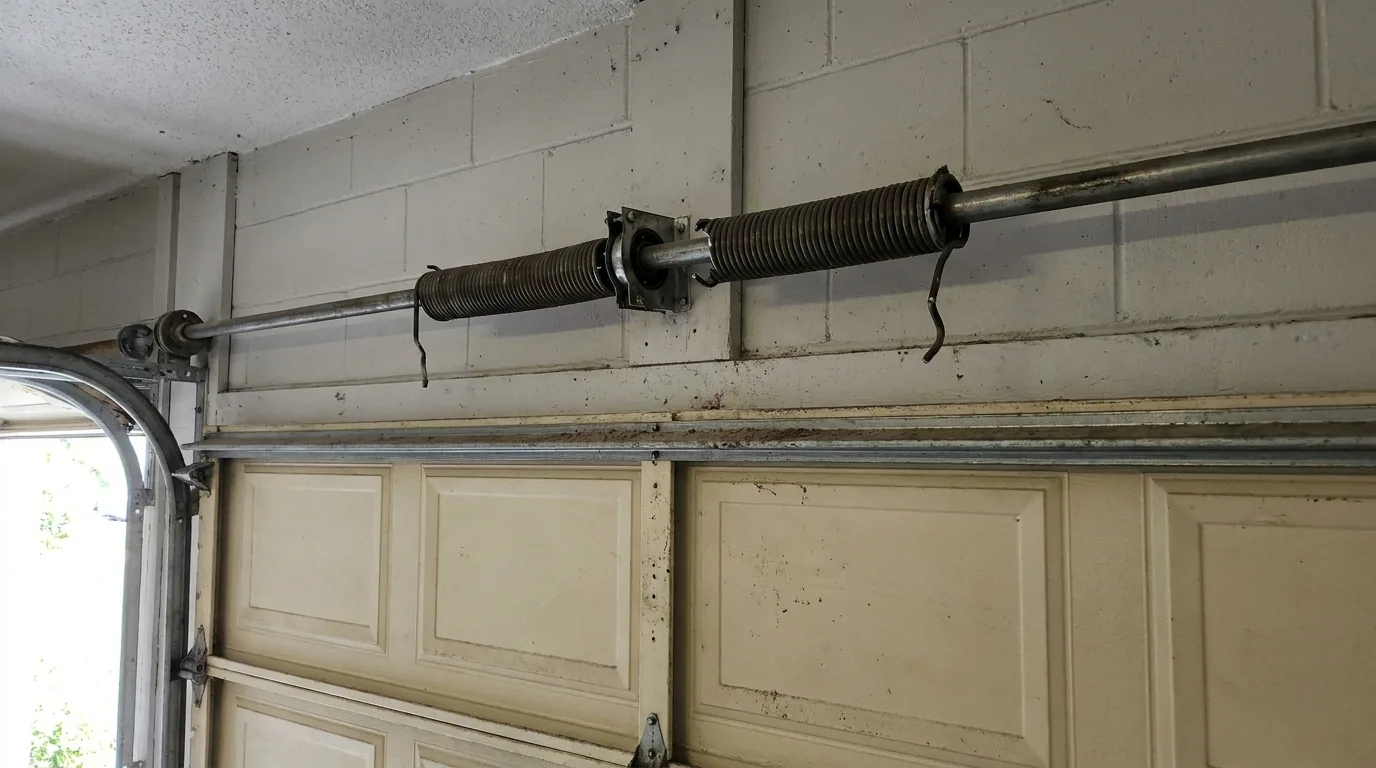
The torsion springs are the horizontal coils mounted on the shaft above the door, running parallel to the header. Most doors have one or two, depending on the door's weight. When one breaks, the coil separates. You will often see a gap of an inch or more between the two halves, and the two ends no longer line up. Sometimes a short piece of the spring has dropped onto the top section of the door or onto the floor below it.
A torsion spring carries the full weight of the door. When it breaks, that weight is no longer balanced. The door may drop hard, or it may stay where it is because the opener is still holding it. The opener is not designed to hold that load. Running it again is how a spring repair becomes a spring-and-opener repair.
If you see a separated spring, stop using the door. Leave it closed if it is closed. If it is open, leave it open and keep people and pets out from under it.
What a cable off the drum looks like
A cable that has come off its drum produces a similar snap, but the door's behaviour is different. The door may hang at an angle, with one side lower than the other. The cable itself is usually visible, either slack across the track or wound unevenly around the drum.
Cables are under tension whenever the door is not fully open with the springs relaxed. A cable that has come loose can whip. This is not a part to inspect closely with your face near the track. Look from a distance, note what you see, and call.
When the snap was not a spring or a cable
Not every sharp noise from the garage comes from the torsion assembly. A few other things produce a snap or a pop, and they are worth ruling out because the response is different.
- A dry or seized steel roller. A steel roller that has lost lubrication, or has developed a flat spot, squeals and pops as it travels through the track. The noise is usually repetitive and tied to movement rather than a single event.
- A stripped opener gear. If you press the button and hear the motor run but the door does not move, the gear inside the opener may have stripped. You hear the motor — sometimes with a grinding or snapping sound — and see no travel.
- A track that has pulled loose from its fastener. A lag bolt that has backed out of the header or jamb lets the track shift, and the door bangs or pops as it passes that point.
- An object in the track. A pebble or a piece of fallen hardware in the track produces a sharp knock each time the roller passes it.
These are all things a technician can identify quickly on site. None of them should be diagnosed by running the door over and over to see whether the noise comes back.
What to do while you wait for service
If the door is open and you see a broken spring or a cable off the drum, leave it open. Do not try to close it manually. The door is no longer balanced and can come down hard.
If the door is closed and you see either of those things, leave it closed. Do not run the opener to see whether it will open anyway. That is how a spring replacement becomes a spring, cable, and opener replacement.
If the door is closed and level, and you see no separated spring and no loose cable, the safest course is still to leave the door alone until a technician has looked at it. A snap loud enough to hear from inside the house means something in the assembly changed. The door may look normal and still be holding on a part that is no longer doing its job.
When you call, describe what you saw: whether the door is level, whether there is a visible gap in the spring coil, whether a cable is off the drum, and whether the opener still runs. That information lets the technician arrive with the right parts and the right plan. CrownLift Garage Doors is licensed and insured and serves Broward County. Reach the team at (877) 897-6132 or service@crownliftgarage.com.