A garage door is one of the few things in a house that tells you what is wrong with it out loud. The sound it makes at the start of a cycle, on the way up, or on the way down comes from a specific part of the assembly, and the four sounds homeowners describe most often, squeal, rattle, bang, and scrape, each lead somewhere different. This guide is about reading those sounds from the garage floor, sorting the ones that are routine from the ones that mean stop using the door, and knowing exactly where your work ends. Springs, cables, rollers, and the opener drive train are technician work throughout. What follows is about listening, observing, and the checks a homeowner can make safely without touching the door's moving hardware.
Why a garage door gets loud at all
A sectional door is a heavy panel assembly riding on rollers inside two tracks, pulled and pushed by an opener, and counterbalanced by springs. Every one of those interfaces, metal roller on metal track, steel hinge pin in steel hinge, opener rail against its trolley, is a place where movement can turn into noise. On a door that is properly adjusted and in good repair, the sounds are quiet and uniform. When something loosens, dries out, wears, or shifts, one interface starts making more noise than the others, and the character of that noise is what tells you which one.
Humidity and coastal air are hard on steel, and hardware in a garage that opens to outside air will corrode faster here than in a dry climate. A rusted roller bearing no longer rolls, it drags, and a dry hinge pin squeals as the door goes around the curve. That much can be stated plainly. What you should not do is assume every new noise is weather-related. A rattle that started this week is more likely a loose fastener than a seasonal change, and treating it as weather leaves the real problem in place.
The squeal: a rotating part that is dry or worn
A squeal is a high, continuous sound that tracks the door's movement, rising and falling with speed. It comes from something that should rotate freely but is instead dragging or running dry. Several parts can produce it, and they are not distinguishable by ear alone:
- A roller with a dry or failed bearing. The roller should spin inside its housing. When the bearing dries out or corrodes, the roller skids along the track instead of rolling.
- A hinge with a dry pin. The hinge plates pivot as the door rounds the curve, and a dry pin squeals at that transition.
- The opener's rail or trolley. Some drives have contact points that squeal when they dry out.
The test that separates these is location, not force. With the door closed and nobody cycling it, listen from the garage floor while a helper runs the door and note where the sound seems loudest: along the vertical tracks, at the hinge line where the door curves, or up at the opener rail overhead. That observation is safe and useful. What is not safe is spraying lubricant into the spring, the cable, or the opener drive train, or reaching into the track assembly to feel a roller. Tell a technician what you heard and where, and the inspection of rollers, hinges, and drive components is theirs to do.
The rattle: something has lost its preload
A rattle is a loose, knocking sound rather than a sustained tone. It usually shows up at the start of a cycle, at the reversal points, or when the door changes direction, and it points to hardware that has worked loose. Common sources include loose hinge bolts, a bracket that has backed away from a panel, a roller stem sitting loosely in its hinge, and the opener's hanging brackets or rail fasteners. On a light commercial door, the same symptom often comes from a fastener that has backed out under repeated cycles.
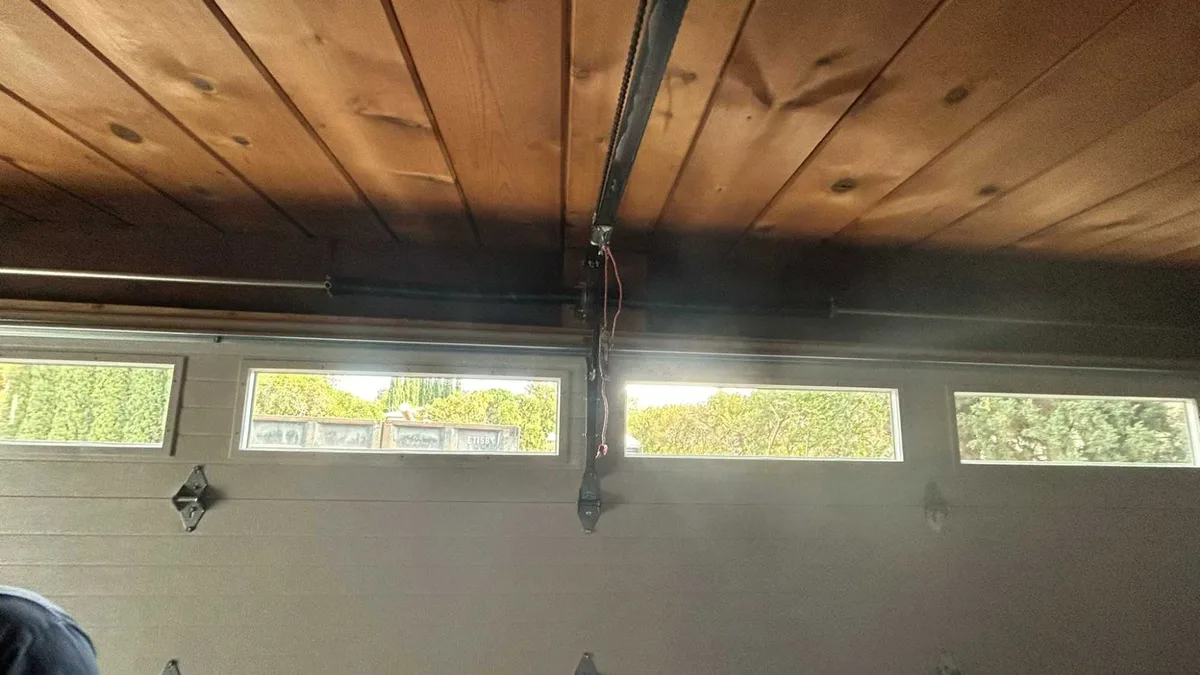
Rattle is the one category where a homeowner can gather useful information without touching moving hardware. With the door closed and the opener off, a visual check of the fasteners from the floor will show a bolt that has clearly backed out or a bracket hanging away from its panel. Note it and leave tightening to a technician, because the torque on door hardware matters and an overtightened bolt can crack a panel or strip a hinge. If the rattle comes with the door sitting crooked or a gap along the top, stop cycling it and treat it as a possible cable or spring problem rather than a loose bolt.
The bang: a one-time report versus a repeated knock
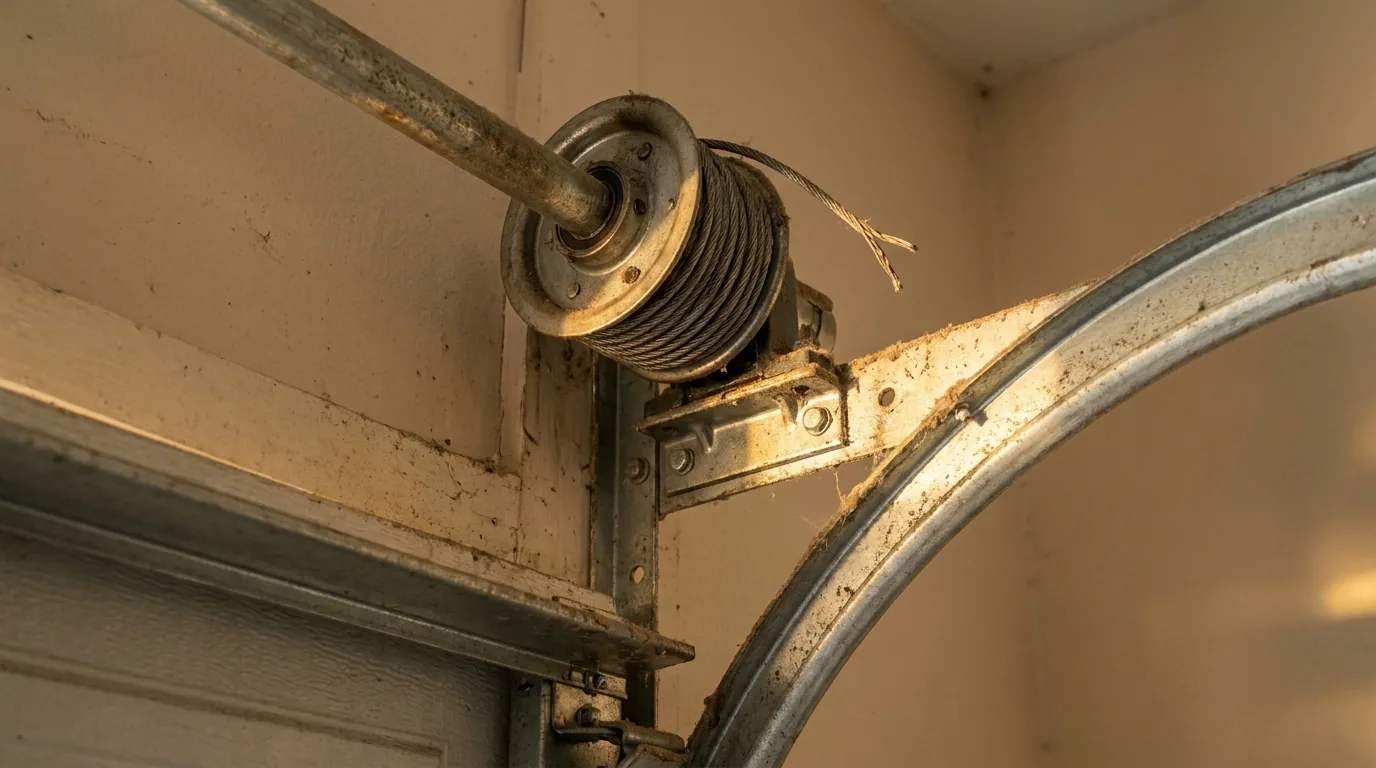
A single loud bang from the garage, especially one followed by the door feeling much heavier in normal use, is the sound of a torsion spring breaking. A broken torsion spring cannot hold the door's weight, and that is mechanically certain. The door may still open partway under opener power, but the counterbalance is gone and the opener is lifting the full weight of the door, which is exactly the job the springs exist to do. Stop using the door and call for service. Do not try to open it by hand and do not pull the emergency release to move it yourself.
Not every bang is a spring. A door that bangs once at the end of travel, every cycle, is more likely reaching a travel limit or coming down hard because a force setting is wrong, and a knock at the start of a cycle can be the opener's trolley taking up slack. The distinction matters: a single bang with a heavy-feeling door afterward is a spring; a repeated bang at the same point in every cycle is an adjustment issue. If you are unsure which you heard, keep the door closed and have it inspected. Both fall within the repair and spring work a technician performs, and CrownLift Garage Doors can be reached at (877) 897-6132 if you want to talk it through.
The scrape: metal contacting metal along the travel
A scrape is a grinding, dragging sound that follows the door along part of its travel. It usually means a panel, a roller, or a hinge is contacting something it should clear: a track knocked out of plumb, a roller that has come out of its track, a bent track section, or a panel that has shifted. A scrape is a fit problem, not a lubrication problem, and adding lubricant will not fix it. Continuing to cycle the door grinds the affected parts and can bend a track further.
From the floor, with the door closed and the garage empty, you can often see the evidence without touching anything: a track visibly out of line with its partner, a gap between door and frame that was not there before, or a door sitting crooked in the opening. Any of those together with a scrape is a reason to stop using the door and have the track and rollers inspected. Track alignment and roller replacement are technician work.
What maintenance prevents, and what it does not
Routine service on a garage door is mostly about the parts that wear: rollers, hinges, the opener's moving components, and the fasteners that hold everything together. A technician inspects the springs and cables, checks track alignment, verifies the opener's travel and force settings, and lubricates the points meant to be lubricated. That work addresses squeal and rattle at their source and catches the conditions that lead to scrape and bang before they strand the door.
What maintenance does not do is make a worn part new or correct a spring that has already broken. If your door has started banging, scraping, or feeling heavier, the right next step is diagnosis, not a lubrication routine. CrownLift Garage Doors serves homeowners and light commercial customers across Broward County, including Hollywood, Fort Lauderdale, Hallandale Beach, Dania Beach, Davie, Pembroke Pines, Miramar, Weston, Sunrise, Plantation, Cooper City, Southwest Ranches, West Park, Pembroke Park, Aventura, and North Miami Beach. The company is licensed and insured and offers garage door repairs, springs, openers, new installation and replacement, and commercial garage doors. Reach the team at (877) 897-6132 or service@crownliftgarage.com. Weekday hours are 7:00 AM to 8:00 PM, weekend hours are 8:00 AM to 6:00 PM, and emergency service is available.
One last note on listening: a noise that changes is more informative than one that stays the same. A squeal that appears only on the first cycle of the day, a rattle that shows up only on the way down, a scrape that began after a car nudged the track, each of those narrows the search. Write down what you hear, when in the cycle you hear it, and whether the door still moves evenly. That description is the most useful thing you can hand a technician, and it costs nothing to gather.