When the power goes out in Broward County, the garage door is usually the first thing a homeowner notices. The opener clicks, nothing moves, and the car is stuck inside. Most modern openers are sold with a battery backup option or built-in battery, and it is one of the few features that earns its place during a storm season. But the backup does less than many people assume, and a battery that has never been tested tends to be discovered at the worst possible moment. This guide covers what the backup actually powers, what it deliberately does not, how the opener behaves when it is running on battery, and how to test it from the garage floor without touching the springs, cables, or the opener's drive train. Those remain technician work. Everything below is about understanding the feature and the checks a homeowner can do safely.
What a battery backup actually does
A battery backup is a small rechargeable battery, usually sealed lead-acid or a similar chemistry, mounted inside or beside the opener head. While the house has power, the opener keeps the battery charged. When the power drops, the opener switches over and can still run the door for a limited number of open and close cycles. The exact number of cycles depends on the battery's condition, the weight of the door, and how the opener manages its draw, so treat any figure you hear as an estimate rather than a promise. The point is not to run the door all day. The point is to get the car out, get it back in, and keep the garage usable until the power returns.
That matters more here than in most of the country. A hurricane or a strong summer storm can take out a neighborhood's power for days, and a garage door that will not open turns the garage into a sealed room. If the garage is also where the generator, the storm shutters, or the water heater live, losing the door is more than an inconvenience. In Hollywood, Fort Lauderdale, Hallandale Beach, Dania Beach, and the rest of the communities we serve, a working battery backup is part of being ready for the season, not a luxury add-on.
What it does not power
The backup runs the opener's motor and its logic board. It does not run the lights on the opener for long, and it does not power anything plugged into the same circuit, such as a garage freezer, a shop light, or a battery charger. It does not run a Wi-Fi module indefinitely, so a smart opener may drop off the app while the house is dark even though the door still responds to the wall button and the remote. It also does not make the door lighter. The springs still carry the door's weight, and the opener still has to move it. A door that is binding, off its tracks, or running on a broken spring will not be rescued by a battery; the opener will strain, and the battery will drain faster.
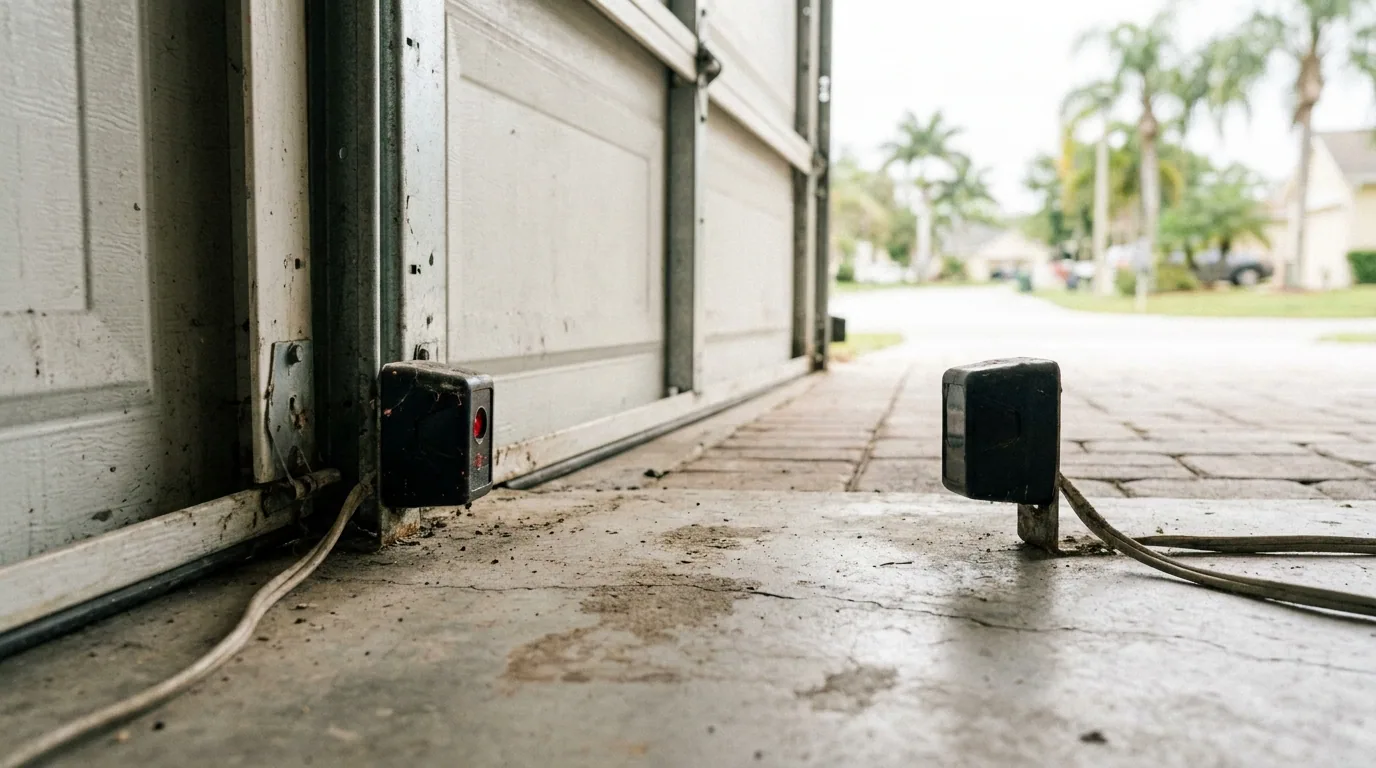
One more limit is worth stating plainly: the backup is for the opener, not for the door's safety devices in the sense of overriding them. The photo-eye still has to be working and aligned for the door to close. If the beam is blocked or the sensors have lost power themselves, the door will still refuse to close on battery, and that is the system doing its job.
How the opener behaves on battery
Most openers signal the switch to battery in a few visible ways. The opener's light may flash, a small indicator on the head or wall control may change color, or the door may move more slowly than usual. Some units beep. The slower travel is normal: the opener is managing its draw to stretch the battery. What is not normal is a door that moves a few inches and stops, or one that reverses immediately. On battery, a door that behaves that way is telling you either the battery is weak or the door is harder to move than it should be, and the two are worth separating before you assume the battery is at fault.
If the door opens and closes normally but slowly, the backup is doing its job. If it opens once and then will not close, check the photo-eye first: a door that reverses on the way down is often a blocked or misaligned beam, and that has nothing to do with the battery. If the door will not start at all, or the opener hums without moving the door, the battery may be discharged, or the opener may have a separate fault. A stripped opener gear, for example, lets the motor run without moving the door whether the power is on or off. The way to tell a dead battery from a mechanical fault is to restore power and try the door again. If it works on house power, the battery is the suspect. If it still fails, the problem is in the door or the opener, and it needs a technician.
Testing the backup safely
The test most manufacturers describe is simple, and it does not require touching any moving hardware. With the door fully closed and the garage empty of people and pets, unplug the opener from the wall outlet, or switch off the circuit breaker that feeds it. Then press the wall button or the remote and watch the door. It should open, and it should close again. Note how it sounds and how fast it moves. Then restore power and confirm the opener returns to normal. Do this once a season, and again before storm season, so you are not learning the battery's condition during an outage.
What you are looking for is not a specific speed but a pattern: the door completes a full cycle in each direction without stalling, reversing, or stopping short. If it does not, stop testing and note what happened. Do not pull the emergency release and move the door by hand, and do not try to assist the door while the opener is running. Both put you in contact with a door that is heavier than it looks, and neither tells you anything the powered test did not.
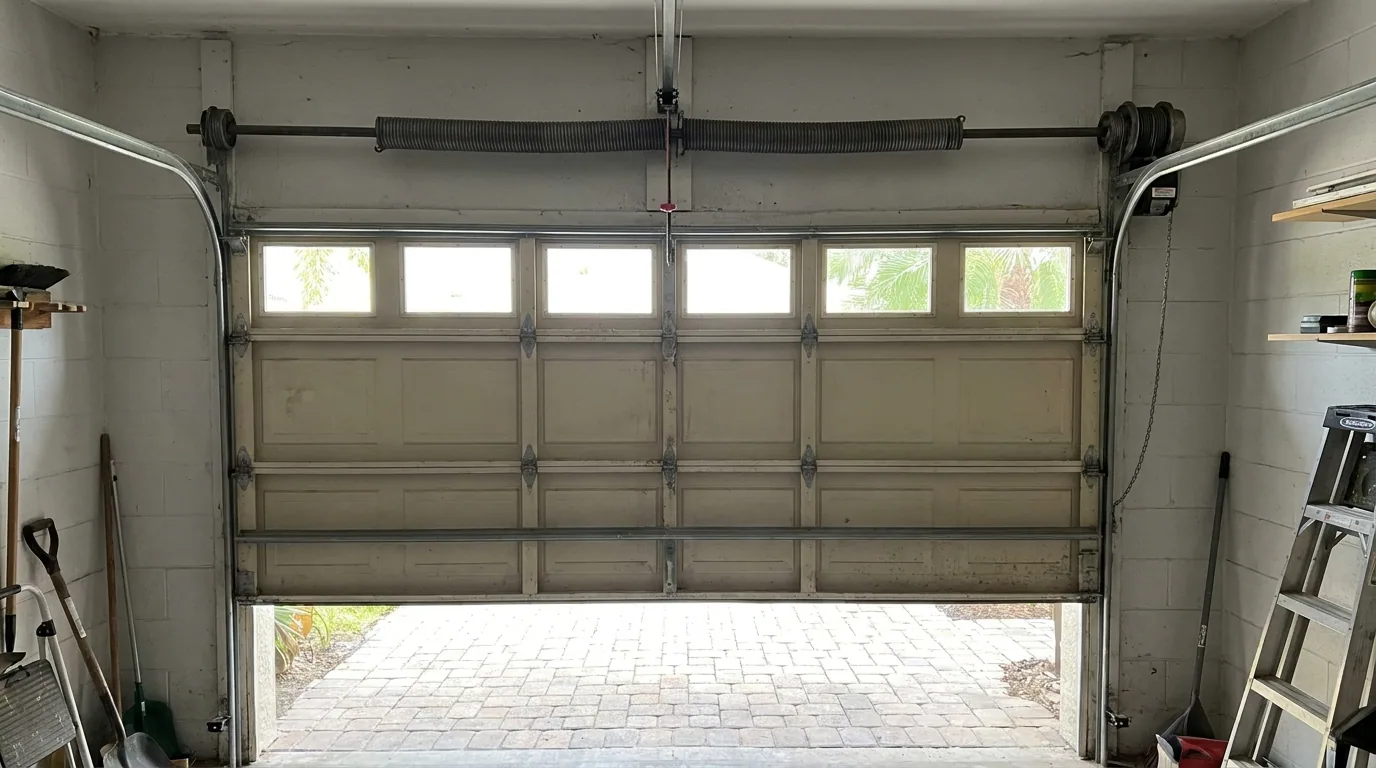
If the door feels heavier than usual in normal use, or if it sits crooked, or if there is a gap along the top when it is closed, those are signs the door itself needs attention. A technician can inspect the springs and cables and check the door's balance properly. A battery backup cannot compensate for a door that is out of adjustment, and running one on battery repeatedly will shorten the battery's life.
Battery care and when to call
Batteries age whether or not you use them. A backup that tested fine two seasons ago may not hold a charge now, and the only way to know is to run the test above. If the door moves only a few inches on battery, or if the opener beeps and refuses to cycle, the battery is the first thing to check. Replacement is a straightforward job, but the battery type and the opener model have to match, and the connection has to be made correctly. If you are not sure, that is a reasonable point to call.
Call a technician as well if the opener runs but the door does not move, if the door reverses before it reaches the floor even on house power, if you hear a new noise at the start of a cycle, or if the door will not stay closed. Those point to the door's mechanical parts or the opener's drive train, not the battery, and they are not homeowner work. CrownLift Garage Doors handles opener service, spring and cable work, and garage door repairs across Broward County, including Davie, Pembroke Pines, Miramar, Weston, Sunrise, Plantation, Cooper City, Southwest Ranches, West Park, Pembroke Park, Aventura, and North Miami Beach. The company is licensed and insured, and emergency service is available. You can reach the office at (877) 897-6132 or service@crownliftgarage.com, Monday through Friday from 7:00 AM to 8:00 PM and weekends from 8:00 AM to 6:00 PM.
A battery backup is a small piece of hardware with a narrow job, and it is easy to forget until the night the lights go out. Test it before the season, keep the door itself in adjustment, and let a technician handle anything that involves the springs, the cables, or the opener's drive train. That is how the feature stays useful instead of becoming a surprise.