A garage door opener that hums, clicks, or runs its motor without lifting the door is one of the more informative failures a homeowner can run into. The unit is getting power, the controls are working, and the motor is turning — so the problem is almost certainly between the motor and the door itself. That narrows things down considerably, and it also means you can gather useful information before anyone touches the door. Springs, cables, and the opener drive train stay with a technician throughout. What follows is what you can safely observe, and how the likely causes are separated.
First, confirm what the motor is actually doing
Stand where you can see and hear the door, and press the wall switch. Listen closely for a few seconds.
- A steady hum with no movement. The motor is running but nothing is being driven. This is the classic case and the one this article is about.
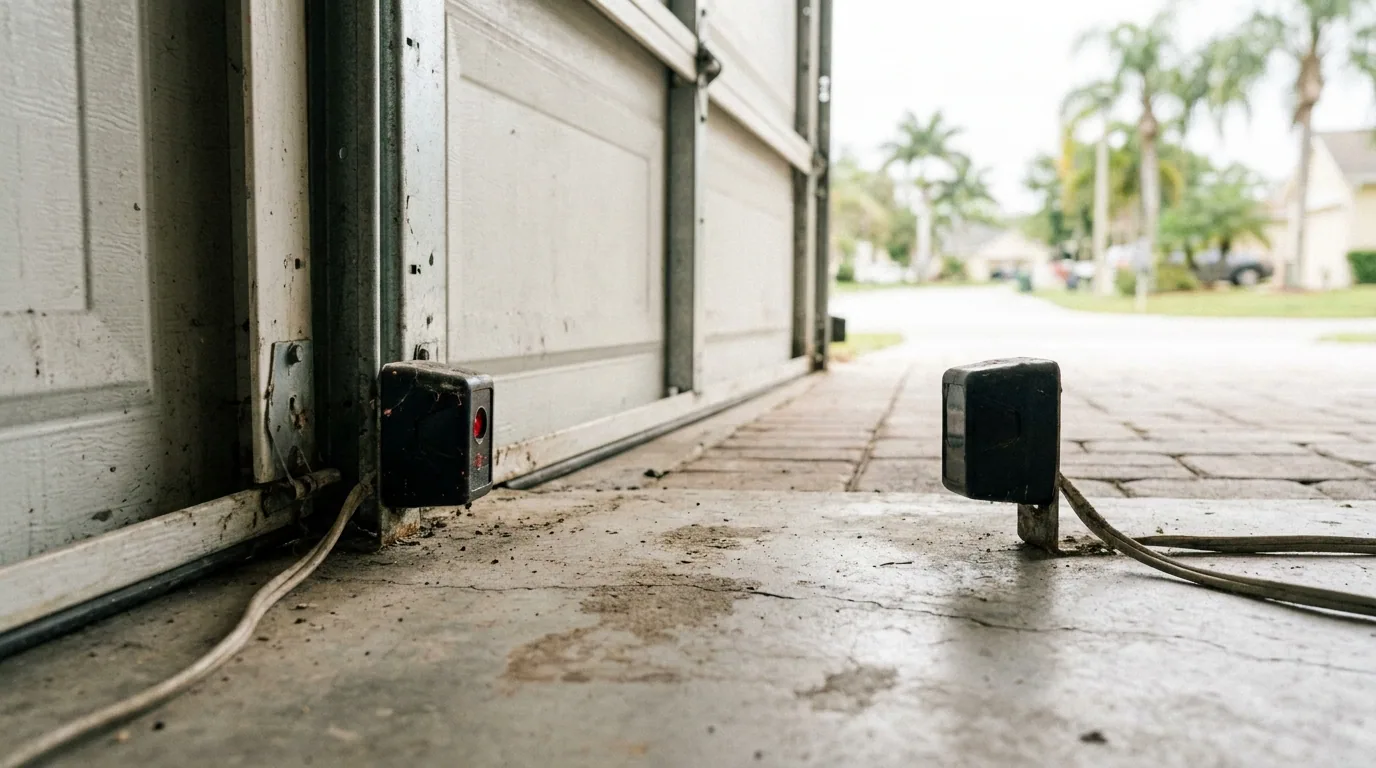
- A brief hum or click, then silence. The unit tried and stopped, which points somewhere else — often a force or travel setting, or a safety device on the closing travel.
- Nothing at all. No sound, no light. That is a power or opener problem, not a drive problem.
It also helps to note whether the door moved at all — even an inch — and whether the noise is new. A door that has been getting louder over a few weeks tells a technician something different from one that failed in a single afternoon.
The stripped gear: one certain explanation
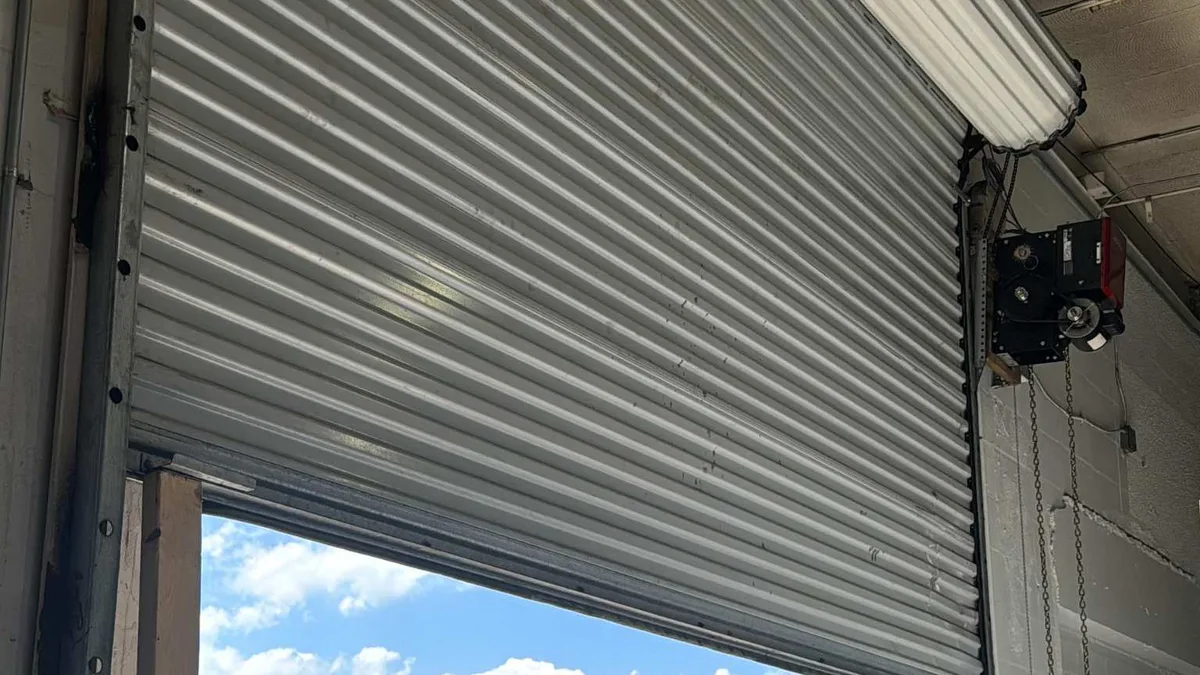
Inside most residential openers there is a plastic or nylon drive gear that turns the chain or belt. When that gear strips its teeth, the motor spins freely and the chain or belt does not move with it. This is mechanically certain: a stripped gear lets the motor run without moving the door. It is one of the most common reasons a homeowner hears the unit running and sees nothing happen.
You cannot confirm a stripped gear from the floor, and you should not open the opener housing to try. What you can do is note the sound. A motor running smoothly with no chain movement at all is consistent with a stripped gear, but it is also consistent with a broken drive chain or a failed drive coupler. The technician separates these by opening the unit and watching the drive train while it runs.
A broken spring or a snapped cable
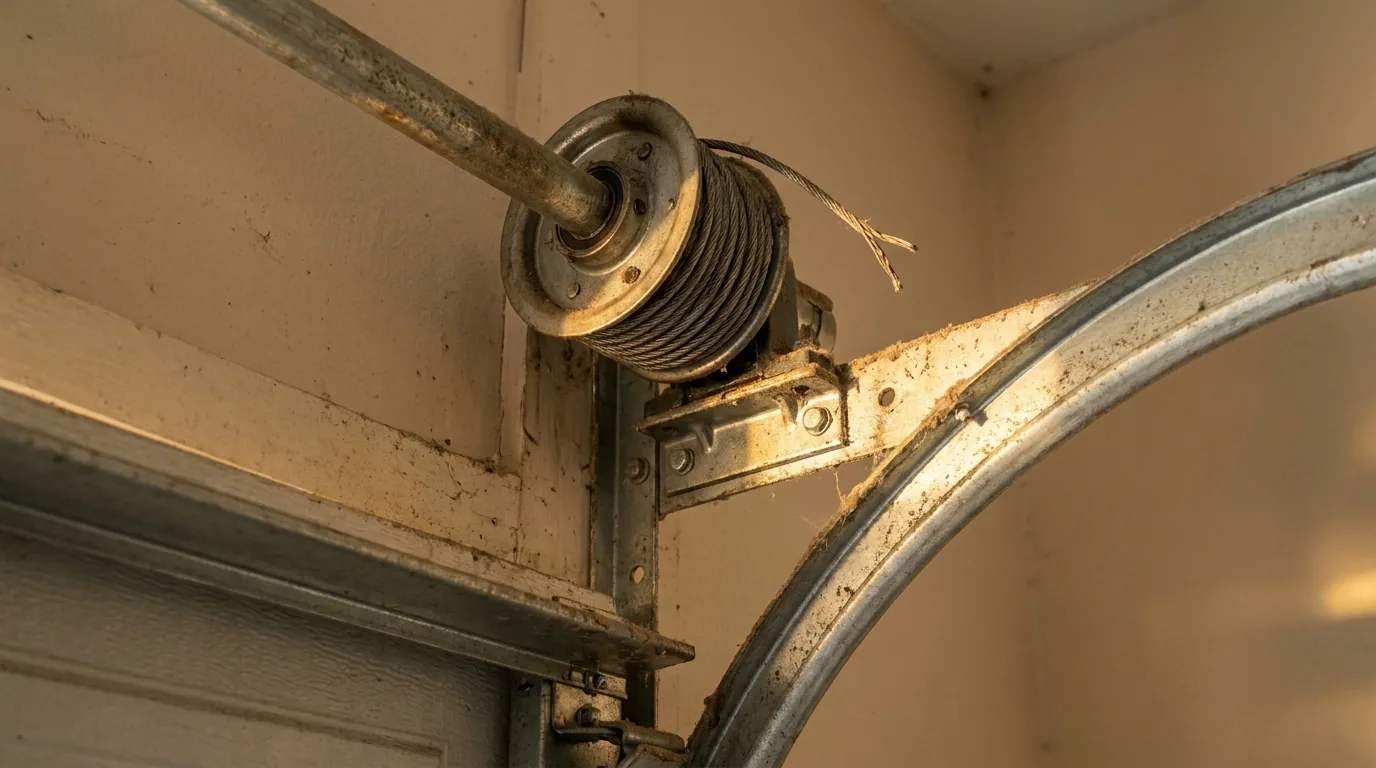
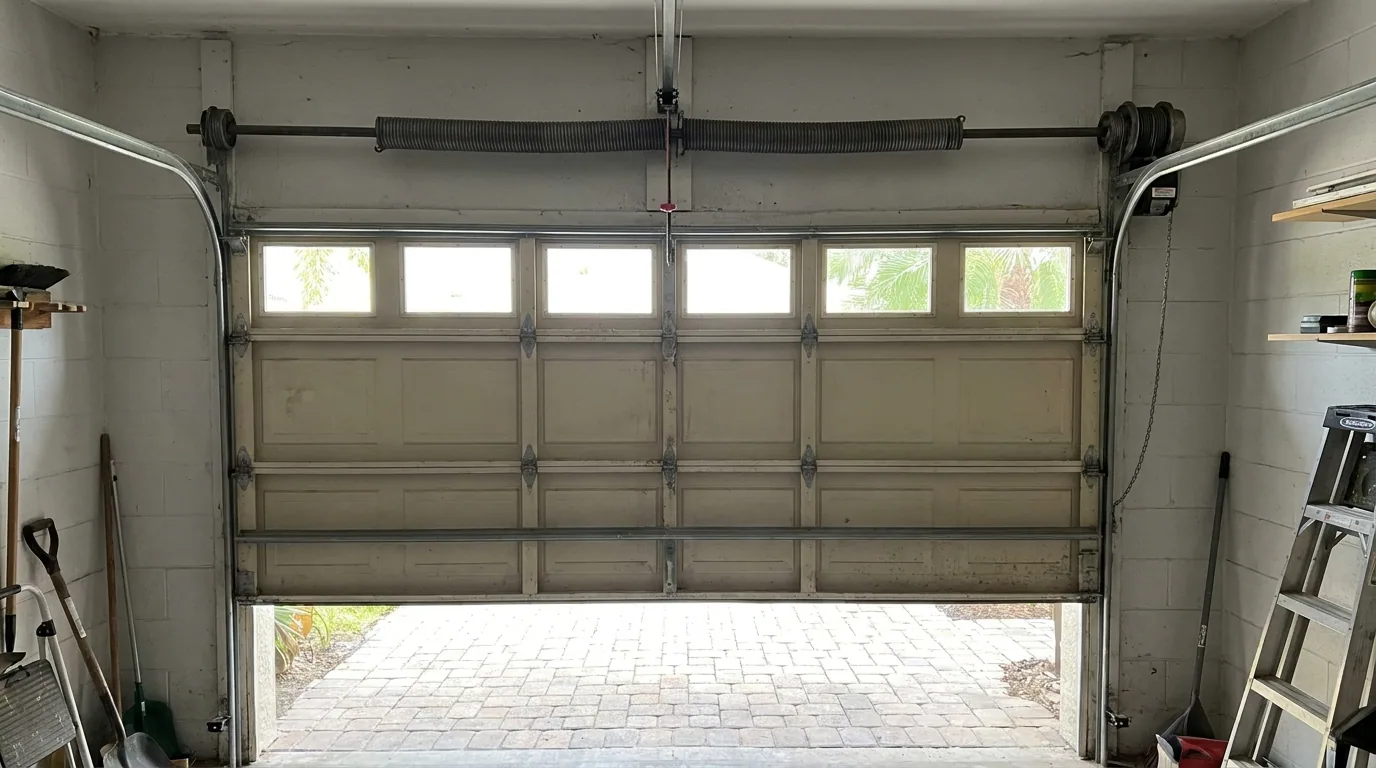
A broken torsion spring cannot hold the door's weight. When one lets go, the opener may still run, but the door does not travel — it may shudder slightly and stop, or the opener may strain against a door it can no longer lift. A door with a snapped cable hangs at an angle, and you can often see that from outside with the garage empty: one side of the door sitting lower than the other, or a visible gap along the top edge that was not there before. A door that feels heavier than it used to when you use it normally is another observation worth passing along.
Do not try to lift the door, test its balance by hand, or pull the emergency release to move it yourself. All of that is technician work, and a door held up by a failed spring or a damaged cable can come down hard.
What the technician checks that you cannot
Once the door is in front of a technician, the diagnosis usually comes down to a short list of parts, and the order they are checked in matters less than watching them work together.
- The drive train. The gear, chain or belt, and coupler are inspected with the unit running. A stripped gear, a slack chain, or a failed coupler each look different once the housing is open.
- The springs and cables. These are inspected for breaks, wear, and proper tension. A door that will not travel under opener power is often a door the springs can no longer counterbalance.
- The tracks and rollers. A bent track or a roller that has jumped its channel can bind the door so the opener cannot move it, even with a healthy drive train.
- The opener's settings. Travel limits and force settings are checked last, because a door that binds will trip the force setting and look like an opener fault when the real problem is mechanical.
This is also the point where a decision gets made about repair versus replacement. A stripped gear on an otherwise healthy opener is a repair. A door with failed springs, damaged cables, and a bent track may be worth discussing as a larger job. Either way, the conversation is more useful once the technician has run the door and watched what actually happens.
What to do before the technician arrives
Stop running the opener. Every cycle with a stripped gear or a failed spring puts more strain on the remaining parts, and a door that is being driven against a bind can damage the tracks. Leave the door where it is, keep the area under it clear, and keep children and pets away from the opening.
Write down what you observed: whether the motor hummed steadily or cut out, whether the door moved at all, whether it looks crooked from outside, and when the change started. That short list saves time on the visit. CrownLift Garage Doors serves Broward County and the surrounding communities, is licensed and insured, and offers emergency service. If your opener is running without moving the door, call (877) 897-6132 or email service@crownliftgarage.com and describe what you heard — it helps route the right parts and the right technician to the job.