A torsion spring is the part of your garage door system that actually holds the door up. The opener does the pushing and pulling, but the spring carries the weight. A spring that has lost its strength changes how the whole door behaves, and the question of when to replace a spring rather than adjust it comes down to how much life is left in the metal. In Broward County, where doors cycle several times a day and the garage sits in heat and humidity year-round, springs take a steady beating. This article walks through cycle life, why springs come in pairs, and the signs of fatigue you can see from the driveway without touching anything. Springs, cables, and the opener drive train are technician work throughout; what follows is about recognizing when to call.
What a torsion spring does, and why it wears out
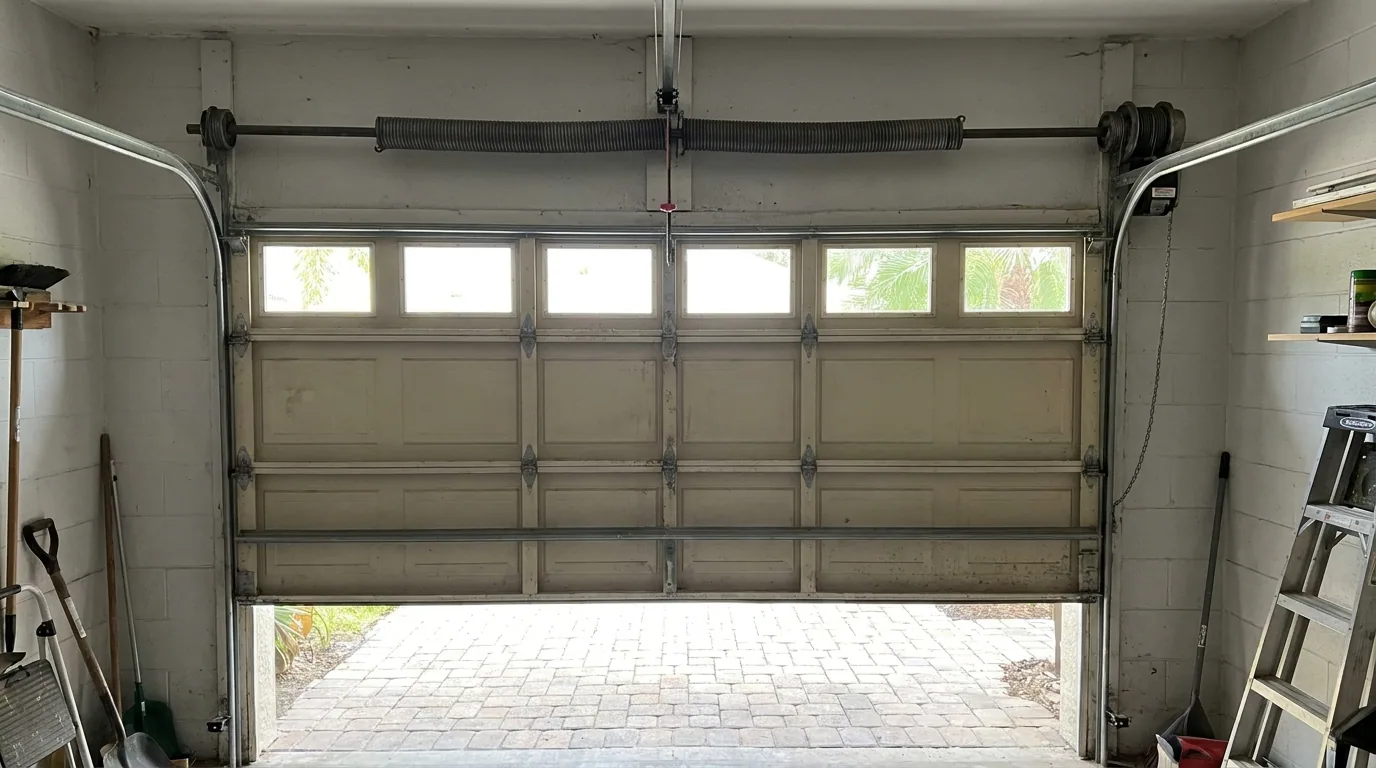
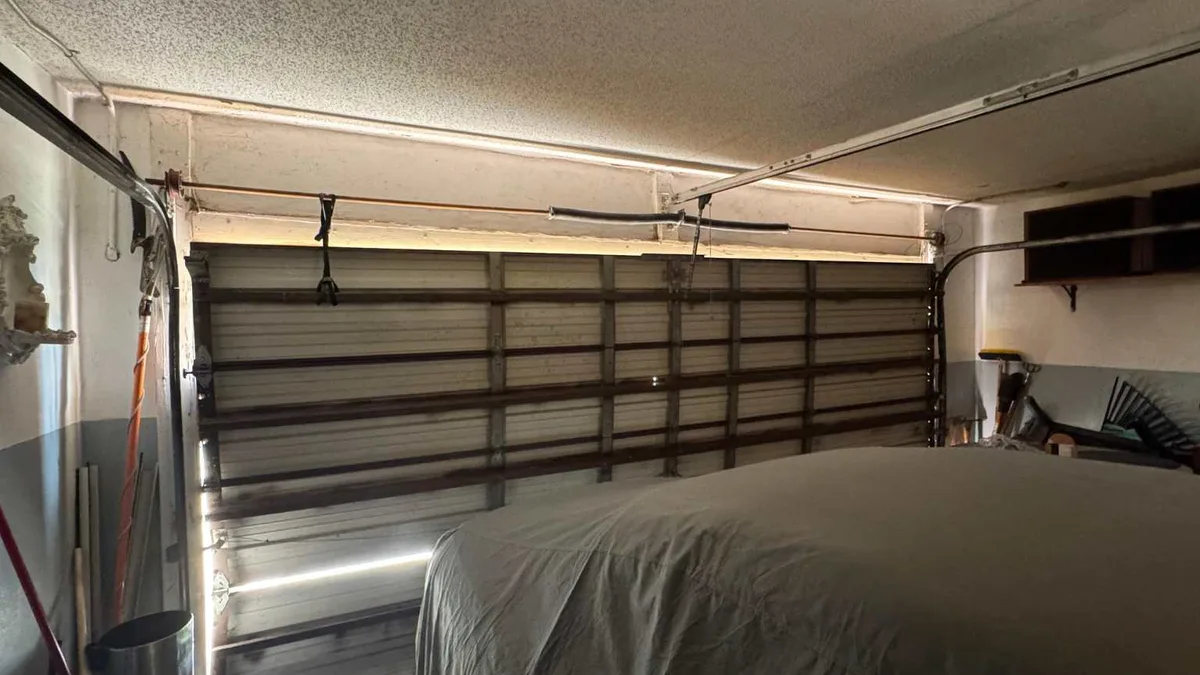
A torsion spring is a coil of steel mounted on a shaft above the door. When the door closes, the spring winds tighter and stores energy. When the door opens, that stored energy unwinds and helps lift the door. The spring is sized to roughly counterbalance the weight of the door, so the opener only has to overcome friction and inertia rather than the full weight of the door itself.
Every open-and-close cycle flexes the steel. Over thousands of cycles, the metal fatigues and the spring loses some of its ability to hold the door's weight. This is normal wear, not a defect. A spring does not fail because it is old in years; it fails because it has been cycled a certain number of times. A door that runs four or five times a day in a busy household reaches that count far sooner than a door that runs once a day. That is why two doors of the same age can be in very different condition.
When a spring loses strength, the opener starts doing work the spring used to do. The door feels heavier in normal use, the opener strains, and the whole system gets noisier. Left alone, a weakened spring eventually breaks.
Why springs come in pairs
Most residential torsion systems use two springs, one on each side of the center bracket. They are matched, and they share the load. When one spring breaks or weakens, the other is left carrying more than it was designed for, and it usually follows.
This is why replacing a single spring on a paired system is rarely the right call. A technician will typically recommend replacing both at the same time, because a new spring paired with a worn one will be under uneven load from day one. The same logic applies to adjustment: if one spring has lost tension and the other has not, you are not restoring balance by adjusting the weak one back to match a fatigued partner. The metal itself has changed, and adjustment cannot put back strength that is no longer there.
Adjust versus replace: what separates the two
Adjustment is the right answer when the springs are still sound but the door has drifted out of balance — for example, after a door has been rehung, after a panel has been replaced, or when the door sits slightly off level and the spring tension no longer matches the door's weight. In those cases the springs still have life in them, and a technician resets the tension to bring the door back into balance.
Replacement is the right answer when the springs themselves have lost strength or failed. The distinction matters because adjusting a fatigued spring only buys a short window before the door is out of balance again. A technician can tell the difference by measuring how the door behaves through a full cycle and by inspecting the springs and cables directly. That inspection is technician work — springs are under high tension and are not something to handle or examine up close yourself.
What you can do from the driveway is observe. The signs below are the ones that point toward replacement rather than a simple adjustment.
Signs of fatigue you can see without touching anything
With the garage empty and the door running normally, watch and listen. None of the following requires you to touch a spring, a cable, or the opener drive train.
- The door feels heavier in normal use. If the door seems to take more effort to raise during an ordinary cycle — or the opener labors noticeably at the start of a lift — the spring may no longer be carrying its share of the weight.
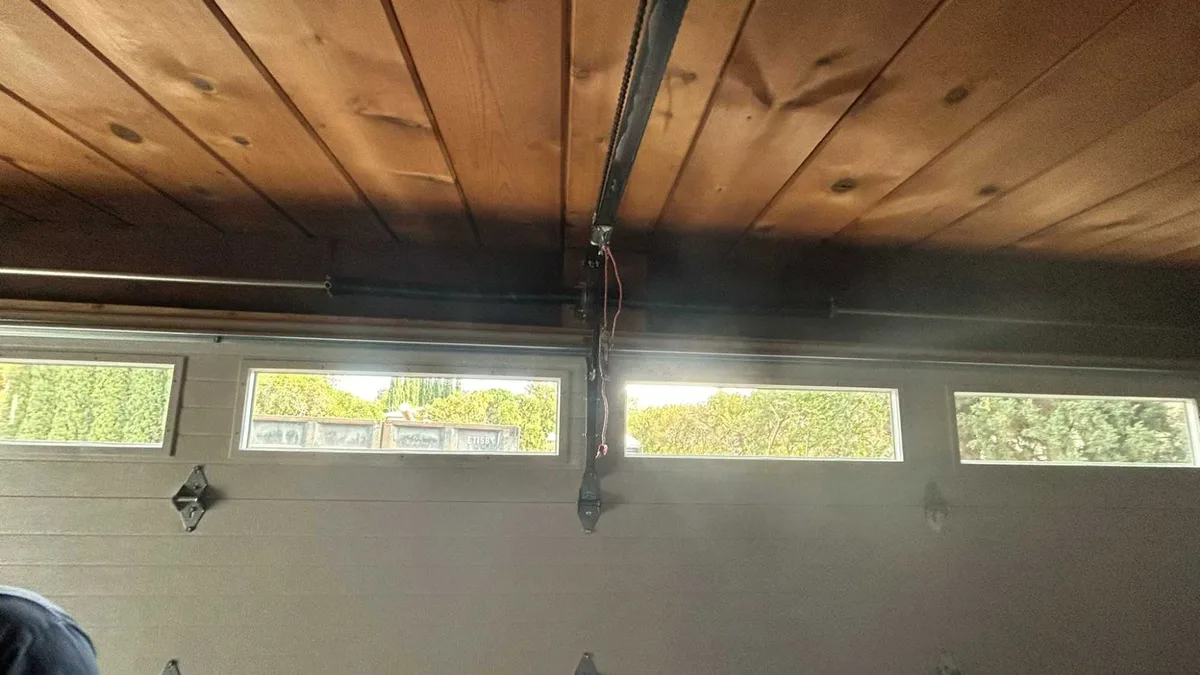
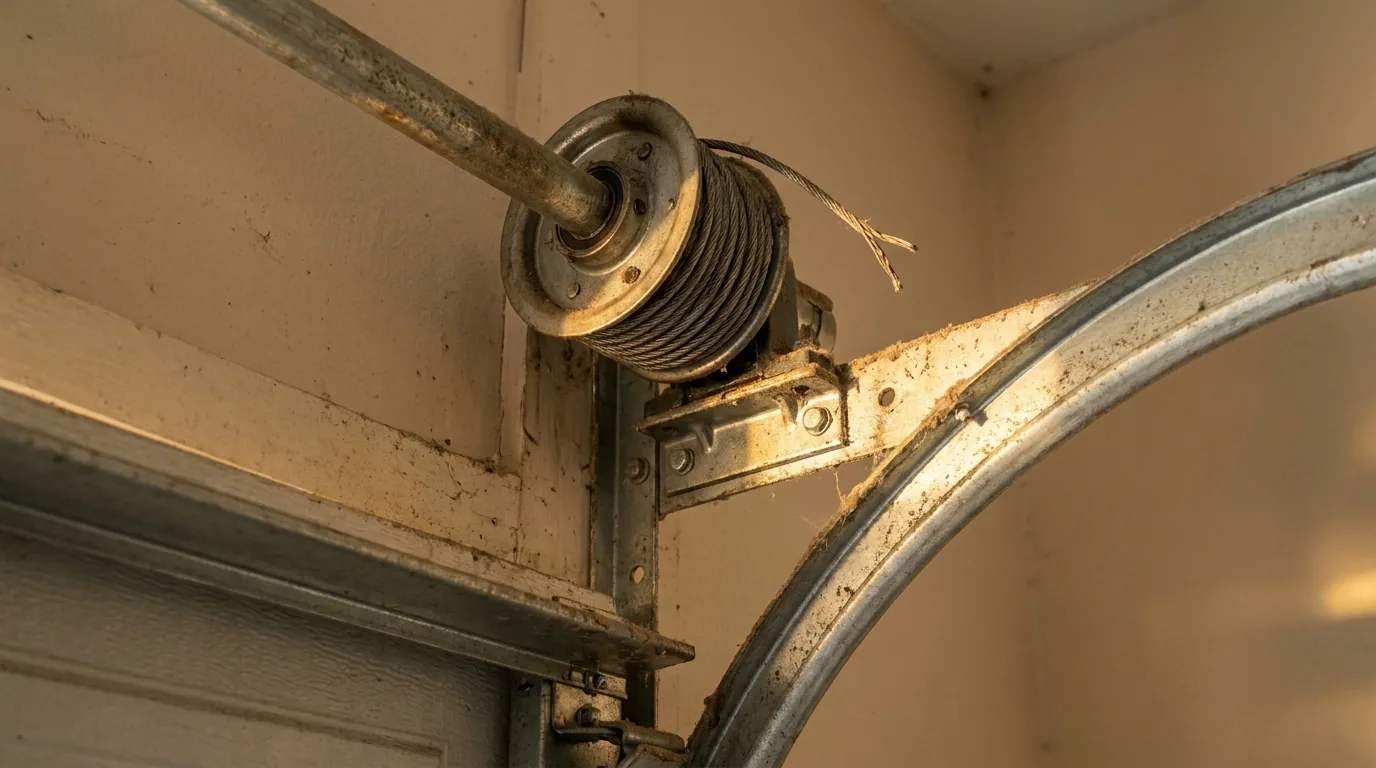
- The door sits crooked. A door that finishes a cycle visibly out of level, with one side higher than the other, can point to a snapped cable, a broken spring, or a bent track. Those are three different problems with three different fixes, and a technician's inspection is what separates them. Do not assume it is the spring.
- A gap along the top of the door. If the door closes but leaves a visible gap at the top, the spring may not be holding the door at full travel, or the travel limits may have drifted. A technician checks both.
- A new noise at the start of a cycle. A bang, a snap, or a heavy thud at the beginning of a lift is worth noting. A squeal can come from a roller, a hinge, or a dry bearing, so the noise alone does not identify the cause — but it is a reason to have the system inspected.
- The door will not stay up on its own. If the door starts to come down as soon as the opener releases it, the spring is not holding the weight. Stop using the door and call for service.
A broken torsion spring cannot hold the door's weight, and a door with a snapped cable hangs at an angle. Both are stop-using-it-today situations. If you see either, leave the door where it is and call CrownLift Garage Doors at (877) 897-6132.
What a technician checks that you should not
When a technician arrives, the inspection covers the parts that carry the door's weight and the parts that move it. The springs and cables are checked directly, along with the drums, the center bearing plate, and the track alignment. The opener drive train — the gear, the rail, the chain or belt — is checked separately, because a stripped opener gear lets the motor run without moving the door, and that is a different repair from a spring replacement.
Balance is measured through a full cycle rather than by hand. A technician will run the door and watch how it travels, then check the spring tension against the door's weight. If the springs are sound, the fix may be an adjustment. If they have lost strength, replacement is the answer, and on a paired system both springs are replaced together.
This is also the moment to look at the rest of the system. Rollers, hinges, and the bottom seal wear on their own schedule, and a door that has just had its springs replaced is a good candidate for a general service visit. CrownLift Garage Doors handles garage door springs, garage door repairs, and garage door openers across Broward County, including Hollywood, Fort Lauderdale, Hallandale Beach, Dania Beach, Davie, Pembroke Pines, Miramar, Weston, Sunrise, Plantation, Cooper City, Southwest Ranches, West Park, Pembroke Park, Aventura, and North Miami Beach.
When to call rather than wait
Springs rarely fail without warning. The warning is usually a door that has been heavier, noisier, or slightly off level for a while. If you have noticed any of the signs above, the right move is to have the system inspected before the spring breaks — a broken spring can leave the door stuck, and running the opener against it can damage the opener as well.
CrownLift Garage Doors is licensed and insured and serves Broward County from 2350 NW 66th Ter, Hollywood FL 33024. Weekday hours are 7:00 AM to 8:00 PM, weekend hours are 8:00 AM to 6:00 PM, and emergency service is available. Call (877) 897-6132 or email service@crownliftgarage.com to schedule an inspection. Leave the springs, cables, and opener drive train to the technician; your job is to notice the door behaving differently and make the call.