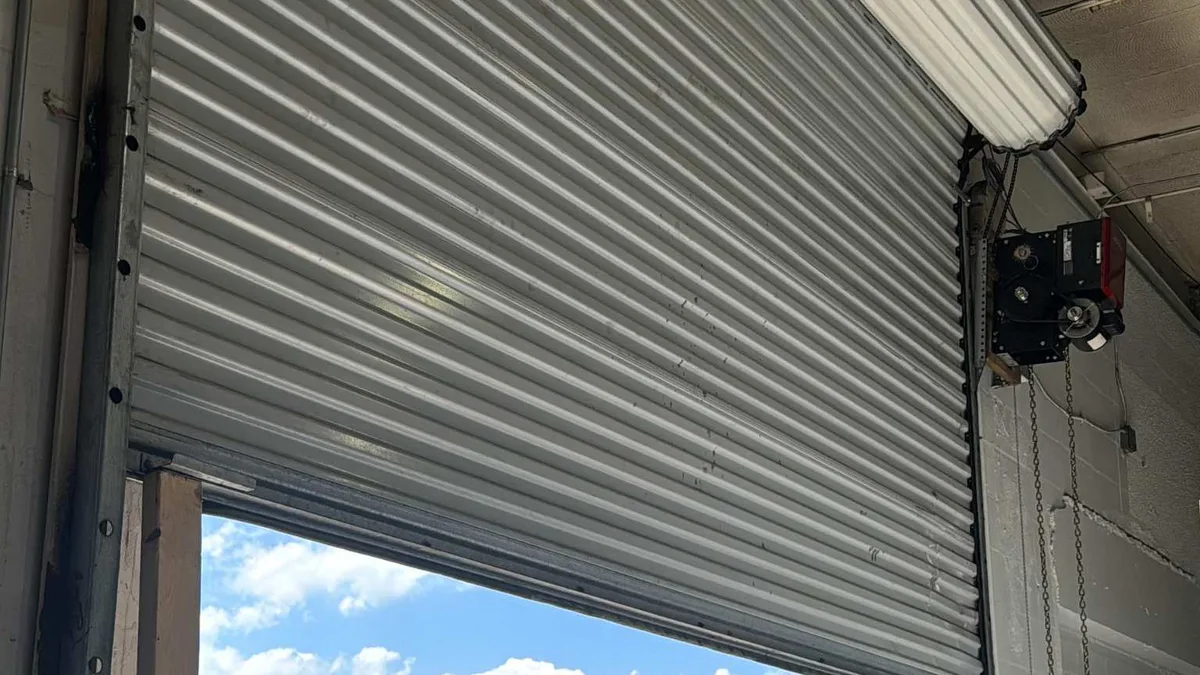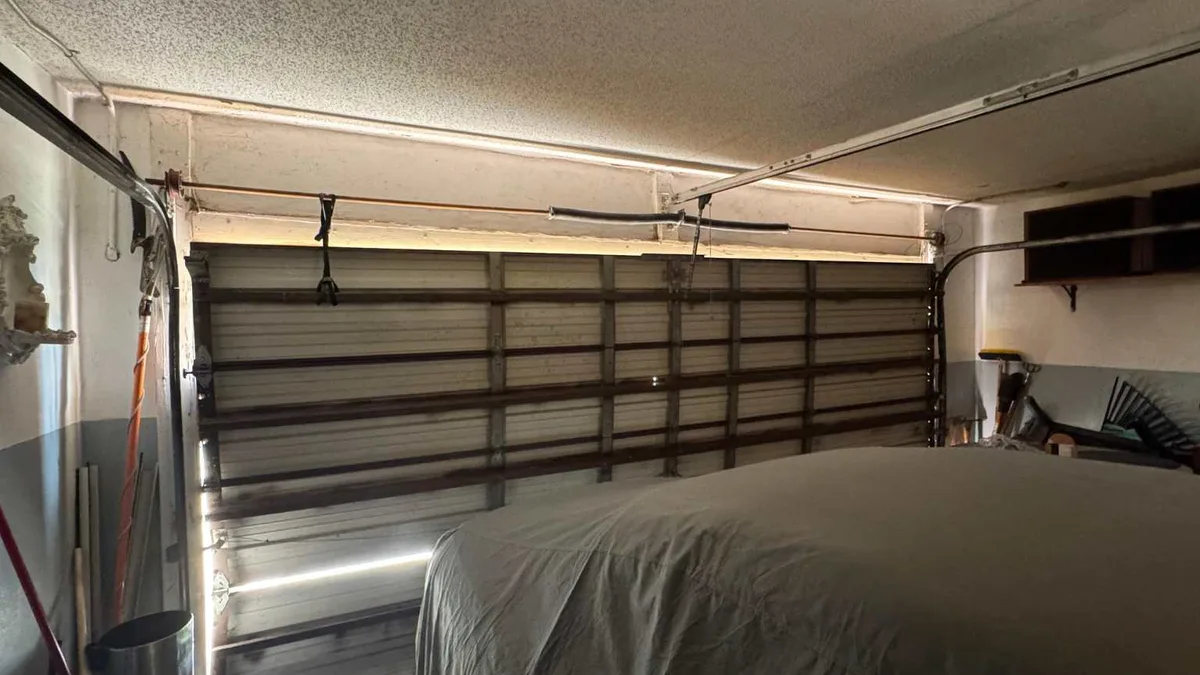
If a bedroom sits directly above the garage, the opener stops being a piece of equipment in a utility space and becomes something the whole house hears. A door that cycles at 6 a.m. on a weekday, or at 11 p.m. when a teenager comes home, sends its sound straight up through the ceiling assembly. That is why the belt-versus-chain question comes up so often in homes with rooms over the garage. The two drive types do the same job, but they transmit noise differently, and the difference matters more in that layout than in a house where the garage sits apart from the sleeping areas.
What each drive actually is
Both openers use a motor mounted at the center of the ceiling, a rail that runs back toward the door, and a carriage that rides the rail and pulls the door. The difference is the loop that moves the carriage.
- Chain drive: a steel roller chain, similar in construction to a bicycle chain, loops around a sprocket on the motor and an idler at the door end. It is strong, it tolerates heat well, and it is the older and more common design.
- Belt drive: a reinforced rubber or polyurethane belt, usually with steel cords molded inside, runs the same loop. It needs a toothed pulley rather than a sprocket, and it is quieter in normal operation.
Neither is inherently more reliable. Both wear, both need the rail to be aligned, and both will eventually need service. The choice comes down to what you are willing to trade.
Why belt drive is usually the quieter choice under a bedroom
A steel chain running over a steel sprocket makes contact metal-to-metal on every link, and that contact produces a rattle that carries. A belt has no links to slap against each other, so the mechanical noise at the rail is lower. In a room directly above the garage, that difference is audible — not silent, but noticeably softer.
It is worth being clear about what a belt does not fix. A belt-drive opener still moves a heavy door on steel tracks with steel rollers, and those rollers are a separate source of noise. If the door itself rattles, a quiet opener will not make it quiet. If the ceiling above the garage is poorly insulated, sound will find its way through regardless of the drive type. The opener is one contributor among several, and it is worth identifying which one is actually bothering you before you replace anything.
How to tell what you are actually hearing
Before deciding the opener is the problem, run a simple test. Disconnect the opener from the door using the manual release cord — pull it with the door closed, and the carriage separates from the door arm. Then open and close the door by hand.
- If the door is quiet by hand and noisy under power, the sound is coming from the opener or its rail.
- If the door is noisy by hand — squealing, grinding, or a rattle that tracks the door's movement — the source is in the door hardware, not the drive. Dry steel rollers on a track squeal, and worn hinges and loose fasteners rattle. Those are door problems, and changing the opener will not address them.
- If the noise is a repeated clunk timed to the carriage passing a point on the rail, look at the rail and the carriage rather than the drive loop.
Reconnect the carriage when you are done. If the door will not move freely by hand, or feels heavy, stop and have it looked at — that points to spring tension, which is not a homeowner adjustment.
Heat, humidity, and the Florida garage
A garage in Broward County gets hot, and it stays humid. Both drive types live with that. What matters practically is that belts and chains are affected differently by age and environment, and the visible condition of either tells you something. A chain that has gone dry will sound harsh and will wear faster; chain lubricant is part of routine service. A belt should be inspected for cracking, glazing, or fraying, and a belt that is visibly worn should be replaced rather than tightened. Neither inspection requires you to touch the springs, cables, or the opener's internal drive train — those are technician work. What you can do is look and listen.
Choosing between them for a bedroom-over-garage layout
If quiet is the priority and the door hardware is already in good condition, a belt drive is the more direct answer. If the garage runs hot and the door is heavy, a chain drive is durable and simple, and the noise can be reduced by addressing the door hardware and the ceiling assembly rather than the drive alone.
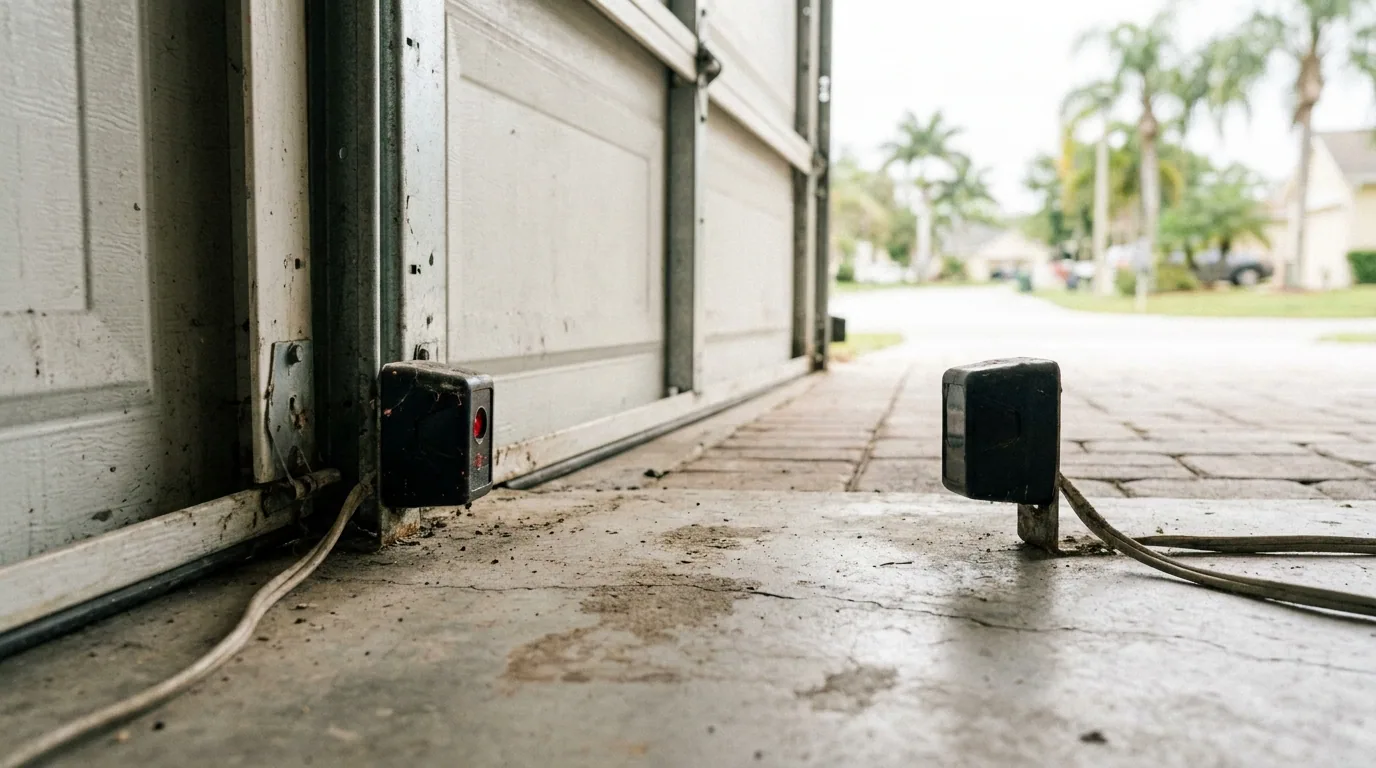
Two other points matter more than most homeowners expect. First, the opener must be matched to the door's weight and size — an opener working near its limit is louder and shorter-lived regardless of drive type. Second, the safety reverse system has to work on whatever you install. Test the photo-eye by passing an object through the beam while the door closes; it should reverse. Test the mechanical reverse by placing a solid object flat on the floor in the door's path.
If you are weighing a replacement in Hollywood, Fort Lauderdale, or anywhere else in the area we serve, the useful next step is an assessment of the whole system — door balance, roller condition, track alignment, and the opener — rather than a decision about the drive loop in isolation. CrownLift Garage Doors is licensed and insured and serves Broward County. You can reach us at (877) 897-6132 or service@crownliftgarage.com. Weekday hours are 7:00 AM to 8:00 PM, weekends 8:00 AM to 6:00 PM, and emergency service is available.