Most homeowners start shopping for a garage door opener by comparing features on a box. That is the wrong end of the problem. An opener is a motor and a drive system sized to move a specific door in a specific garage, and the questions that actually decide the purchase are about your door's weight, the space above it, whether anyone sleeps over the garage, and what you want the door to do when you are not standing in front of it. Get those sorted first and the feature list mostly sorts itself. This guide walks through the decisions in the order a technician would ask them, so you can walk into a conversation already knowing what you need. Anything involving springs, cables, or the opener's drive train stays with a technician; what follows is about choosing, measuring, and understanding.
Start with the door, not the opener
The opener does not carry the door's weight. The springs do. The opener's job is to push and pull a door that is already balanced, and its capacity is rated against that balance. This is why the first question is not which opener but what door you have.
Door weight is a function of material, insulation, and width. A single-car door made of thin steel panels weighs far less than a double-car insulated door with a steel back and a layer of polyurethane. A wood door can be heavier still, and a door with glass panels or a reinforced frame adds more. If you are replacing an opener on an existing door, the old opener's label will usually state its horsepower and its rated lifting capacity, and that is a useful starting point. If the label is gone, or the door has been replaced since the opener was installed, a technician can confirm the door's weight and balance before a new unit is specified.
This matters because an opener that is undersized for the door will run hot, strain, and wear out early. An oversized one is not dangerous, but it is money spent on capacity the door does not need. The correct match is the one rated for your door's weight with a margin, not the largest unit on the shelf.
Belt, chain, screw, and jackshaft: matching the drive to the garage
The drive type is the part of the opener that actually moves the door, and each type trades noise against cost and maintenance in a different way.
Chain drive
A chain drive uses a metal chain running along a rail to pull the trolley. It is the most common type and the most mechanically straightforward. It is also the loudest, because a metal chain running over metal sprockets transmits vibration into the ceiling joists. In a detached garage, or a garage under a bedroom, that noise is the thing homeowners notice first. Chain drives need periodic lubrication to stay quiet, and a dry chain is one of the more common sources of a rattle at the start of a cycle.
Belt drive
A belt drive replaces the chain with a reinforced rubber belt. The belt absorbs much of the vibration the chain would pass into the structure, which makes it noticeably quieter in the room above. It generally needs less lubrication than a chain. The trade-off is that belts can stretch and, over time, need tensioning or replacement. For a garage beneath a living space, a belt drive is usually the reason people choose it, and the reason is sound, not lifting capacity.
Screw drive
A screw drive uses a threaded steel rod turning inside a follower on the trolley. It has few moving parts and no chain or belt to tension, and it sits between chain and belt on noise. It does need grease on the screw to stay quiet and to keep wear down. It is a reasonable choice where a homeowner wants low maintenance and does not need the quietest option.
Jackshaft (wall-mount) drive
A jackshaft opener mounts on the wall beside the door and drives the torsion shaft directly rather than pulling a trolley along a ceiling rail. It is the answer when there is no ceiling space for a rail, when a high-lift or vertical-lift track puts the door up near the ceiling, or when the homeowner wants the ceiling clear for storage. It requires a torsion-spring door and enough side room for the unit. Because it works on the torsion shaft, installation and any later adjustment are technician work without exception.
Headroom, side room, and the measurements that rule out options
Before any drive type is chosen, the garage has to physically accept it. Two measurements decide most of this.
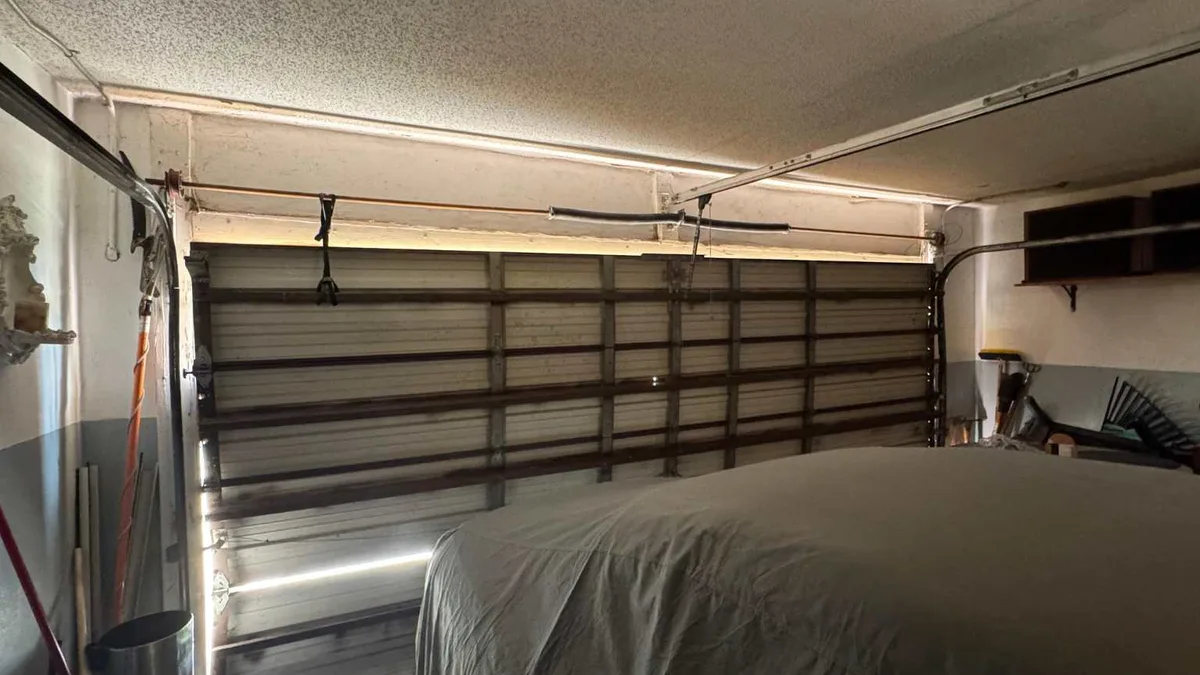
Headroom is the distance from the top of the door, in the open position, to the ceiling. A standard rail-and-trolley opener needs enough room above the door for the rail and the opener head, and the door's track has to be set up to match. A garage with low headroom may need a different track configuration, and if the ceiling is very close, a jackshaft opener may be the only type that fits without changing the door's hardware.
Side room is the clearance beside the door. Jackshaft openers need it; ceiling-mounted units generally do not. If the garage has a tight corner or a wall return close to the track, that rules out a wall-mount before you ever compare features.
There is also the question of what is above the garage. A rail-mounted opener hangs from the ceiling, and in a garage with a finished ceiling, a storage platform, or living space above, the mounting points and the vibration path both matter. A technician surveying the garage will check the ceiling structure, the door's balance, and the track layout together, because an opener that fits the box but not the garage is the most common reason a purchase gets returned.
What the opener should do: safety reverse, battery backup, and smart features
Every opener sold today includes a safety reverse system, and the photo-eye pair at the bottom of the tracks is part of that system. The opener also has travel limits and force settings that determine how far the door moves and how much resistance it will push through before reversing. These are set at installation and are technician adjustments; a door that reverses before it reaches the floor, or stops short on the way up, is a travel-limit or force-setting problem rather than a sensor problem.
Battery backup is worth deciding on deliberately. It keeps the opener running for a limited number of cycles when the house loses power, which matters in a region where storm-season outages are a fact of life. It does not power lights, and it does not run indefinitely. If the garage is your primary exit or your car is parked inside, it is a feature that earns its place; if you have a side door and no strong feelings, it is optional.
Smart features fall into a few practical groups: opening the door from a phone, receiving an alert when the door has been open for a set time, and letting a delivery driver in through a one-time code. These are conveniences, and they are only as good as the Wi-Fi signal in the garage. A garage at the far end of a house, or a detached one, may need a stronger signal before any connected opener is worth buying. Decide which of these you will actually use before paying for the rest.
Matching the opener to the door you have, and the one you plan to have
If the door is being replaced at the same time as the opener, specify them together. A new insulated door may weigh more than the old one, and an opener chosen for the previous door may no longer be the right match. If the door is staying, the opener should be chosen for that door's weight and balance as it sits today, not as it was rated when it was new.
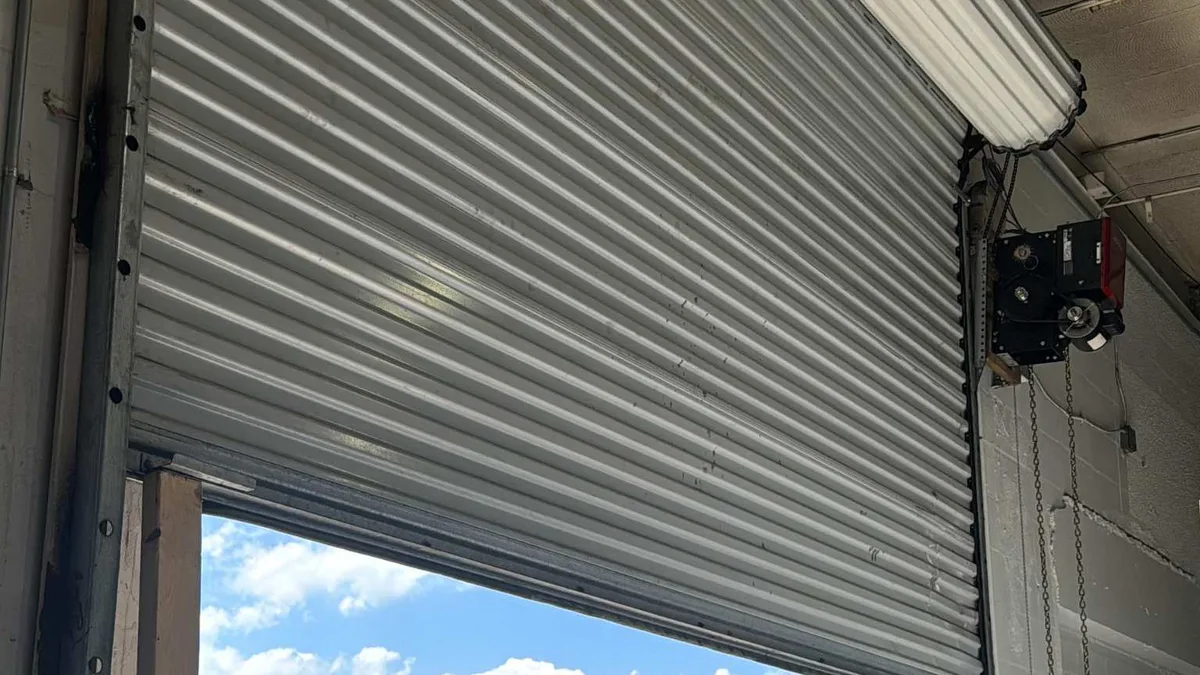
For a light commercial door, the same logic applies with less margin. A roll-up or sectional door on a shop or a small warehouse cycles far more often than a home door, and the opener's duty rating matters more than its feature list. Commercial openers are a separate category from residential units, and the choice should be made against the door's size, weight, and daily cycle count.
Wherever you are in the service area, from Hollywood and Fort Lauderdale through Davie, Pembroke Pines, Miramar, Weston, Sunrise, Plantation, Cooper City, and the rest of the communities CrownLift Garage Doors serves, the sequence is the same: confirm the door's weight and balance, measure the headroom and side room, choose the drive type that fits the garage, then decide which features you will use. CrownLift Garage Doors handles opener installation and replacement, spring and cable work, and general garage door repairs, and can confirm what your door and garage will accept before anything is ordered. If you are unsure which measurement applies to your garage, call (877) 897-6132 or email service@crownliftgarage.com and describe what you see; a technician can sort the options from there. For anything involving the springs, the cables, or the opener's drive train, leave the door alone and let a technician take it.