Garage door cables are the quiet partners to the springs. The springs do the lifting, and the cables run from the bottom corners of the door up to the drums at the top of the track, keeping the two sides of the door moving together. When a cable frays or goes slack, the door usually tells you before anything fails — a crooked hang, a bang at the start of a cycle, a door that suddenly feels heavier. Cables and springs are both under heavy tension and belong to a technician. What follows is what you can safely notice from outside the door with the garage empty, and how the likely causes behind each symptom are separated.
What the cables do, and why they matter
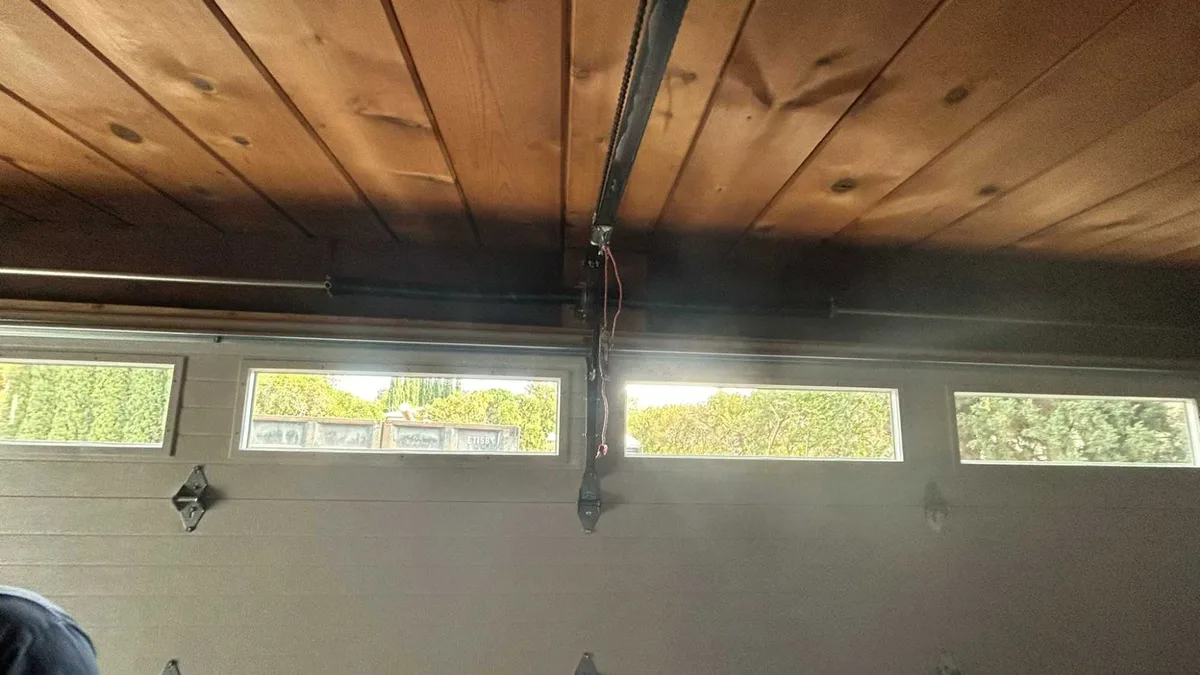
On a standard sectional door, a cable runs down each side of the opening, anchored at the bottom bracket and wound around a drum at the top of the track. The springs carry most of the door's weight; the cables keep that weight evenly distributed and stop the door from dropping if a spring lets go. Because the cables are under constant load, a worn one does not usually snap without warning. It frays first, one strand at a time, or it loses tension and hangs slack against the track. Both conditions are visible to a technician — but only a technician should get close enough to examine them, because a cable under load can injure a hand or an eye in an instant.
Signs you can see without touching anything
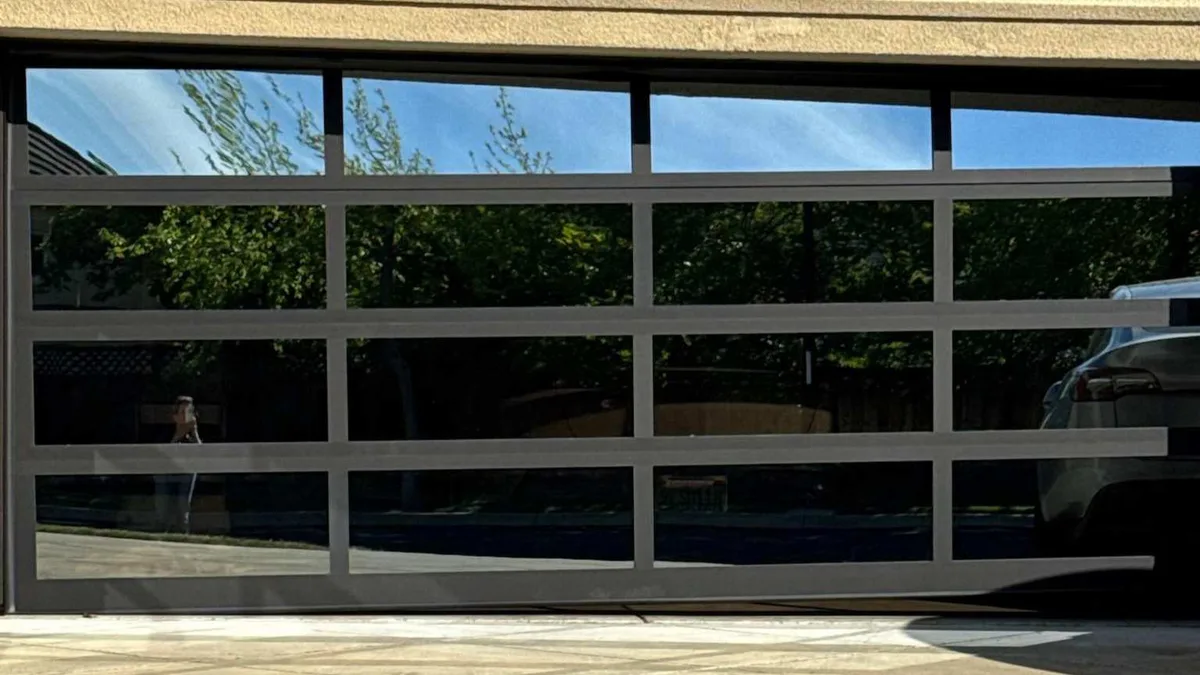
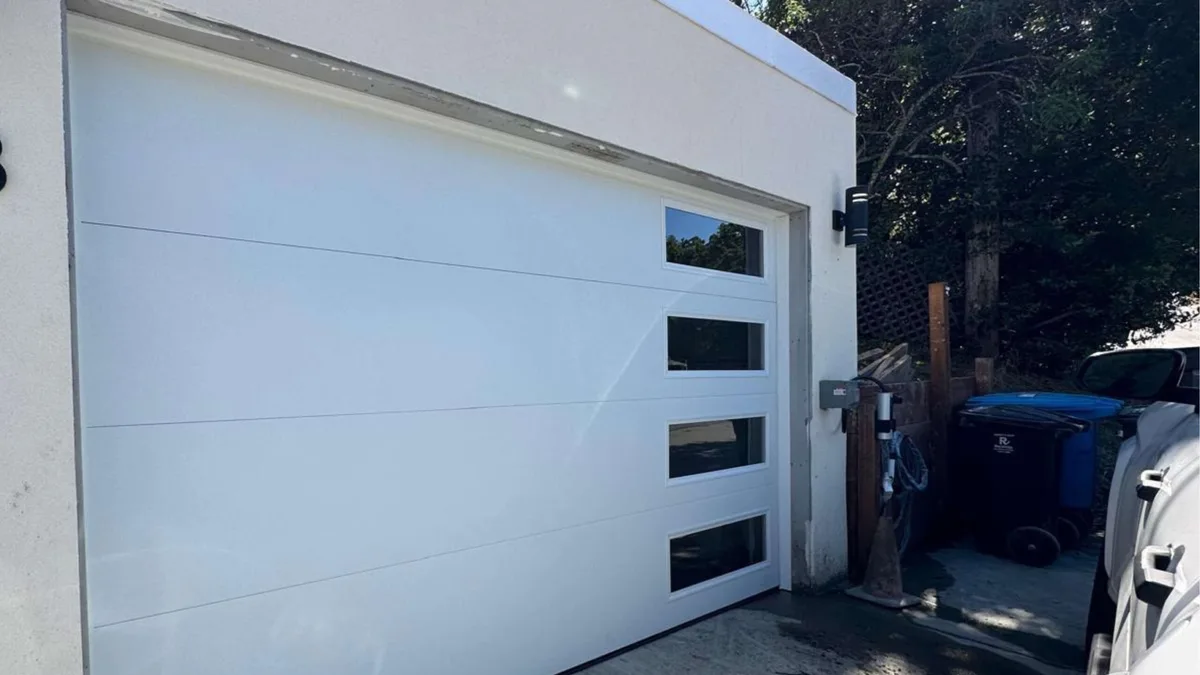
With the garage empty and the door closed, stand back and take in the whole opening. A few things are worth noting:
- The door sits crooked. One side is lower than the other, or the panels are not level across the width of the opening. A snapped cable is one certain cause of a door hanging at an angle, but a broken spring or a bent track can produce the same look. The technician separates them by checking the springs and cables directly and running the door.
- A gap along the top or one side. If the door no longer meets the header evenly, or daylight shows along one edge, the door is not traveling straight. A slack cable is one possible reason; a track out of alignment is another.
- The door feels heavier in normal use. If you have to push harder on the remote or the wall switch to get the door moving, or it seems to labor on the way up, the springs or the cables may no longer be carrying their share. Do not lift the door by hand to check — that is technician work.
- A new noise at the start of a cycle. A sharp pop, a twang, or a scraping sound as the door begins to move can come from a cable jumping its drum, a roller binding, or a hinge that needs attention. A noise alone does not identify the cause; the technician traces it to the source.
- The door hangs unevenly when partly open. Watch from a safe distance as the door travels. If one corner lags behind the other, stop using the door and call for service.
Frayed versus slack: two different problems
A frayed cable and a slack cable are not the same fault, and they tend to show up differently.
Frayed cables usually announce themselves with noise and a change in how the door runs. Broken strands catch on the drum or the track, producing a scraping or popping sound during travel. The door may still open and close, which is what makes a frayed cable easy to ignore — but the remaining strands are carrying more load than they were designed for.
Slack cables often follow a spring problem. If a spring has lost tension, the cable on that side can go slack and come off its drum. The door may hang crooked or refuse to move at all. A slack cable is not a sign that the cable itself is worn; it is a sign that something upstream has changed, and the technician checks the springs, drums, and bottom brackets together.
In both cases, the door should stay closed and out of use until someone qualified has looked at it. Running the opener on a door with a compromised cable puts load on the remaining hardware and can turn a repair into a replacement.
What to do when you notice a problem
If you see any of the signs above, the safe sequence is short. Close the door if it is open and leave it closed. Do not pull the emergency release to move the door by hand, do not try to re-seat a cable on its drum, and do not spray anything on the cable or drum to quiet a noise. Keep children and pets clear of the opening, and call for service.
A technician will inspect the springs and cables, check the drums and bottom brackets, and confirm whether the door is traveling evenly before returning it to service. If the cable has frayed, replacing it is a job for someone with the right tools and the training to work around spring tension. CrownLift Garage Doors serves Broward County and the surrounding communities, is licensed and insured, and offers emergency service outside regular hours. Reach the team at (877) 897-6132 or service@crownliftgarage.com. Weekday hours are 7:00 AM to 8:00 PM, and weekend hours are 8:00 AM to 6:00 PM.