A custom garage door is usually the largest single moving part on a house, and on many South Florida homes it is also the largest flat surface facing the street. That makes it a design decision and a durability decision at the same time. Homeowners in Hollywood and Fort Lauderdale tend to come to this with a picture in mind — a carriage door with iron straps, a clean row of glass panels, a woodgrain finish that matches a front entry — and the work is figuring out which version of that picture will still look right and operate smoothly after several Broward County summers. The style you pick and the material you pick are separate choices, and they fail in different ways. This guide walks through the common styles, how each material handles humidity and salt air, and what to settle before anything is ordered. Springs, cables, and the opener drive train stay with a technician; everything here is about choosing and planning.
Start with the opening, not the catalog
Before style enters the conversation, three measurements decide what is even possible: the width and height of the opening, the headroom above the door, and the depth of the space behind it. A door that has to swing up and back needs clearance for the panels as they travel; a door that rolls up needs less. Low headroom is common in older homes around Dania Beach and Hallandale Beach, and it narrows the field quickly.
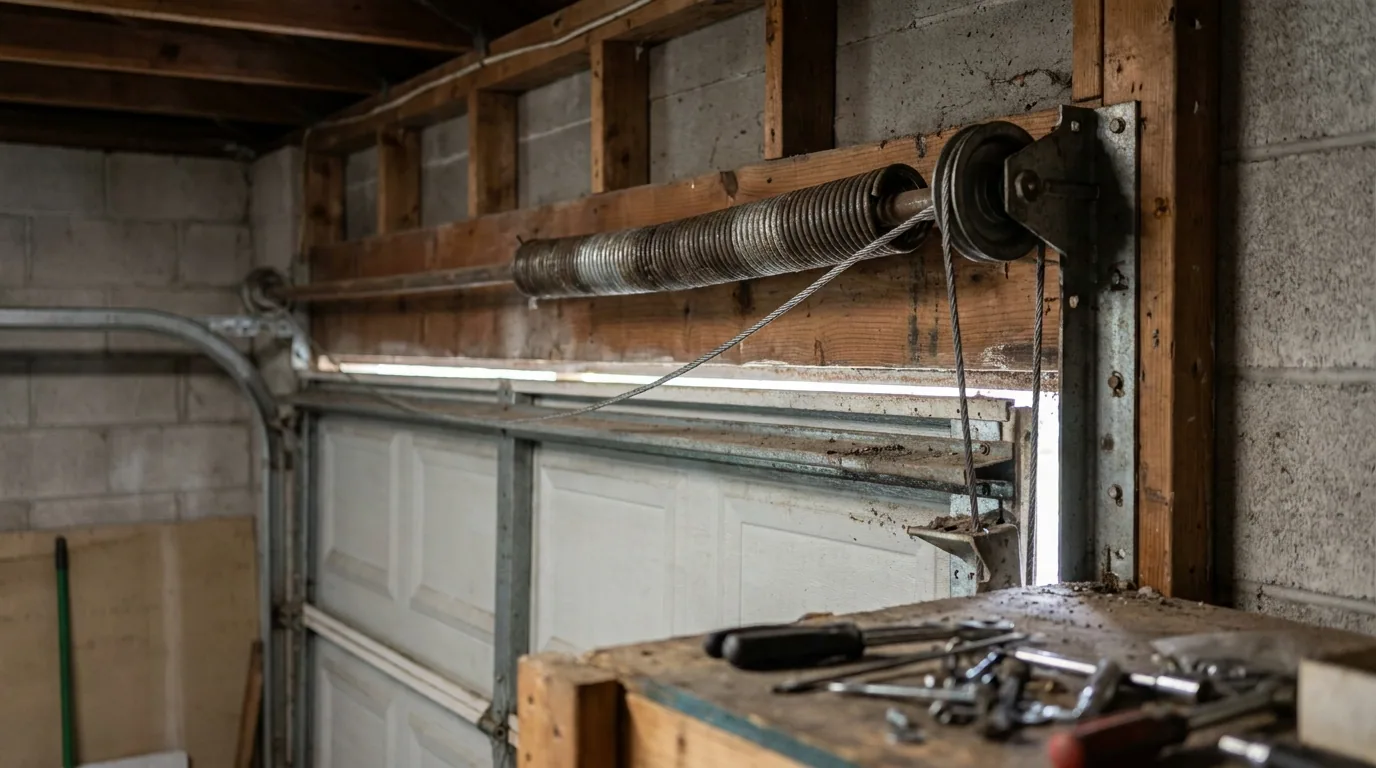
The other fixed constraint is the structure above the opening. A heavy door — glass, thick insulated steel, anything with a lot of mass — puts more load on the springs and the hardware than a light one. That does not rule it out, but it means the spring system has to be matched to the door's actual weight, which is a technician's calculation, not a homeowner's. If you are replacing an existing door, the person who measures should also confirm what the current springs were sized for. A door that feels noticeably heavier in normal use after a swap is a sign the spring and the door are not matched, and that is worth raising before the installation is signed off.
Carriage doors: the look, and where it comes from
Carriage style mimics the swing-out doors of old carriage houses, with vertical boards, decorative hinges and handles, and often a row of small windows near the top. On a modern home it is almost always a sectional door — panels that travel on tracks — dressed to look like two swinging leaves. The hardware is decorative; nothing actually swings.
The appeal in this region is that it suits the Mediterranean and Spanish-influenced architecture common across Plantation, Cooper City, and Weston. The caution is the decorative hardware itself. Straps, handles, and hinge plates are usually steel or a coated composite, and small fasteners are where corrosion shows up first. Ask what the hardware is made of and how it is finished, and expect to keep those pieces clean. A carriage door with painted steel hardware that is never wiped down will start to show rust at the screw heads long before the panels themselves show anything.
Carriage doors also tend to have more surface detail — grooves, applied boards, raised panels — which means more places for dust and pollen to settle. In a climate where everything blooms, that is a maintenance consideration rather than a dealbreaker.
Flush panel: the simplest surface, and the easiest to live with
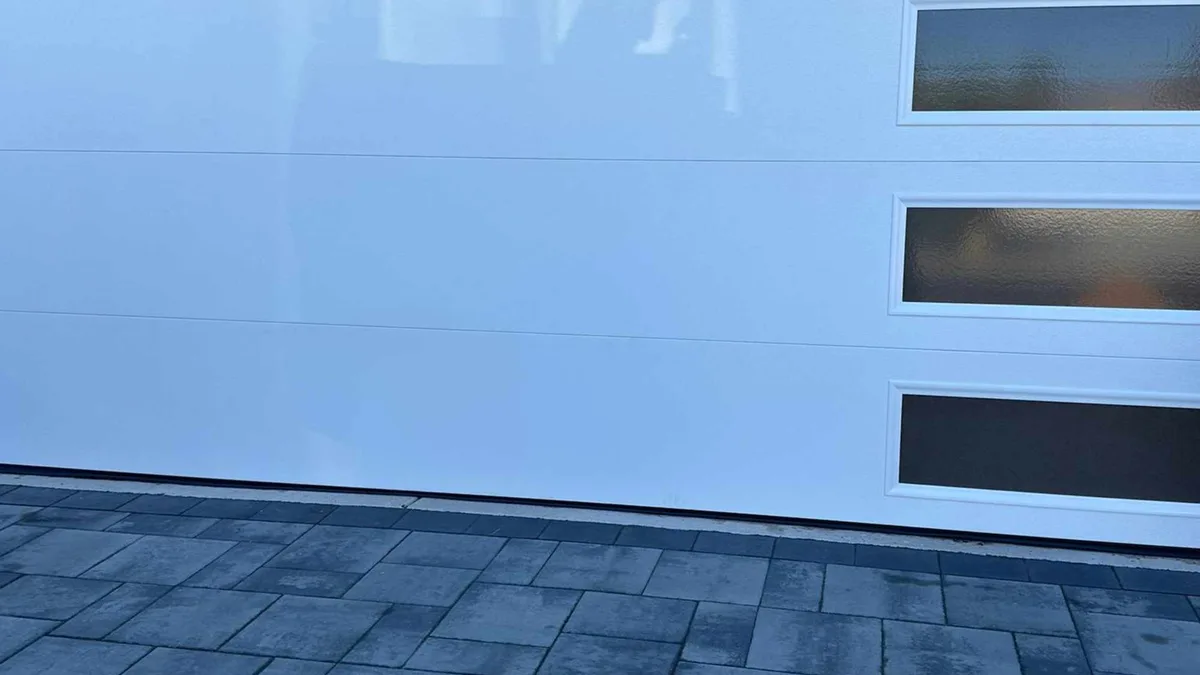
A flush panel door is flat, with no raised sections and often no windows. It reads as modern and disappears into the facade, which is why it turns up on newer construction in Miramar and Pembroke Pines and on renovated homes where the garage is not meant to be the focal point.
From a service standpoint, flush doors are the least demanding. Fewer seams and fewer applied pieces mean less to clean and fewer edges for finish to fail along. If the door is steel with a factory finish, the flat face is also easy to wash down, which matters near the coast. The trade-off is visual: a large flat panel shows every dent and every uneven spot in the finish, and it offers no shadow lines to break up the surface. On a wide two-car opening, a plain flush door can look like a blank wall unless the color and the surrounding trim are chosen deliberately.
Glass and full-view doors: beautiful, and the most demanding
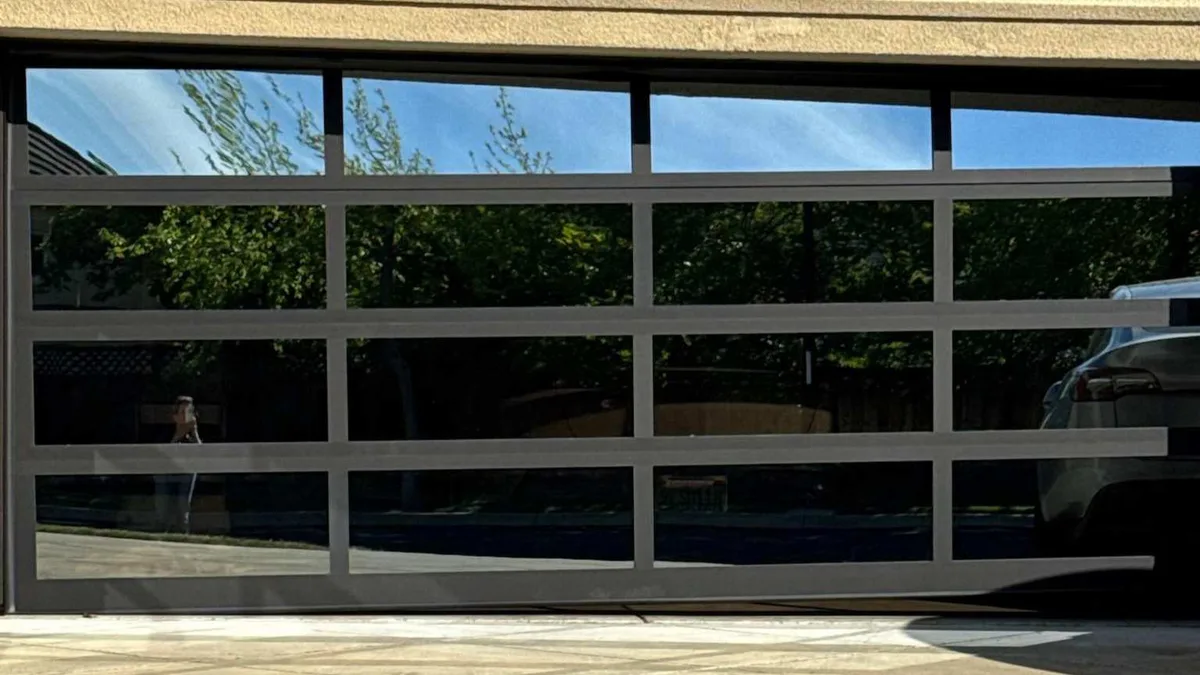
Full-view doors — aluminum frames with glass panels running the full height — are popular where the garage faces the street and the homeowner wants light or a modern line. They are also the option that needs the most thought in South Florida.
The frame material matters more than the glass. Aluminum frames with a proper finish hold up well; bare or poorly finished aluminum near salt air does not. Glass choice matters too: tempered glass is the baseline for safety, and a laminated or insulated glass unit changes both the weight of the door and how much heat it lets through. Heavier glass means heavier panels, which loops back to the spring sizing above.
Glass also shows everything. Dust, pollen, hard-water spotting from irrigation, and fingerprints all read clearly on a full-view door, and cleaning between the frames takes longer than washing a flat steel panel. If the door faces the afternoon sun, expect the interior side to be warm to the touch and the garage behind it to be bright and hot unless the glass is specified for it. None of this argues against glass — it argues for choosing it with the maintenance and the heat in mind rather than only the photograph.
Woodgrain steel and composite: the wood look without the wood
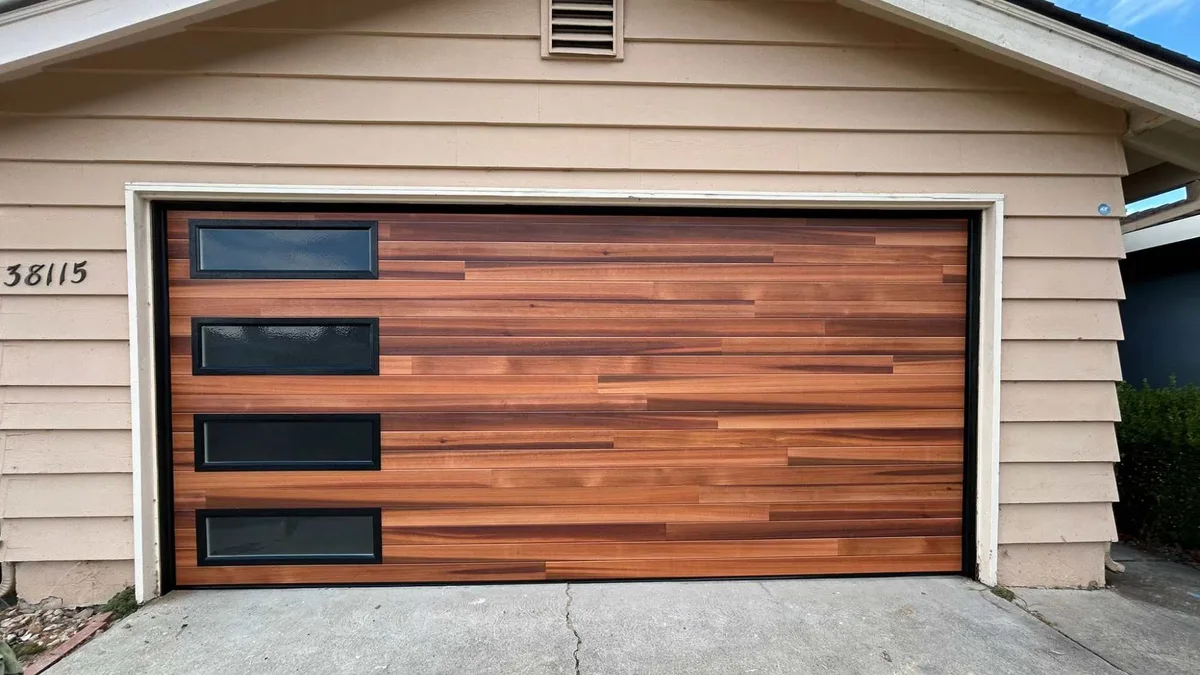
Many homeowners want the warmth of wood but not the upkeep. Woodgrain steel and composite doors use an embossed or laminated finish over a steel or composite substrate to imitate the grain and color of a real wood door. On an elevation where the front entry is stained wood, this is often the closest match available without committing to a wood door.
Real wood doors exist and are still made, but in this climate they demand the most attention of anything on this list. Wood moves with humidity, joints open, and the finish has to be maintained on a schedule rather than when it looks tired. A wood door that is neglected in a humid climate does not simply fade; it can swell and bind. If wood is the goal, go in knowing that the finish is a recurring cost in time, not a one-time step.
Woodgrain steel and composite avoid that cycle, but the finish is a surface, not the material. Scratches and chips expose what is underneath, and on steel that means the potential for rust at the damaged spot. Touch-up is straightforward if it is done promptly and less so if it is left. This is the practical difference between the wood look and real wood: the wood look asks for occasional touch-up, real wood asks for scheduled refinishing.
Humidity, salt air, and what actually corrodes
Two things drive wear on a garage door in Broward County: moisture in the air and salt carried on the wind, both of which concentrate near the coast and vary block by block. The parts that suffer first are almost never the big panels. They are the fasteners, the hinges, the rollers, the bottom weather seal, and the track where it meets the floor.
That has a practical consequence for design choices. A door with fewer exposed fasteners and fewer applied decorative pieces has fewer places for corrosion to start. Stainless or coated fasteners and hardware are worth asking about on any door that will sit close to the coast. The bottom seal is a wear item in any climate, but in a humid one it also traps moisture against the bottom panel and the floor; a seal that has gone hard or torn lets water sit where it should not. If you notice water on the garage floor after rain, or a damp line along the bottom of the door, that is worth having looked at rather than ignored.
What you should not do is try to diagnose the hardware yourself. A door that sits crooked, a gap that has opened along the top, a new noise at the start of a cycle, or a door that feels heavier than it used to — each of those can have more than one cause, and sorting them means a technician inspecting the springs, cables, rollers, and track. A crooked door, for example, can point to a cable, a spring, or a bent track, and only an inspection separates them. That inspection is not something to attempt from a ladder.
What to settle before you order
Most of the regret around a custom door comes from decisions made in the wrong order. A workable sequence looks like this:
- Measure the opening and the clearances. Width, height, headroom, and the depth behind the door. Low headroom limits the options more than style does.
- Match the door's weight to the spring system. This is a technician's calculation and should be confirmed before installation, not after the door feels heavy.
- Choose the material for the climate first, the look second. A style that needs constant refinishing is a poor fit for a house where nobody wants that job.
- Ask what the hardware and fasteners are made of. This is where coastal wear shows up first, and it is easy to overlook when you are looking at panel profiles.
- Decide how the door will be cleaned and how often. Glass and heavily detailed carriage doors take more time than a flush panel, and that is a real ongoing cost.
- Confirm the opener is suited to the new door. A heavier door may need a different opener than the one already on the ceiling, and the opener should be matched to a door that is already balanced.
One more thing worth planning for: the door has to keep working while the decision is being made. If the existing door is noisy, will not close properly, or has stopped altogether, that is a repair question separate from the design question, and it is worth having it looked at rather than living with it until the new door arrives. CrownLift Garage Doors handles garage door repairs, springs, openers, new installation, and replacement across the area, including Hollywood, Fort Lauderdale, Hallandale Beach, Dania Beach, Davie, Pembroke Pines, Miramar, Weston, Sunrise, Plantation, Cooper City, Southwest Ranches, West Park, Pembroke Park, Aventura, and North Miami Beach. The company is licensed and insured, and can be reached at (877) 897-6132 or service@crownliftgarage.com. Weekday hours are 7:00 AM to 8:00 PM, weekends 8:00 AM to 6:00 PM, with emergency service available.
A custom door is a long-lived purchase, and the version that ages well here is usually the one chosen for how it handles moisture and maintenance as much as for how it looks in a rendering. Get the clearances and the spring sizing settled first, pick a material whose upkeep you are willing to do, and let the style follow from there.