Most homeowners in Broward County start thinking about garage door insulation on a July afternoon, when the garage has turned into a room they avoid. The door faces the sun for hours, the space behind it is noticeably hotter than the rest of the house, and every time the opener runs the whole thing sounds hollow. Insulation is the usual answer, and it does help, but it helps in specific ways and not in others. It will not cool the garage, it will not seal out humidity on its own, and it will not fix a door that rattles because something in the hardware is loose. What follows is a plain account of what an insulated door and a proper weather seal actually change, how to tell whether your door is the weak point in the first place, and which parts of the job stay with a technician. CrownLift Garage Doors works throughout the area, from Hollywood and Fort Lauderdale to Weston, Miramar, and the rest of the communities listed at the end, and the questions below come up in nearly every conversation about a door that is due for replacement or service.
What insulation actually does, and what it doesn't
A garage door is a large, thin panel facing the outside. Insulation slows the movement of heat through that panel. That is the whole of it. It does not generate cool air, and it does not stop a hot garage from being hot if the roof, the walls, or an unsealed gap somewhere else is letting heat in.
What you can reasonably expect is a slower heat gain. On a west-facing door in the afternoon, an uninsulated steel panel can become hot enough that the space just inside it is uncomfortable to stand near. An insulated door reduces how much of that heat crosses into the garage, so the garage stays closer to the outdoor temperature rather than climbing above it. If the garage shares a wall or a ceiling with living space, that difference matters more, because the garage is acting as a buffer between the sun and the rooms behind it.
What insulation does not do is make the garage a conditioned room. It is not a substitute for a sealed attic hatch, a proper ceiling, or ventilation. If your goal is a workshop you can use in the afternoon, insulation is one part of the answer and the rest of the building envelope is the other part. Do not let anyone tell you a single door panel will solve a room that has no ceiling insulation at all.
There is also a difference between the insulation inside the door and the seal around it. A well-insulated panel with a worn bottom seal and no perimeter weatherstripping still leaks air and water at every edge. The two work together, and the seal is usually the cheaper and more neglected half.
Noise: what you hear and where it comes from
Homeowners often ask about insulation because the door is loud. It is worth separating the two kinds of noise, because insulation addresses only one of them.
The first kind is airborne noise passing through the panel: traffic, a lawnmower, a neighbor's dog, the general sound of the street. A solid, insulated panel blocks more of that than a single sheet of steel, and the difference is noticeable from inside the house. If the room above or beside the garage is a bedroom or a home office, this is the reason to consider an insulated door.
The second kind is mechanical noise: a rattle, a squeal, a bang at the start of a cycle, a grinding sound as the door moves. Insulation does not touch that. Those sounds come from rollers, hinges, the torsion assembly, or the opener's drive train, and a heavier insulated panel can even make a worn roller louder because there is more mass moving on the same hardware. If your door is noisy in the mechanical sense, the fix is service, not a new panel. A technician can tell the difference between a dry bearing, a worn roller, and a loose hinge by running the door and listening at each point, and that is a job for someone standing under the door with the right tools.
One practical note for South Florida: a door that is louder at certain times of day than others is common, and there are several possible reasons, from temperature-related movement in the tracks to a roller that has worked loose. Rather than guess at a mechanism, have the hardware checked. The symptom is real; the cause needs to be identified rather than assumed.
Humidity, sealing, and the Florida edge cases
Insulation is not a vapor barrier. It slows heat, and some faced panels include a surface that resists moisture, but the thing that keeps humid outdoor air and wind-driven rain out of the garage is the weather seal, not the foam.
That seal lives in a few places. There is the bottom seal, the rubber or vinyl strip along the bottom edge that compresses against the floor. There is the perimeter weatherstripping along the sides and top, usually a vinyl or brush strip in a retainer nailed to the jamb. There is the threshold, if the floor slopes or has a gap. In this climate, the bottom seal takes the most punishment: heat, sun, and repeated compression cause it to harden, flatten, or tear, and once it does, water comes in under the door during a driving rain and the door no longer sits quietly against the floor.
This is also where a door that will not close properly often begins. If the door comes down and stops short, or reverses before it reaches the floor, the cause is usually a travel limit or force setting on the opener, not the seal. If it closes but leaves a visible gap along the bottom or one side, the seal, the track alignment, or the door's position in the opening is the place to start. Those are different problems with different fixes, and a technician can tell them apart in a single visit.
Salt air near the coast is another consideration for the hardware rather than the insulation. Hinges, rollers, and fasteners are the parts that show the effects first. When the door is serviced, those are the components worth checking and lubricating, and it is a reasonable thing to ask about if your home is close to the water in Hallandale Beach, Dania Beach, or Aventura.
How to tell whether your door is the weak point
Before spending on insulation, it helps to know where the heat and the noise are actually coming from. A few observations from outside the door, with the garage empty and the door closed, will tell you a lot.
- The door sits crooked in the opening. One side is higher than the other, or the gap along the top is uneven. That points to the door's mechanical condition rather than its insulation, and it should be looked at before anything else.
- There is daylight along the top or sides. A visible gap means the perimeter seal is not doing its job, and air and water are moving through it.
- The door feels heavier than it used to when you open it with the opener. That is a sign the springs or the balance have changed, and it is technician work to evaluate.
- There is a new noise at the start of a cycle. A single clunk or squeal that was not there before is worth having diagnosed rather than covered up.
- The garage is hot but the door panel is not. If the panel is warm to the touch from inside but the room is hot anyway, the heat is coming from elsewhere and insulation will not be the answer.
A technician inspecting the door will check the springs and cables, the track alignment, the rollers and hinges, and the seal, and will tell you which of those is actually responsible for what you are feeling. That inspection is also the right moment to ask whether a replacement door with insulation makes sense for your situation, or whether sealing and service on the existing door will get you most of the way there.
Where insulation fits in a service or replacement decision
If your door is at the end of its life, insulation is one of the choices you make when selecting a replacement, along with material, window options, and how the door is built. If your door is structurally sound and the problem is heat, noise, or a draft, the first step is usually service and sealing rather than replacement. CrownLift Garage Doors handles garage door repairs, springs, openers, new installation, and replacement, and the same crew can look at a residential door or a light commercial one.
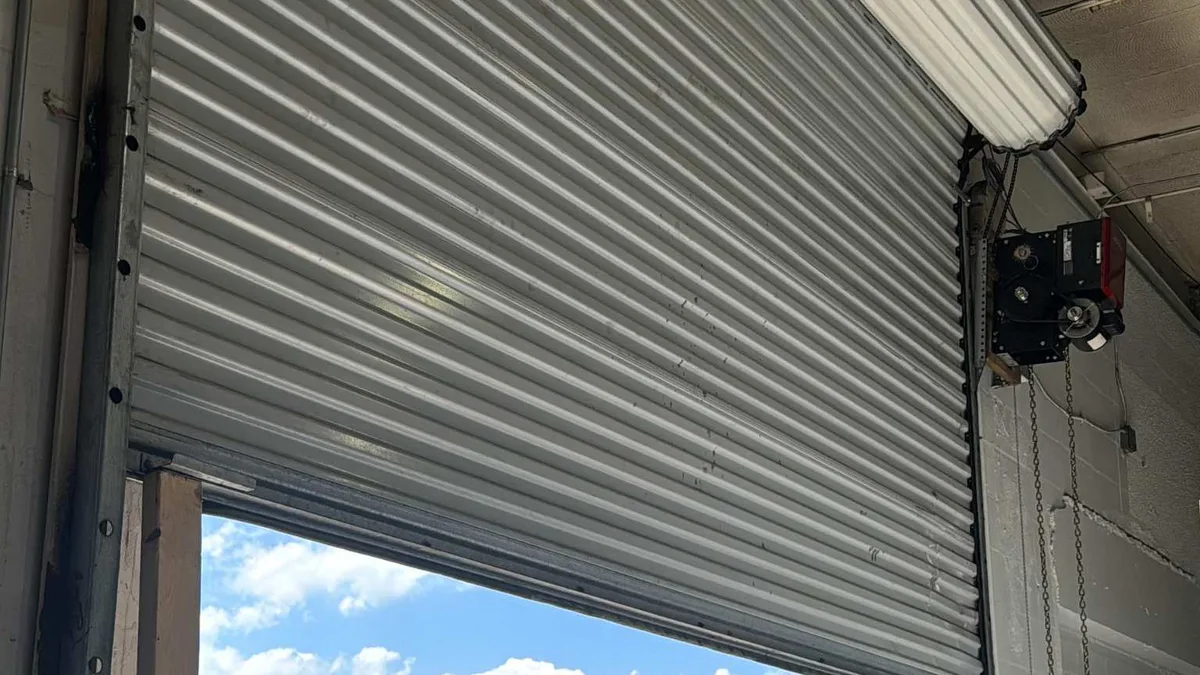
For commercial readers, the calculus is a little different. A loading area or a service bay door that faces the sun all day has the same heat problem, but the priority is usually the seal and the hardware, because a door that cycles dozens of times a day wears its bottom seal and rollers faster than a home door ever will. Insulation still helps, particularly if the space behind the door is occupied, but it is one item on a longer list.
What we would avoid is treating insulation as a cure-all. It is a real improvement to comfort and sound, and in this climate it is worth considering. It is not a substitute for a door that is out of adjustment, a seal that has failed, or hardware that needs attention. Get the mechanical side right first, then decide how much insulation you want on top of it.
CrownLift Garage Doors serves Hollywood, Fort Lauderdale, Hallandale Beach, Dania Beach, Davie, Pembroke Pines, Miramar, Weston, Sunrise, Plantation, Cooper City, Southwest Ranches, West Park, Pembroke Park, Aventura, and North Miami Beach. The company is licensed and insured, and can be reached at (877) 897-6132 or service@crownliftgarage.com. Weekday hours are 7:00 AM to 8:00 PM, weekend hours are 8:00 AM to 6:00 PM, and emergency service is available. The office is at 2350 NW 66th Ter, Hollywood FL 33024.