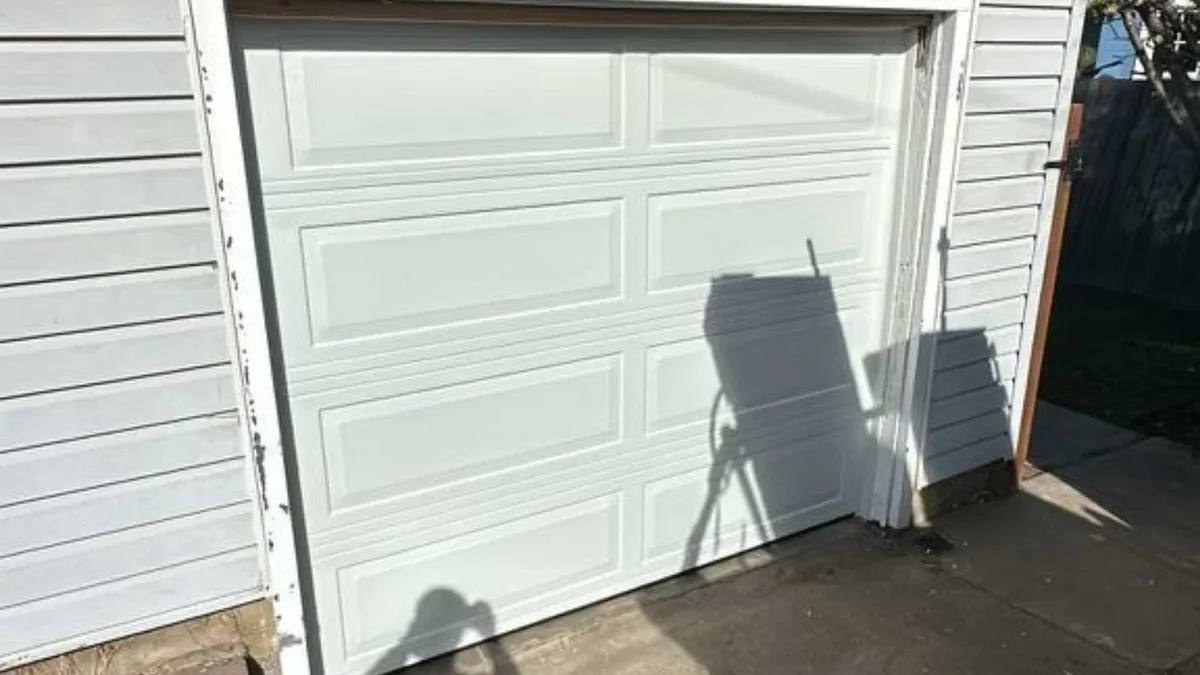
A damaged garage door panel is one of those problems that looks simpler than it is. You can see the dent, the crack, or the spot where the paint has lifted, and the obvious move seems to be to fix that one panel and move on. Sometimes that is exactly right. Sometimes it is not, and the money spent patching a panel would have been better put toward a door that closes properly and matches on both sides. The decision comes down to a handful of things you can check from the driveway: what the panel is made of, where the damage sits, whether the door still runs level, and whether the panel can be sourced to match.
Start with what the panel is made of
The material decides what kinds of damage are even fixable. Steel panels can often be worked back toward shape when the dent is shallow and the metal has not creased, though the paint over a repaired dent rarely matches perfectly. Aluminum behaves similarly but dents more easily and can crack at the edges. Wood panels can be patched and repainted, but only if the damage is surface-level and the wood has not swelled or rotted. Vinyl and composite panels tend to crack rather than dent, and a cracked panel is a replacement, not a repair.
Look at the back face of the panel as well as the front. A dent that looks cosmetic from the street can have stretched the metal on the inside enough that the panel no longer sits flat against its neighbors. If the panel is bowed or the seams between sections no longer line up, repair is unlikely to bring it back.
Where the damage sits matters
The bottom panel takes most of the abuse. It is the one that meets a car bumper, a bicycle, a trash can, and the occasional ball. It is also the panel most exposed to splash and standing water at the floor line. A dented bottom panel that is otherwise sound is often a candidate for replacement on its own, because it is a distinct section and does not require disturbing the rest of the door.
Damage higher up is a different story. A dent in a middle panel usually means something struck the door with force, and that force traveled into the hinges, rollers, and tracks on that side. Before deciding on the panel, watch the door through a full cycle. If it binds, jumps, or drifts to one side, the panel is not the only issue, and replacing it alone will not fix the travel.
Check whether the door still runs true
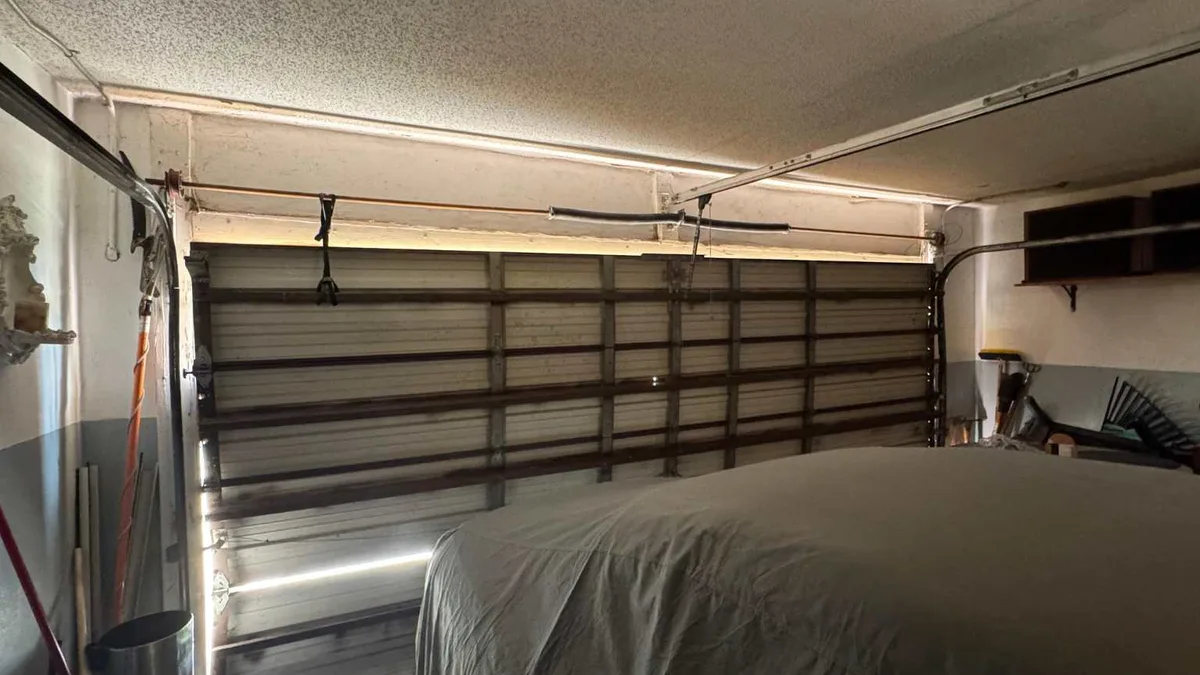
A panel can be replaced only if the rest of the door is mechanically sound. Open and close the door and watch the gap between the door and the tracks on both sides. The gap should stay consistent as the door moves. If one side pulls away or the door shudders partway through the cycle, a roller, hinge, or track is involved, and that needs to be addressed before any panel work makes sense.
Do not reach for the springs, cables, or the opener's drive train to investigate. Those carry stored energy or moving parts that can injure you, and they are work for a technician. What you can safely check is the door's visible behavior: whether it runs level, whether it makes new noises, and whether the panels line up with each other when the door is closed.
Matching a replacement panel
Garage door panels are manufactured in profiles, and a replacement has to match the profile, the width, and the color of the existing door. Older doors can be difficult to match because the profile may no longer be produced. If an exact match is not available, the options narrow to replacing the damaged panel with the closest available match and accepting a visible difference, or replacing the door so the whole face is consistent.
This is where the math often tips. One panel replacement on a door that is otherwise in good condition is a sensible repair. Several panels, a poor color match, and a door that is already showing wear in its hardware is a different calculation, and a full replacement starts to make more sense than chasing parts.
When the whole door is the better call
Consider the full door when the damage is widespread rather than isolated, when the panels cannot be matched, or when the door's age and condition mean the hardware is due for attention anyway. A door that has been struck hard enough to damage multiple sections has usually transferred that force into the tracks and hinges, and replacing panels on a bent frame does not produce a door that runs well.
If you are unsure which path fits your door, CrownLift Garage Doors serves Broward County and can look at the damage and the door's travel before you commit. Reach the team at (877) 897-6132 or service@crownliftgarage.com. The company is licensed and insured, and emergency service is available. A short assessment now is cheaper than replacing a panel that was never the real problem.