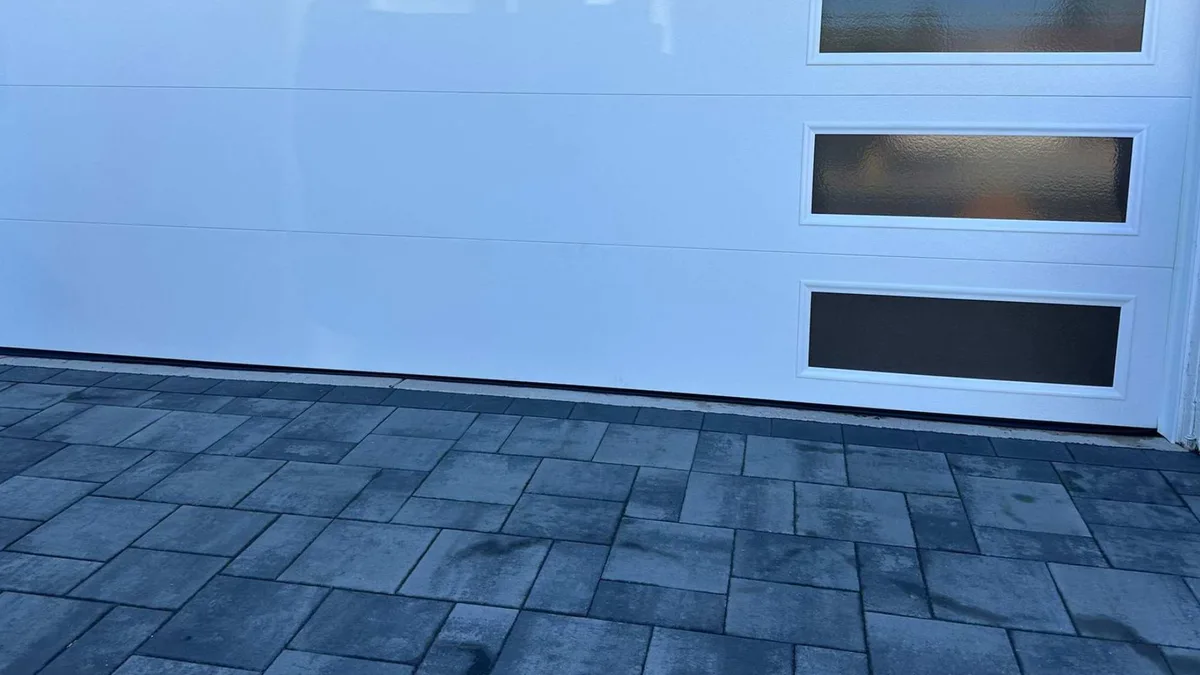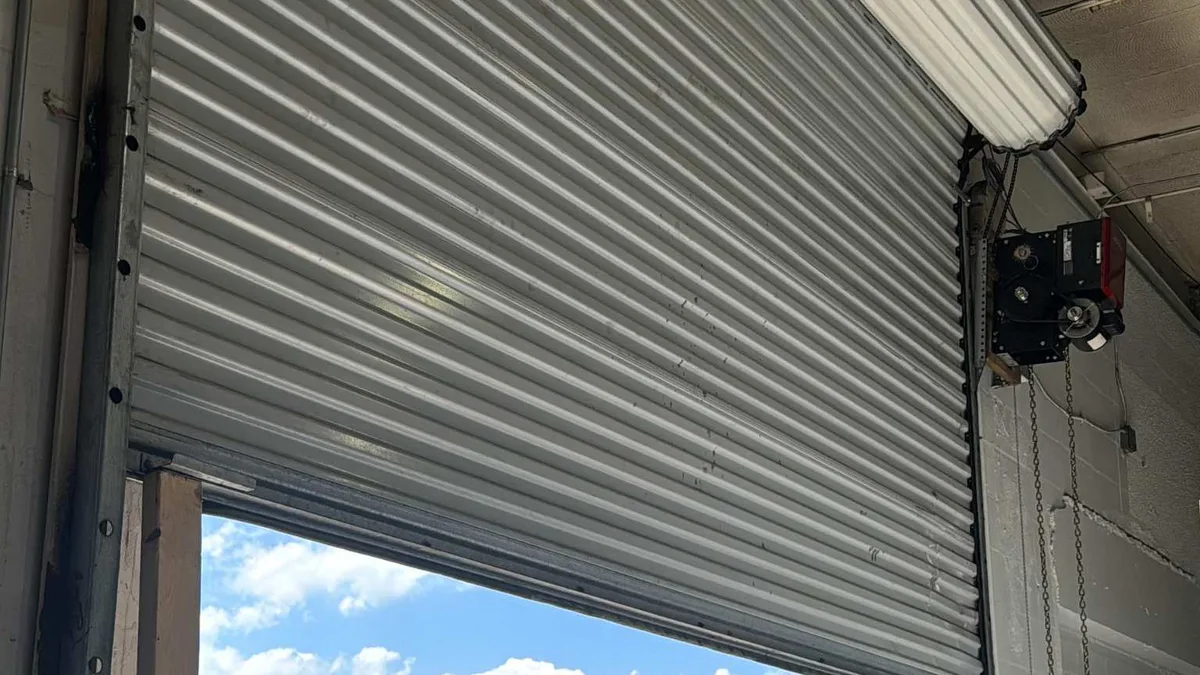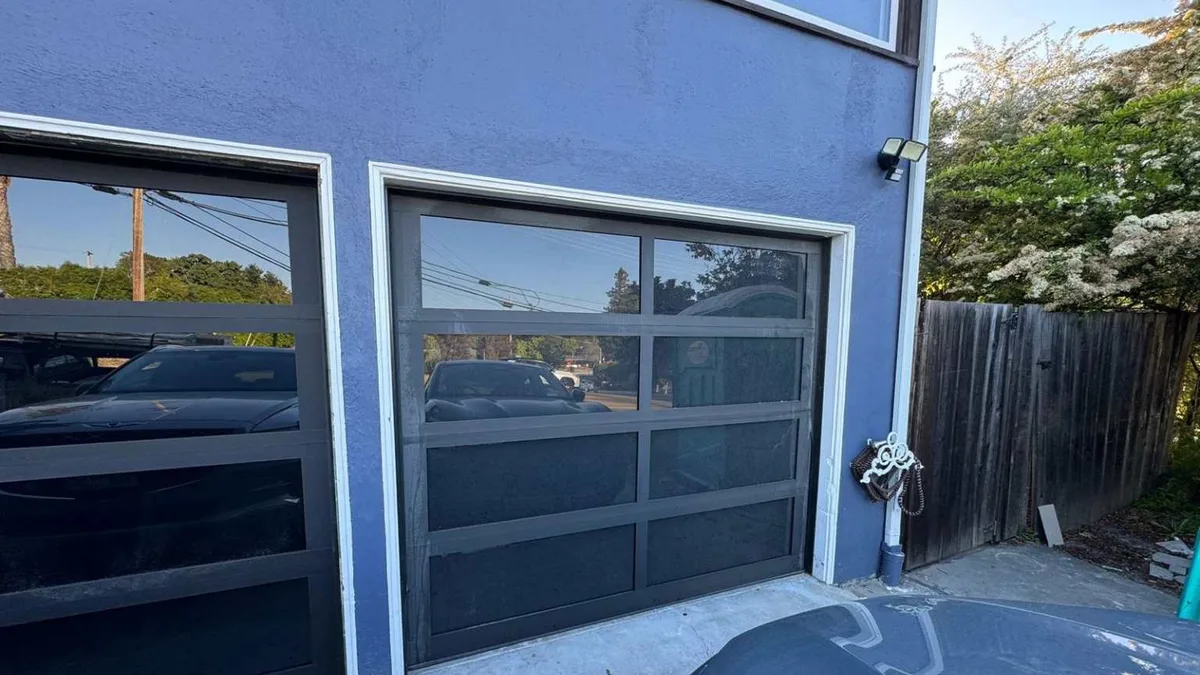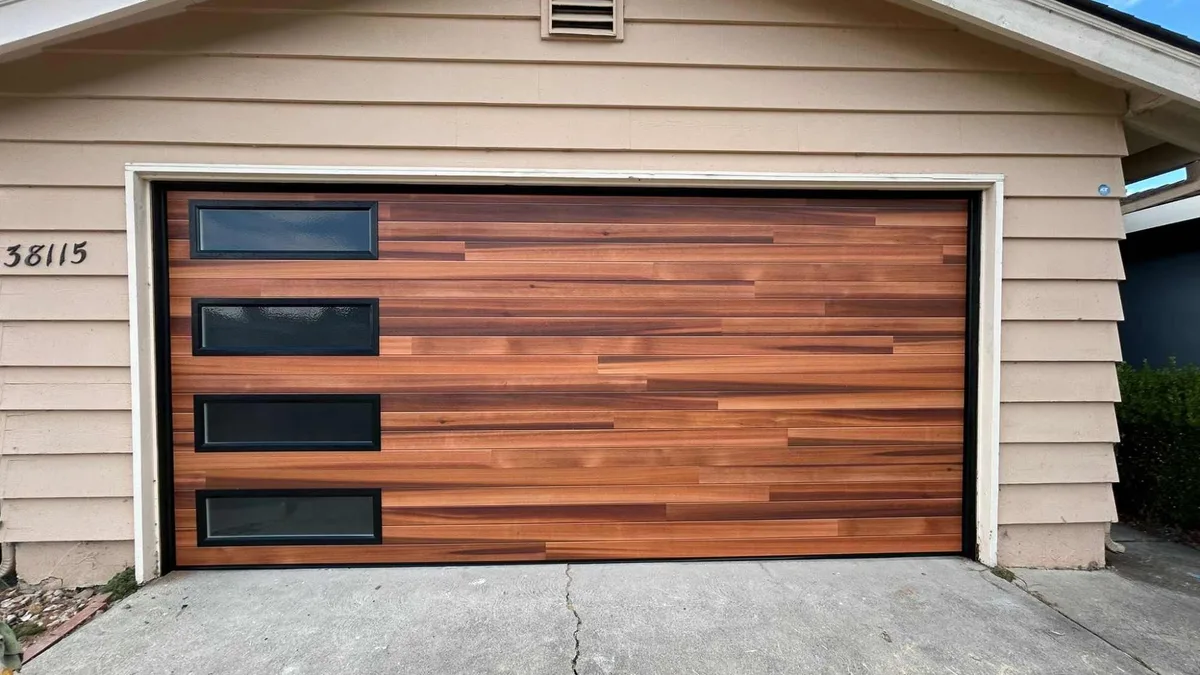
A residential garage door installation looks simple from the curb: a truck pulls up, the old door comes down, a new one goes up, and by evening the house looks finished. In practice most of the day is spent on things you never see afterward — measuring the opening, confirming headroom, setting the track so the door travels straight, and matching the spring to the actual weight of the door. Homeowners across Broward County, from Hollywood and Fort Lauderdale down through Hallandale Beach, Dania Beach, and Miramar, tend to have the same questions going in: how long it takes, what they need to clear out, and what could change the plan once the technician starts. This guide walks through the process in the order it happens. Springs, cables, and the opener drive train are technician work throughout; what follows is about preparation, sequence, and what to watch for.
Before the truck arrives: the measurements that decide everything
Three dimensions drive the whole job, and they are taken before anything is ordered or removed.
The first is the opening itself: the clear width and height between the jambs, measured in more than one spot, because older openings are rarely perfectly square. A door is built to the opening, so a quarter inch of difference matters.
The second is headroom — the space above the top of the opening, up to the ceiling. A standard sectional door needs room above the opening for the door panels to sit when the door is up. Low headroom changes the hardware: different track, different spring arrangement, different way of routing the door. A garage with a low ceiling is not a problem, but it is a different installation than a garage with a tall one, and it has to be known in advance.
The third is the depth of the space behind the door, plus where the opener will hang and whether there is a ceiling outlet near it. A door that needs a rear torsion spring, a door that will use extension springs, and a door driven by a jackshaft opener all want different clearances. Measuring these on the day of installation, after the door has been built, is how jobs turn into two-day jobs.
If you are replacing an existing door, the technician will also confirm how the old door is anchored and whether the framing around the opening is sound. A garage door carries real weight and pulls against its framing every time it moves. Soft or damaged framing around the opening is worth knowing about before the new door goes on it.
What the homeowner should clear, and what to expect on the day
The single most useful thing you can do is empty the garage floor. The installation crew needs the full width of the door plus working room on both sides, and they will be moving panels, track sections, and a ladder through the space. Cars out, shelving pulled back from the walls near the door, and anything hanging from the ceiling near the opener's path taken down.
Expect the garage to be open to the outside for a stretch of the day. There is no way around this — the old door comes off before the new one goes on. If the garage holds anything sensitive to heat, rain, or dust, plan for it.
Most residential installations follow the same rough order:
- The old door and its hardware come down, and the opening is checked again now that it is bare.
- The track and vertical angles go up, set plumb and level, because everything else follows the track.
- The panels are set into the track and hinged together.
- The springs are installed and tensioned to the weight of the door.
- The opener is mounted and connected, if one is being installed or reused.
- The door is cycled and adjusted — travel limits, force settings, and the safety reverse.
Steps two and four are where the quality of an installation lives. Track that is slightly out of plumb will make a door that drags or drifts to one side for years. Springs that are not matched to the door's actual weight will make an opener work harder than it should and shorten its life. Neither problem is visible on the day, which is why the measuring and the testing deserve the time they take.
Springs, track, and the parts that have to match the door
A torsion spring holds the door's weight so the opener only has to guide it. The spring is selected for the weight of the specific door being installed, which is why the door is weighed or its weight confirmed from the manufacturer's figures rather than guessed. A spring that is too light lets the door drop; one that is too heavy makes the door hard to move and overloads the opener. This is not a part a homeowner should adjust or tension — it is stored energy, and it is technician work.
The track is the other half of the equation. Vertical track has to be plumb and the same distance from the jamb on both sides, and the horizontal track has to be level and at the right angle so the door settles against the opening instead of hanging off it. When a door is installed with track that is off, the symptom shows up later as a door that rubs, squeals at one point in its travel, or leaves a gap along one side. If your new door develops a noise at the same spot every cycle, that is worth a service call rather than something to live with.
Cables connect the bottom of the door to the spring system and keep the door level as it travels. They are under tension whenever the door is down. A cable that is improperly seated during installation will announce itself as a door that hangs crooked, and a door hanging at an angle should be left alone and looked at by a technician — a snapped or slipped cable can let the door come down hard.
Testing: what the technician checks before leaving
The last part of the day is the part that matters most, and it is worth watching so you know what was done.
The door is cycled several times and observed through its full travel — up, pause, down. The technician is checking that it runs smoothly, that it does not bind or hesitate, and that it closes against the opening evenly.
The opener's travel limits are set so the door stops at the floor without pressing on it and stops at the top without straining. The force settings are set so the opener reverses when it meets an obstruction within its designed range, and the safety reverse is tested. On a door with photo-eyes, the technician confirms the beam is aligned and that a blocked beam reverses the door while it is closing. That is the photo-eye's job — it is a safety device on the down travel, and it has no role in a door that will not start or that reverses before reaching the floor.
The technician also confirms the springs and cables are seated and tensioned correctly, and that the door sits level in the opening with the panels aligned. If an opener was installed, the wall control and any remotes or keypad are paired and tested before the crew leaves.
Ask for a walkthrough at the end. A short demonstration of the door running, the safety reverse, and the opener controls is the best way to catch anything that needs a second look while the crew is still there.
After installation: the first weeks and the maintenance that follows
A new door is not a maintenance-free door, and the first month is when small adjustments tend to surface. Hardware settles, and a door that was silent on day one can develop a rattle or a squeak as things seat in. A single service call in the first few weeks to check the track, tighten hardware, and lubricate the moving parts is normal and worth doing.
After that, the routine is simple and mostly observational. Keep the tracks clear of debris. Have the moving parts lubricated periodically. Watch for changes you can see from outside the door with the garage empty: the door sitting crooked in the opening, a gap appearing along the top or one side, the door feeling heavier than it used to when you use it normally, or a new noise at the start of a cycle. Any of those is a reason to call a technician rather than investigate yourself. Springs, cables, and the opener drive train stay with someone trained to work on them.
If your door is due for replacement or you are planning an installation, CrownLift Garage Doors works with homeowners throughout Broward County, including Hollywood, Fort Lauderdale, Hallandale Beach, Dania Beach, Davie, Pembroke Pines, Miramar, Weston, Sunrise, Plantation, Cooper City, Southwest Ranches, West Park, Pembroke Park, Aventura, and North Miami Beach. The company handles new garage door installation, garage door replacement, garage door openers, springs, and repairs, and is licensed and insured. Reach the team at (877) 897-6132 or service@crownliftgarage.com, or visit 2350 NW 66th Ter, Hollywood FL 33024. Weekday hours are 7:00 AM to 8:00 PM, weekend hours are 8:00 AM to 6:00 PM, and emergency service is available.